


This article is part of the thematic channel The Carbon Observer. Subscribe to the newsletter or update your preferences.
Carbon Capture and Storage (CCS) is often described as a singular, monolithic technology, and the general public's impression is that it is still in the pilot project stage. In reality, there are a variety of solutions, some of which have been established for years, offering increasing levels of decarbonisation and, inevitably, increasing costs and complexity. The focus of the discussion today should not be so much on which is the best CCS technology but rather on in which industrial context, on what scale and with what logistics, the technology of capture, use or storage really holds up technically and economically. We spoke with Fabio Ferrari, Circular Carbon and Integrated Solutions Head of Department at NextChem, a Maire Group company, to understand how this technology segment is evolving.
“As a group, we have a good track record: around 30% of all industrial post-combustion plants in existence today were built by us,” begins Ferrari. “In the past, CO₂ was captured for use as feedstock for urea, i.e., for the production of fertiliser. Today, the main issue is reducing the carbon footprint.” Maire's plants are “heavy” units, producing around 400-450 tonnes of CO₂ per day: industrial-scale plants, not demonstration plants.
Today, the challenge is that of global scale-up, moving beyond the niche of ideal cases perfectly integrated with petrochemical ecosystems, and adapting CCS to more fragmented contexts. Within the portfolio, the most mature solution today remains post-combustion amine capture, i.e., based on solvents (amines) that absorb CO₂ from flue gases. It is a solution already technically robust and ready for industrialisation. The key issue is economic scale: in many hard-to-abate sectors (cement, glass, paper, small plants), the “large unit” model becomes too costly in terms of capex and opex.
“If you have a small cement plant or glass furnace, some solutions are too big, too expensive or difficult to integrate into the specific industrial context. You need something more ‘tailor-made’, closer to the needs of the individual customer,” explains Ferrari. Hence, the idea of a proprietary suite, NX Decarb: not a technology, but a portfolio covering different use cases. “First of all, the issue of transportation. If it is transformed or injected near where it is captured, it can be transported in gaseous form; otherwise, it can be liquefied, consuming energy but reducing the complexity and costs of transportation.”
In particular, “people don’t realise how important the issue of volumes is,” emphasises Ferrari, pointing out that Maire has excellent in-house expertise in cryogenic gas cooling, including NX CLIQ “self-cooling” technology, which uses the properties of CO₂ itself without external refrigerants. There is a twofold industrial promise: to scale up to large capacities (in the order of 70-100 tonnes per hour) and to gain efficiency, as even a 10% improvement on these volumes has a significant impact on the bottom line.
Transportation becomes essential to deliver CO2 where it is needed by the market or by regulation. And here all the options for use open up: from high-pressure injection into the subsoil for remineralisation and sequestration, to conversion into methanol or SAF, sustainable aviation fuels, and, in the future, perhaps the production of hydrogen with carbon as the only by-product, thus directly avoiding the generation of carbon dioxide (still in its early stages of industrial implementation).
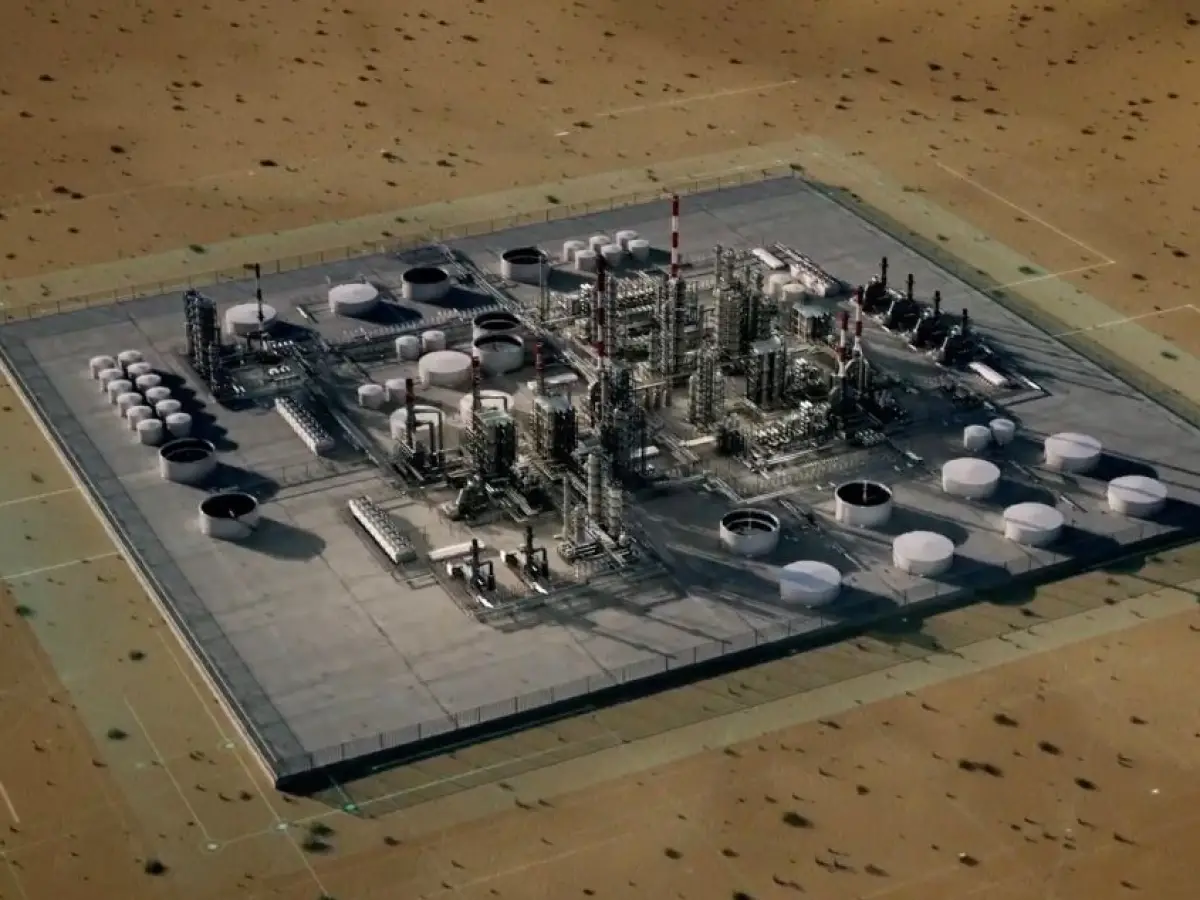
The Maire Group is developing numerous large-scale projects. Hail & Ghasha (Middle East) stands out on the list: a large gas plant where the CO₂ to be handled is counted in “millions of tonnes per year”. Part of it will be used for enhanced oil recovery, a technique involving the use of high-pressure carbon dioxide to improve production in depleted hydrocarbon wells. A project that, according to the report, “touches on every aspect”: separation, hydrogen recovery, and cryogenic use of CO₂. In Italy, the key project is Casalborsetti, the first carbon capture facility installed in Italy to test underground burial, developed for ENI, followed by the NextChem project, currently under development, for the decarbonisation of the Marcegaglia steelworks in Ravenna.
A global compact on CCS?
When CCS initiatives slow down, it is often not because the technology does not work, but rather because a piece of the puzzle is missing. The missing piece is not technological, but regulatory. Ferrari has no doubt about this: without a framework with clear rules, CCS cannot become mainstream. “We need the infrastructure and legislative building blocks to close the loop.”
Currently, there are two economic mechanisms that support the adoption of these technologies: in the US, tax incentives known as 45Q tax credits offer tax credits proportional to the amount of CO2 captured. In Europe, there is the ETS, whereby only the portion of CO2 emitted net of that captured is taxed. “These are two systems that need to be balanced and integrated,” concludes the NextChem expert. “Each tool can be effective. But it cannot be exposed to political circumstances and government variability. A systemic initiative is needed to bring CCS back into line with the Paris Agreement, an intergovernmental effort shared by several countries, capable of providing a sufficiently long-term perspective to ensure continuity in commitments.”
This leads to a strong argument: CO₂ must become like other regulated pollutants, a “standard cost” distributed along the supply chain, not the burden of a single plant. Ferrari uses an industrial comparison: just as no one would build a plant today without systems to reduce contaminants (because the law requires it and the cost is internalised), in the same way, in the future, it would be unthinkable to produce without controlling carbon emissions.
This content is produced thanks to the support of sponsors
Cover: rendering of the Hail & Ghasha plant, under construction