

This article is part of the thematic channel The Carbon Observer: subscribe to the newsletter
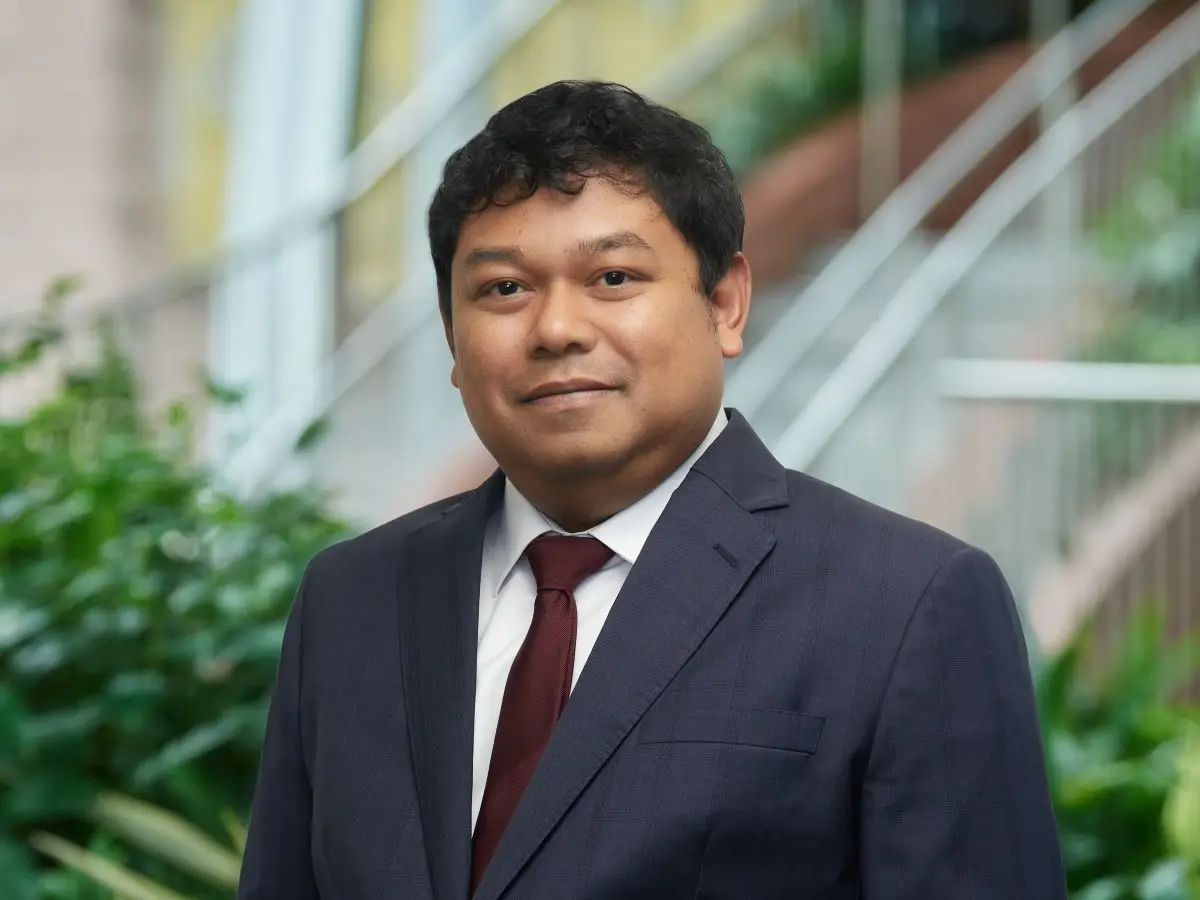
Anshari Rahman knows Article 6 from both sides of the table: he helped shape the rules as Singapore’s lead carbon markets negotiator at the UNFCCC and now applies them as Director of Policy & Analytics at GenZero, a SGD 5 billion investment platform backed by Temasek with a mandate to scale decarbonisation globally. GenZero is widely considered a pioneer investor and one of the most active players in the carbon market, with investments across the value chain, including companies such as BeZero Carbon and South Pole.
Anshari Rahman leads GenZero’s data-driven strategy on carbon market policy, regulation, standards, methodologies, and pricing, translating evolving regulatory and integrity frameworks into actionable investment insights and portfolio risk management.
He currently serves on the Board of Verra, the world’s largest carbon standard, and South Pole, a leading carbon project developer and climate advisory firm. Prior to joining GenZero, he was a climate change negotiator with Singapore’s National Climate Change Secretariat under the Prime Minister’s Office. He co-chaired negotiations on Article 6 of the Paris Agreement at the UNFCCC and represented the Singapore government in major international forums, including the UNFCCC, Convention on Biological Diversity (CBD), Intergovernmental Panel on Climate Change (IPCC), and ASEAN, contributing to the design of international rules governing carbon markets and climate cooperation.
We spoke with him for The Carbon Observer about the Asia-Pacific carbon market, the perceived paralysis around Article 6 and government letters of authorisation, and where the real mitigation potential lies.
The European debate on carbon markets tends to focus on Africa. Asia-Pacific feels under-represented. What is your read on the region’s potential?
The starting point is mitigation potential – and this is where Asia-Pacific, particularly Southeast Asia, really stands out globally. Countries like Indonesia already have a critical mass of projects registered under independent standards such as Verra and Gold Standard. Historically, Indonesia was not a major player under the CDM, and that gap now represents a scalable opportunity for carbon markets and Article 6 project development. The second dimension is policy readiness around Article 6, and here the picture has shifted significantly. Two or three years ago, Asia was behind Latin America and parts of Africa. Today, we are seeing a meaningful change: a growing number of countries are introducing carbon pricing mechanisms, whether carbon taxes or emissions trading systems and opening up to international carbon markets. Indonesia is the most visible example. Recent presidential decrees have not only opened the country to international carbon cooperation but also formally recognised projects registered under international standards.
If you had to identify three priority markets in the region, which would they be?
Indonesia is the first, for the reasons just mentioned. The second is China, primarily because of its scale and the evolution of its ETS. China has moved from a carbon intensity cap to an absolute cap, and its latest NDC signals a genuine increase in ambition toward 2035, targeting absolute emission reductions. There is no backsliding in the latest five-year plan, despite a stronger focus on competitiveness. That level of policy predictability is what matters most to investors. Looking ahead, China could potentially become an Article 6 buyer. It is a realistic scenario, but not in the short term; it will take time. The third is India: the country has introduced a power trading scheme, has been a front-runner in renewables, and has recently published a white list of project types eligible under Article 6, primarily focused on green hydrogen and the energy sector. That kind of clarity is critical for investment decisions. At GenZero, we have a significant commitment to an alternative wetting and drying project for rice cultivation in India. For now we stand guided by the policy from the agriculture ministry that projects in this sector are expected to remain within the voluntary carbon market.
Singapore’s approach to Article 6 is often cited as a model. What makes it distinctive, and how does GenZero leverage it?
The government has established bilateral implementation agreements with multiple countries, including Ghana, Morocco, Chile and Papua New Guinea, creating government-to-government frameworks that define eligible project types and set clear processes for issuing letters of authorisation. While we have a global mandate and we invest across various voluntary and compliance markets, this G2G foundation provides a level of confidence difficult to replicate in markets without such bilateral structures. On top of that, we conduct our own due diligence on host country readiness, developer track record, and methodology quality. More broadly, Singapore is taking a very pragmatic approach: leveraging existing carbon market infrastructure, standards, platforms and rating agencies to lower barriers for private sector participation in Article 6.
The market is widely described as “paralysed” around letters of authorisation. Developers across many countries are waiting. Is that a fair characterisation?
I would push back slightly on the idea of “paralysis”. Recent data on Article 6 authorisations actually shows an acceleration. What we are observing is the tail end of a steep learning curve. Countries have spent years negotiating these rules from Paris to Katowice, Glasgow, Sharm el-Sheikh and Dubai. But moving from the CDM era to Article 6 requires a completely different institutional setup. Under the CDM, there was essentially no trade-off: projects brought investment and technology transfer, and host countries did not have to account for emissions reductions against national targets. Under Article 6, countries now have NDCs, reporting obligations every two years, and annual tracking of transfers. This is a much more demanding system, and the capacity gap is real. There is also a perception issue. Many policymakers look at their emissions inventory alongside corresponding adjustments and perceive a significant loss. But for large emitters – China, India, Brazil, Indonesia – the actual impact is marginal. Even including all CDM-era projects, the share of emissions affected would be relatively small. By contrast, the potential benefits in terms of investment, technology transfer, and scale are significantly larger.
Looking ahead, which project types do you expect to play a leading role in Article 6 markets?
Energy transition projects are particularly compelling – not because they rely on breakthrough technologies, but because they address both climate and energy security at the same time. We are currently working on a pilot in the Philippines focused on accelerated coal phase-out using transition credits. The Rockefeller Foundation has also been active in this space. Methodologies are emerging: Verra released one last year and is now revising it, and there is increasing interest in jurisdictional approaches to energy transition. Nature is the other key area. In the Global South, and particularly in this region, this is where the largest mitigation potential lies, especially when linked to the bioeconomy. Our first Article 6 investment is a reforestation project in Ghana, a segment that many still consider complex. Our expectation is that demonstrating a viable Article 6 pathway for nature-based projects will help unlock further investment and create momentum for the broader market.
Cover: Anshari Rahman