



The Italian autumn has been a hot one. Since the start of October, the streets have been filled time and again with protests against the high cost of living and fuel prices: the first general strike on 2 October; lorries in southern Italy parked in lay-bys in protest against high diesel prices; farmers and lorry drivers staging sit-ins from Lecce to Parma; and the USB’s general strike at the end of October. Friday 20 November marks the peak with the CGIL’s general strike, calling for a Budget Bill that invests in the welfare state, education, healthcare and local public transport – rather than in rearmament. Household finances are also suffering, with petrol and groceries becoming a little more expensive every month.
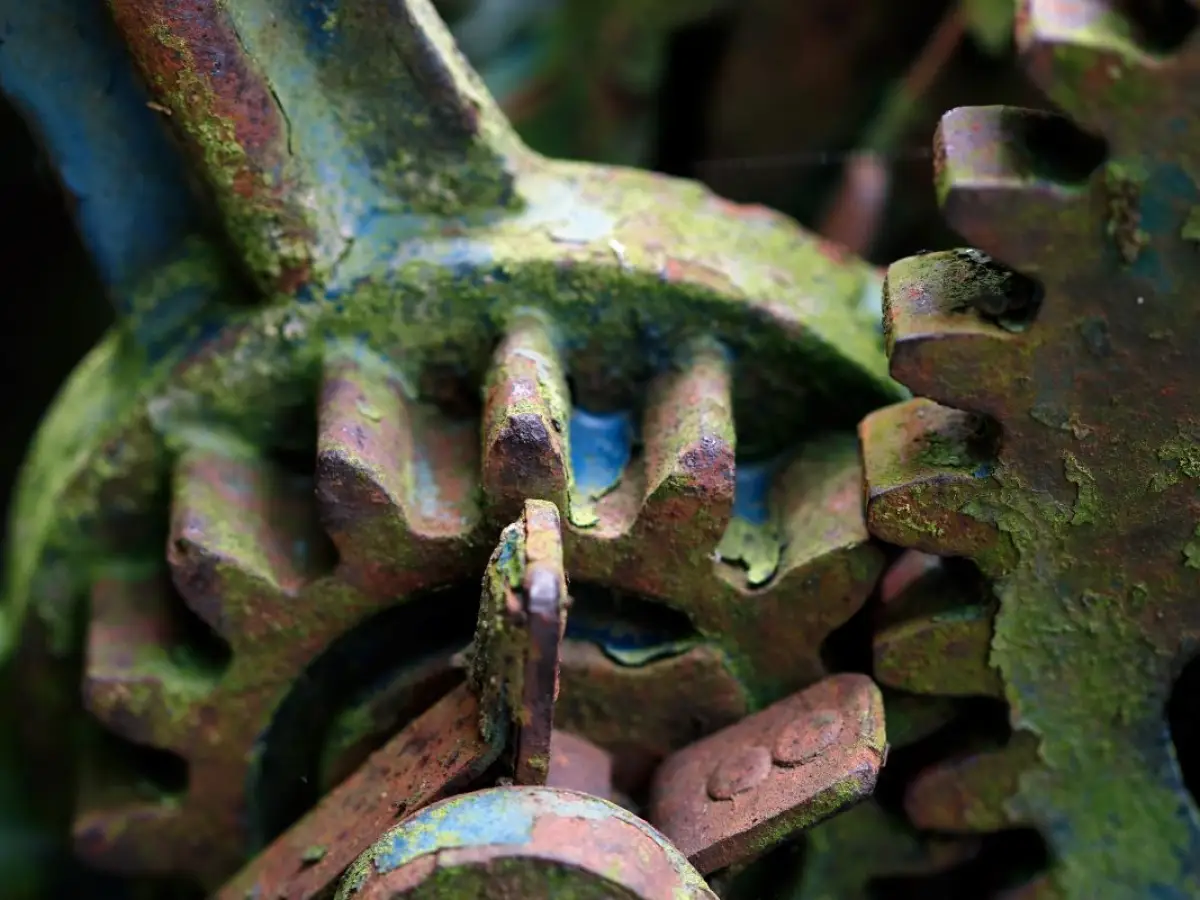
The same issues fuelling the protests, however, are having slower and less visible effects on the country’s entire economy. They act like rust, forming where a surface remains exposed without protection and, by the time it becomes visible, has already been corroding deep beneath for a long time. Italy’s economy reaches autumn in this state, exposed to corrosion while the world remains far from the targets of the 2030 Agenda. The foundation – that is, the Italian businesses that have invested – is sound. The protection that policy should guarantee, consisting of stable regulations, swift authorisations and funds being spent, exists at least on paper; yet in far too many areas, someone continues to chip away at it. The most exposed area is the one that is burning the brightest today: energy.
The picture emerges from GreenItaly 2026, the seventeenth edition of the report commissioned by the Symbola Foundation, Unioncamere and the Guglielmo Tagliacarne Research Centre of the Chambers of Commerce, in partnership with CONAI, Ecopneus, ENEL and Novamont, sponsored by the Ministry of the Environment and Energy Security, and with a contribution from Renewable Matter.
The alliance, to begin with and to allay any concerns, is solid. Between 2020 and 2025, eco-investments involved 591,450 businesses, 36.2% of the total, a figure that rises to 42.5% in the manufacturing sector. And investors look ahead with greater confidence: amongst green manufacturing firms, 22% expect higher exports in 2026, compared with 17% of others; 30% anticipate growth in turnover, compared with 26%; and 18% expect an increase in employment, compared with 13%. For many companies, as highlighted in the 2025 report, the transition has been an economic choice, and it is paying off.
The metal, however, remains exposed precisely where the cost-of-living crisis is burning today. The steel industry says as much, almost word for word: with the hot section of the former ILVA plant shut down, Federacciai (the Italian Steel Association) sounded the alarm for companies that have already halted or are in the process of halting operations due to high energy costs. In 2025, dependence on foreign energy rose from 73.5% to 75.2%, with around 95% of gas being imported. Photovoltaic generation exceeded 44 terawatt-hours – a record – but the decline in hydroelectric and wind power has prevented renewables from gaining market share in electricity demand, while new installed capacity fell to 7 GW, down from 7.7 GW the previous year. Authorisation difficulties, regulatory instability and infrastructure delays are taking their toll. And so every plant at a standstill awaiting a permit is a place where corrosion can take hold. Meanwhile, the funds set aside to protect the environment remain untapped. By May 2026, around 45% of the €56.8 billion from the National Recovery and Resilience Plan (PNRR) earmarked for the ecological transition had been spent, and of the €18.2 billion generated by ETS auctions between 2012 and 2024, only 9% had been used for climate-related purposes. Hopefully, it is worth reiterating that these are resources that could have strengthened grids, infrastructure and energy efficiency, and improved the competitiveness of the national economy.
This fragility also affects the most valuable aspect of the alliance: the circular economy. In 2024, Italy’s material circularity rate stood at 21.6%, third in Europe after the Netherlands and Belgium, compared with the EU average of 12.2%, and total waste recycling reached 92.6%, compared with the European average of 61.2%. In industry, secondary raw materials account for 90% of steel inputs, compared with the EU average of 31%, and 78% of aluminium inputs, compared with 32%. In Europe, the crisis in plastic recycling has wiped out almost one million tonnes of production capacity in three years, and in Italy the sector is caught between weak demand, higher costs and low-priced virgin materials imported from China, South-East Asia and Egypt. In 2025, the bio-based chemicals sector saw a 3.3% decline in production value, falling to just over 5 billion euros.
Europe, meanwhile, is putting in place a further layer of protection. The Circular Economy Act (CEA), expected by the end of 2026, is one of the pillars of the Clean Industrial Deal. It aims to complete the single market for waste and secondary raw materials and to double the EU’s circularity, bringing it to 24% by 2030. Work is well under way. The real test will come from national systems, where 27 differing end-of-waste regimes currently coexist; in the plastics sector alone, these cost mechanical recycling around 120 million euros a year.
In Italy, moreover, the problem has specific causes. The European Directive on the energy performance of buildings has not yet been transposed into national law. In January 2026, 69.3% of the 1,781 renewable energy projects under assessment were still awaiting the conclusion of the technical review, according to Legambiente. And some regions have declared large swathes of their territory “unsuitable”, thereby closing off to renewables precisely the spaces the country needs. Where supply chains are organised, however, the land is sufficient. In the textile and fashion sector, consortium-based end-of-life systems are emerging, and in Prato, new models of selective collection are being trialled. In the furniture sector, the National Furniture System Consortium, promoted by FederlegnoArredo, is testing a future extended producer responsibility scheme with the Ministry of the Environment.
This autumn’s heatwave should therefore be viewed in its entirety. The public is calling for protection from energy prices. The companies that have invested in the transition have already partly built that protection, and Europe is preparing the rules to extend it. What will corrode Italy’s “green” credentials is every obstacle in the way: yet another plant awaiting authorisation, a fund left sitting in the coffers, a directive that has never been transposed. Rust can be treated as long as it remains on the surface. If it reaches the structure, we will all pay the price – not just those who already have a thousand reasons to take to the streets today.
Cover: Envato