

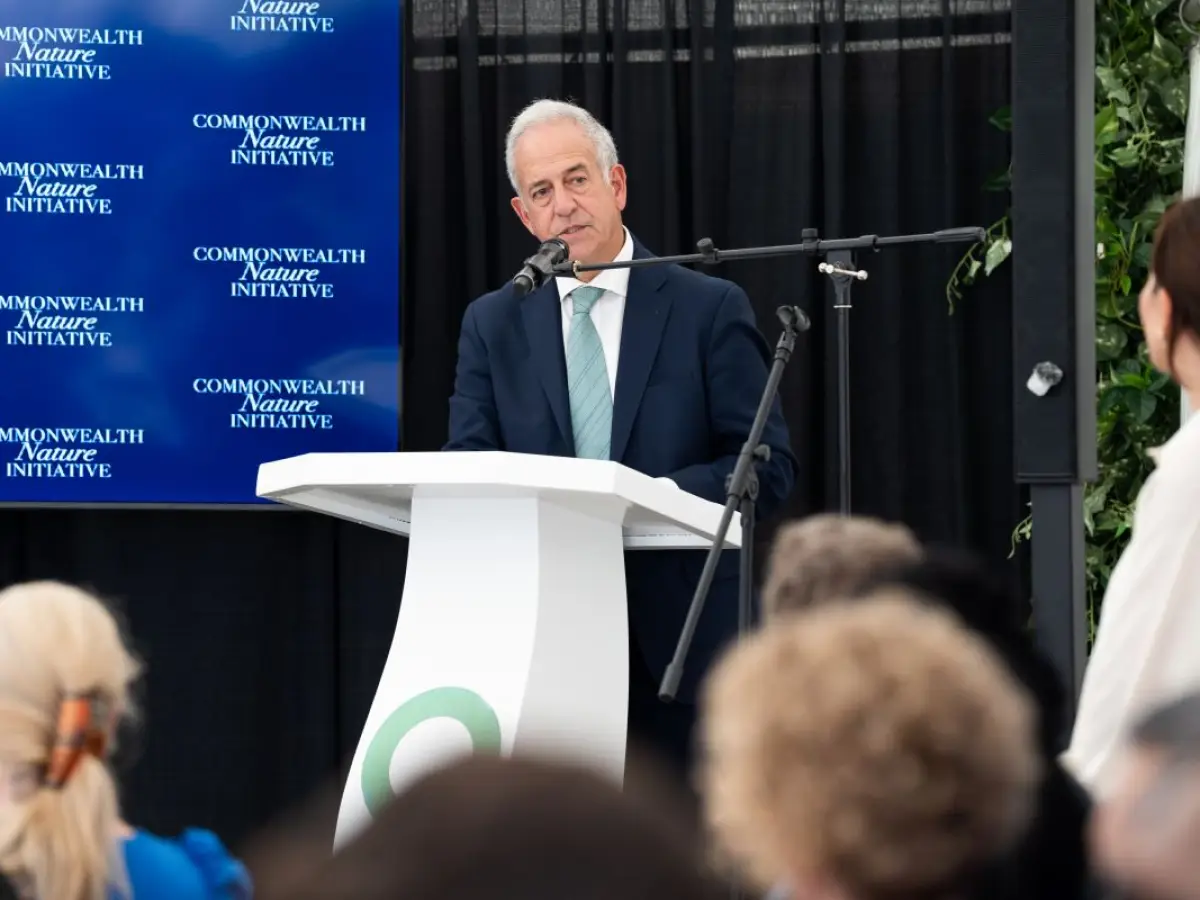
Antalya - On 2 November, at the Commonwealth Heads of Government Meeting in Antigua and Barbuda, the Commonwealth Nature Initiative was launched. It is a platform bringing together governments, foundations and businesses to finance the 30x30 target, the protection of at least 30% of land and sea by 2030, in middle- and low-income Commonwealth countries. It opened with US$202 million in pledges and aims to raise a further US$1 billion by 2030. Among its promoters is Campaign for Nature, the international coalition for 30x30, whose Global Steering Committee is chaired by Russ Feingold.
A Democrat from Wisconsin, Feingold served as a US senator from 1993 to 2011. He is remembered for the McCain-Feingold campaign finance law and for being, in 2001, the only senator to vote against the Patriot Act. He later served as US Special Envoy for the African Great Lakes region. We chatted with Sen. Feingold during COP31, at which Trump’s United States has no official delegation, to discuss what America can do for nature and climate.
The United States signed the Convention on Biological Diversity in 1993 but has never ratified it. Almost every other country in the world is a party. Ratification needs two-thirds of the Senate, not a simple majority. Realistically, will the US ever join, and what would have to happen first?
The US should ratify the CBD, but it doesn’t need to become a party to the CBD in order to reassert itself as one of the world’s leaders on biodiversity conservation. Immediately following COP15, the US set its own 30x30 target and took concrete actions to build support for the 30x30 marine target from countries around the world. Until recently, the US has also been one of the largest international funders for nature. Moving forward, the most important thing that the US could do is to dramatically increase its international funding for nature, recognising that investing in protected and conserved areas in the Global South will not only help curb biodiversity loss, but also support national and global security, drive sustainable development, support food security, and help combat climate change.
Democrats now control both the House and the Senate, but the White House can still veto. From January, what can Congress actually do for nature conservation: budgets, oversight, blocking rollbacks on public lands? And what can’t it do? Which role shall we expect from the private sector regarding funding?
Congress can restore and further increase budgets for nature conservation, both domestically and internationally. Congress should also consider new revenue streams for conservation, including devoting a portion of AI profits to nature conservation, comparable to how offshore oil and gas development and the sale of sporting goods have funded land and water conservation in the US for over 50 years. By controlling Congress, Democrats can also effectively block some of the Administration’s most unpopular and un-American ideas, like selling off millions of acres of public lands.
After the cuts to the National Park Service, is a real relaunch of America’s parks and protected areas possible? Can the US still help the global 30x30 target from outside the Convention, through states, tribes and private land?
The most important way that the US can support 30x30 implementation around the world is by increasing its international finance for protected and conserved areas. There is roughly a $100 billion gap in annual spending for 30x30, with many countries in the Global South ready to protect more of their nature but lacking the resources needed to do so. Even over the next two years, there are ways that the US can further advance nature conservation domestically. States across the country have set their own 30x30 targets and are moving forward with implementation. California serves as a particularly impressive example, as it has increased its funding for nature conservation and acquisition, created incentives for private landowners to conserve their own lands, and empowered Indigenous Peoples by returning ancestral lands to Indigenous stewardship.
At COP31 Washington will not be officially there. What should we expect from Antalya? What role is left for American states, cities and companies?
COP31 represents an opportunity for world leaders to further demonstrate the importance of nature in tackling climate change. Previous climate COPs, starting with COP26 in Glasgow, have emphasised the central roles that forest and ocean conservation play in achieving our global climate goals. This must be embraced and built upon at COP31. If nature can provide over 30% of the solutions to climate change, then nature conservation should receive over 30% of International Climate Finance and should occupy a more prominent position in COP decisions.
Climate, biodiversity and desertification are still negotiated in three separate COPs, with three secretariats and three timetables. Do you see a real chance of merging the three Rio Conventions, or at least holding joint sessions? Would a single COP strengthen nature’s weight in the talks, or dilute it?
At the very least, we need to make sure that the three COPs are better aligned and that the key decisions and outcomes from one are brought into the others. Scientists have found that 30x30 is not only essential for curbing biodiversity loss, but that it is also needed for reaching carbon mitigation and climate resilience goals. World leaders and the UN should bring 30x30 more prominently into the climate negotiations and not expect that action and consideration within the CBD is sufficient.
How to accelerate funding for biodiversity?
Action must begin with governments. Governments have already agreed to ambitious biodiversity funding targets, pledging to increase international and domestic funding for nature. Historically, government spending has represented over 80% of nature finance, and, at least in the near term, we must expect that this will continue to be the case. That means that in order to reach global nature finance targets, governments must increase their nature finance. Unfortunately, many developed governments are cutting their overseas development budgets, including their support for nature. This trend must be stopped and reversed. Over the long-term, there is the opportunity for the private sector to contribute more to nature conservation, but this will only happen at necessary levels if governments create the regulations and incentives for businesses to act. Industries that use natural resources, whether it is the oil and gas and mining companies, AI labs, pharmaceutical companies, or others, should be required to mitigate their impacts by financially supporting nature conservation.
Cover: Russ Feingold