


Throughout history, furniture has represented a category of material consumption. Just consider the contribution of Egyptian culture, which, as early as its first dynasties, was producing furnishings and furniture of the finest quality, adorning stately homes, temples and tombs. These included coffee tables, armchairs and stools, as well as pottery, statues and various decorative items. Not to mention the Roman furnishings of patrician homes, the large upright wardrobes and medieval sideboards, Ottoman chests and diwans, finely decorated Baroque furnishings, and the extremely heavy French Rococo style with its trumeaux. These are objects that today make our lives more comfortable and define us through their style, while cluttering our homes, which are increasingly overflowing with possessions.
Furniture and interior design are sectors typically analysed more for their style than for their actual impact. And this is precisely why Renewable Matter has decided to focus on an industry that today holds significant value and influence, but also has a growing environmental impact: one in which durable, high-quality furniture, the product of great craftsmanship, is increasingly overshadowed by items of mediocre value, dubious aesthetic taste and poor circularity.
The high-quality craftsmanship of Europe’s great furniture manufacturers, who once produced pieces passed down through generations, is increasingly giving way to fast furnishing: furniture designed to last a few years, rather than to accompany a family through the increasingly complex challenges of modern working life, characterised by frequent moves and lifestyles that change every 5–7 years. With the arrival of low-cost brands, you can buy a bed for your university years, then sell it or dump it in landfill; then you spend a few years in a big city, buying something a bit less cheap but not too luxurious, as you know that salaries aren’t great for young people. At 40, you start a family and buy something more durable, provided the marriage holds up and the couple won’t have to move cities or countries to pursue increasingly complex and dynamic careers. And perhaps a second home in the mountains comes along, to escape climate change, with wooden furniture made by the local carpenter (and yes, that stuff at least lasts). Then there’s the home for a well-deserved rest in retirement, with furnishings that stay with us right up to the day when our grandchildren aren’t quite sure what to do with the bed featuring plastic decorations. Socio-economic dynamics change, and with them the way we furnish our homes and experience living.
And so the quality furniture sector adapts to new behaviours and consumption patterns, becoming more sustainable both economically and environmentally: it offers furniture that can be easily dismantled and reassembled, encourages the reuse and refurbishment of old furniture, supports schemes to promote high-quality second-hand goods (see the article on EPR for furniture), decarbonises production processes in the ceramics sector, and recycles mattresses. In short, it is striving to secure its place at the table of the circular economy with ever-greater conviction. It turns out, however, that Europe is not the only one leading the way: ambitious China is, too, with the quality, style and sustainability of products in the furniture supply chain all continuing to improve.
Furniture does not stand still in the face of change. And this issue seeks to capture the tensions and opportunities within this important sector, too often overlooked in discussions on economic transition.
DOWLOAD AND READ ISSUE #65 OF RENEWABLE MATTER: INTERIOR
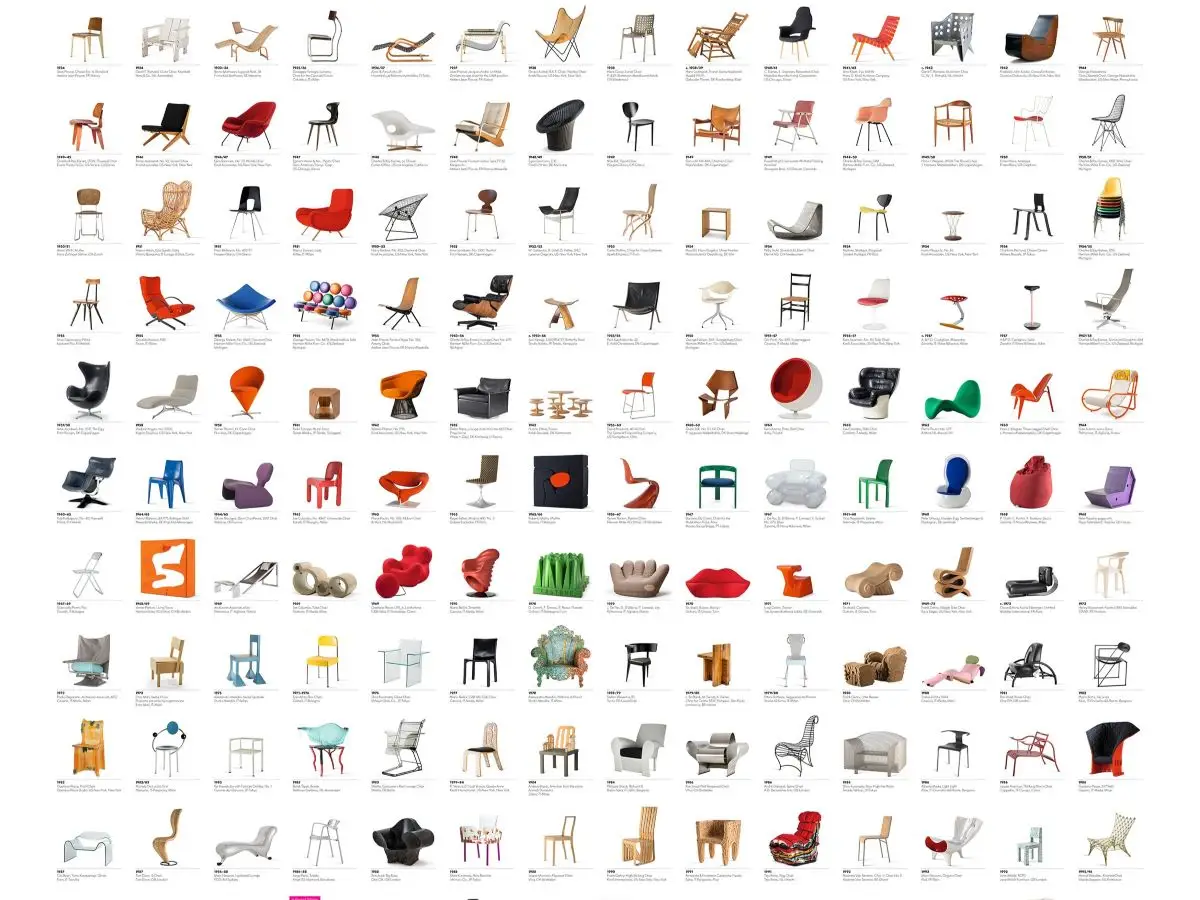
Cover: The Chair Collection Poster © Vitra Design Museum