

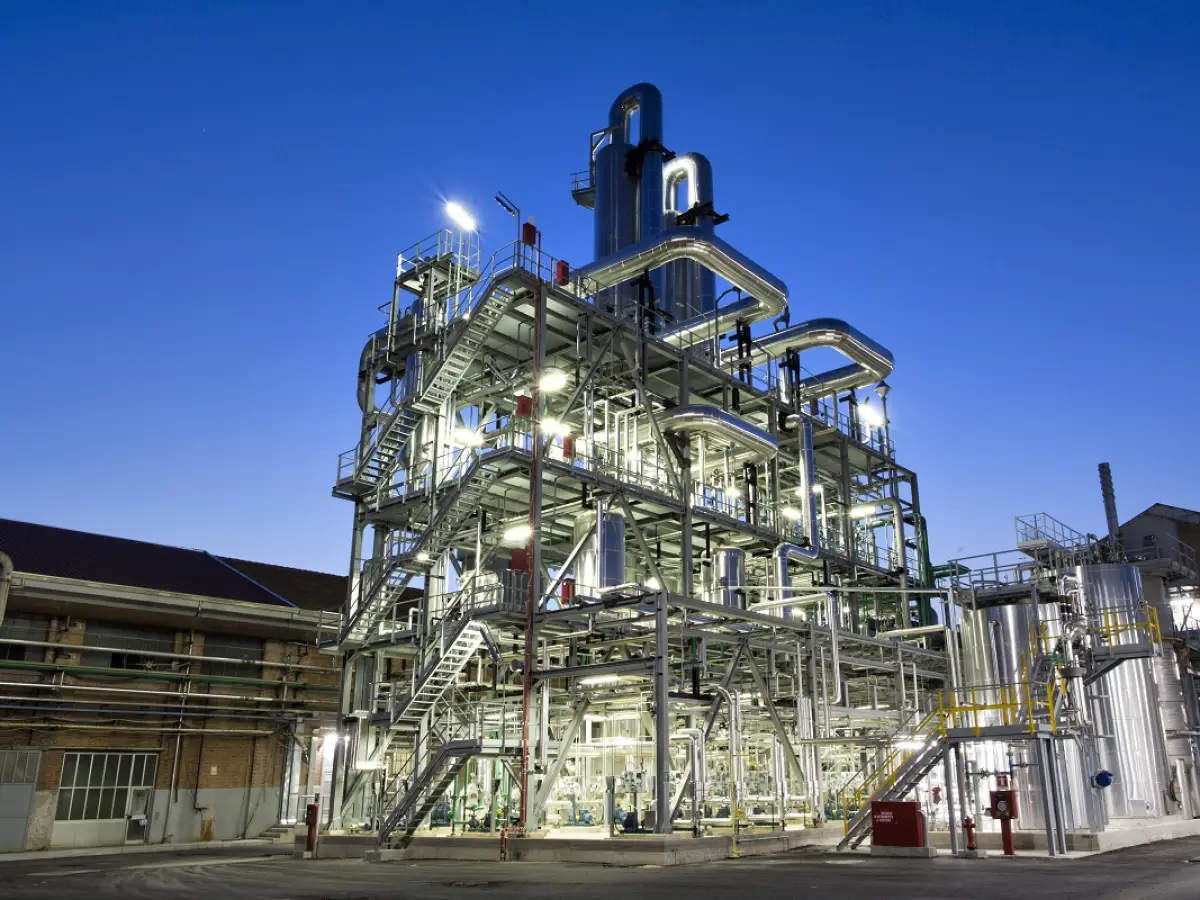
In the heart of Polesine, in Bottrighe, near Adria, a highly innovative plant in the international bioeconomy sector has been built: this is the first industrial site of its kind capable of producing 1,4-butanediol (BDO) directly from sugars through fermentation processes. Typically derived from fossil raw materials, this organic compound is used in a wide range of applications in numerous sectors, including textiles, electronics and automotive.
Thirty years of research and innovation
The Bottrighe plant was inaugurated in 2016 by Novamont, whose roots lie in the Montedison School of Materials Science, where around thirty years ago a group of researchers began developing an ambitious project to combine chemistry, the environment and agriculture.
A certified B Corporation Benefit Company, Novamont is part of Versalis (Eni's chemical company), engaged in specialising its portfolio through chemistry from renewable sources.
Novamont has five production sites, four in Italy and one in Estonia; four research centres; and three technology hubs, covering a wide range of skills and specialisations, with equipment ranging from laboratory scale to innovative pilot plants. It has commercial offices in Germany, France, Spain and the United States, as well as a network of distributors in more than 40 countries.
Over the years, he has brought 13 proprietary technologies to industrial scale, including four firsts in their field for the production of bioplastics and bioproducts derived, in whole or in part, from biomass, by creating synergies between different areas of study (bioplastics, biotechnology, agronomy, organic chemistry, product ecology).
An industrial reconversion project
The production of bio-BDO, which marks a milestone in the history of biomass chemistry, is the result of a combination of the know-how developed over time by Novamont and innovative technology developed by Genomatica, a leading Californian company in biological engineering.
The Bottrighe plant is also the outcome of the industrial conversion project of the former BioItalia site, previously owned by Ajinomoto: the original architecture has been preserved and renovated, in a context of territorial regeneration and enhancement of infrastructure, skills and professional expertise.
“The Bottrighe plant embodies Novamont’s bioeconomy model: integrating chemical processes for the production of biochemicals with industrial biotechnology, paving the way for the production of other chemical intermediates, derived entirely or partially from renewable sources, creating value in a perspective of circularity and greater sustainability,” says Stefano Dessì, plant manager.
A model of energy efficiency
In addition to being a production hub, the plant is an example of more sustainable energy management. The facility is equipped with a cogeneration system capable of simultaneously producing electricity and heat with an overall efficiency of 90%, which has earned it energy efficiency certificates, or white certificates. Electricity not used internally is fed into the national grid, contributing to Italy's energy security.
In addition to cogeneration, the site also features a biodigester, a highly advanced system that uses biomass residues from the production process, including sludge from the water treatment plant, to generate biogas. The biogas is then converted entirely into biomethane and also fed into the grid, further contributing to the overall expansion of renewable energy sources.
Promoting investment
“Integrated biorefineries for biochemistry are crucial infrastructures for the bioeconomy: they require many years of research and technological development, but also significant investments, with very high technological, financial and market risks,” Stefano Dessì emphasises. “To support this dynamic and impactful industry, which also involves farmers and primary producers, it is essential to ensure that there is clear legislation and a robust regulatory framework that promotes investment and encourages innovation, including measures to support demand for bioproducts.”
This content is produced thanks to the support of sponsors
Cover: photo by Novamont