

Antalya – Sun Express flight 133 from Munich to Antalya is packed to the brim: negotiators, activists, journalists, businesspeople and even a few unsuspecting tourists seeking the Mediterranean sun in November. At the border, there are dozens of officials on hand to ensure a swift entry without queues. After all, 100,000 people are expected at COP31 for the two weeks of climate negotiations – a record number. It was supposed to be a transitional COP, in the run-up to the next Global Stocktake, whilst waiting to bring the US back on board and leave the Trumpist spiral (Milei, Meloni, but also Putin and Netanyahu) behind. Instead, like every COP, it is fuelling attention and a sense of urgency to levels that would have been unimaginable just a few years ago. And perhaps it may even hold a few surprises in store.
A COP with two heads
COP31 is a two-pronged negotiation. Turkey is hosting the summit and leading the Action Agenda, a series of voluntary initiatives that are separate from the official negotiations but designed to bring together the commitments and positions that governments, civil society, businesses, investors and regional or local stakeholders intend to implement in order to accelerate climate action. The Australian presidency, on the other hand, chairs the UN negotiations and leads the formal talks. The Turkish presidency, as previously reported in Materia Rinnovabile in an exclusive interview, Murat Kurum wants an “implementation-COP”. Kurum push in particular for the ‘35 by 35’ initiative, aimed at raising the share of electricity in global final energy consumption from 23 per cent to 35 per cent by 2035, and for the Climate Implementation Bridge (BRIDGE), which calls on member states to demonstrate their climate commitments through tangible results in industrial policy, with a strong focus on the circular economy (an issue that has enthused professionals in the circular economy sector). Methane is also high on the agenda, as reducing this greenhouse gas could have immediate mitigation effects. The hope is that Ankara will join the Global Methane Pledge, the international initiative launched by the United States and the European Union at COP26, which has been signed by 159 countries. But the real game-changer would be Russia – the world’s largest emitter of CH₄, joining the pledge.
The Australian presidency, led by the ‘fossil’ Chris Bowen (it should be remembered that Australia has considerable interests linked to coal and oil), has three key issue on the table: the commitment to triple funding for adaptation by 2035; determining how to operationalise the indicators for the Global Adaptation Goal; and the new mechanism for a just transition. These are all matters of the utmost urgency, requiring operational mechanisms that can have a significant impact on mitigating the effects of the climate crisis and making the complex transition to decarbonisation less disruptive. The two presidents’ idea is to have a draft negotiating text ready immediately to present to heads of state and negotiators, to set the bar for the negotiations’ level of ambition straight away. It is better to avoid the Brazilian chaos last year.
Geopolitics and climate
The blue wave in the United States and the re-election of Lula are the two good news with which COP31 gets underway. A delegation from the US Congress is expected at COP as early as the first week, although the names have not yet been announced. Ideally, as in previous years, the American unofficial delegation will showcase decarbonisation projects at state, city and business network levels, whilst waiting for the most troublesome occupant of the White House ever to pack his bags. Meanwhile, Luiz Inácio Lula da Silva will be arriving in Antalya for his victory lap. The Brazilian president recently defeated his right-wing rival Flavio Bolsonaro, thanks in part to his policies to combat deforestation, and to his support of the TFFF (Tropical Forest Forever Facility), one of the world’s most important climate and biodiversity initiatives. At COP31, Lula will present a comprehensive roadmap for member states on the transition away from fossil fuels, supported by a 182-page document that addresses the opportunities and risks involved in gradually phasing out fossil fuels from a nation’s energy mix. To gauge which countries are ready to turn the commitment into action, the key will be to see which develop national roadmaps for transitioning away from fossil fuels: a voluntary process, rather than a formal UN requirement. As for Europe, France, Germany and the Netherlands have already submitted theirs. The UK has a plan, but only in name; Turkey has published its energy plan featuring a large proportion of renewables (though there is still room for coal). Italy? Nothing has been received as yet.
Those who will stand in the way of any resolution on fossil fuels are the Gulf petro-states, Russia, Venezuela and Egypt, whilst global civil society will put pressure on the two presidencies to set a new target for the phase-out of coal. With an agenda that is already very full, countries will also have to begin discussing a possible post-2030 framework that could bring together the three UN Conventions on climate, biodiversity and desertification (i.e. water), particularly in view of the imminent arrival of a new Secretary-General and a comprehensive reform of the United Nations expected as early as 2027, as well as the conclusion of the 2030 Agenda. COP31 will be Antonio Guterres’s final COP, but he is not going down without a last fight, doing everything in his power to mobilise the participating nations to take action.
Finally, the issue of ‘government-led’ science must be kept under review: will countries manage to negotiate a resolution calling for the next IPCC report to be published in time for the 2028 Global Stocktake in China?
Money, money and more money
It has been since COP15 that climate finance has been stirring up passion and interest. For African countries, it has always been a conditio sine qua non. For the most vulnerable countries, such as the Nepal, the focus is on resources for Loss & Damage – the fund for losses and damage caused by climate-related disasters. According to a report by the Brazilian presidency (led by the highly active André Aranha Corrêa do Lago), the target of mobilising 1,300 billion per year by 2035 is achievable, but only with rapid reforms across almost all sectors of finance. According to Gaia Larsen, Director of Climate Finance Access at the World Resources Institute: “Multilateral development banks must take on greater risks; we need to tap into more innovative sources of international finance; and developed countries must increase, rather than reduce, their public funding, particularly for the poorest and most vulnerable countries. Together with stricter policies and market rules, these reforms can help unlock hundreds of billions in private investment in renewable energy, resilient infrastructure and other climate solutions”. Then there is the immense challenge of tripling funding for adaptation, as agreed for 2035. We can expect a few pledges, formal commitments, but nothing new or truly significant. The announcement we’d all like to see – but which won’t happen? China announcing its intention to remove from the list from developing countries and be integrated into industrialised ones.
The queues of delegates waiting to collect their badges are long, and the list of events and side events in the blue zone (official UN area) and the green zone (open to the public) is endless. It looks set to be a long and complex round of negotiations. We at Materia will be there for the full two weeks with our team to bring you updates on what’s happening inside COP31.
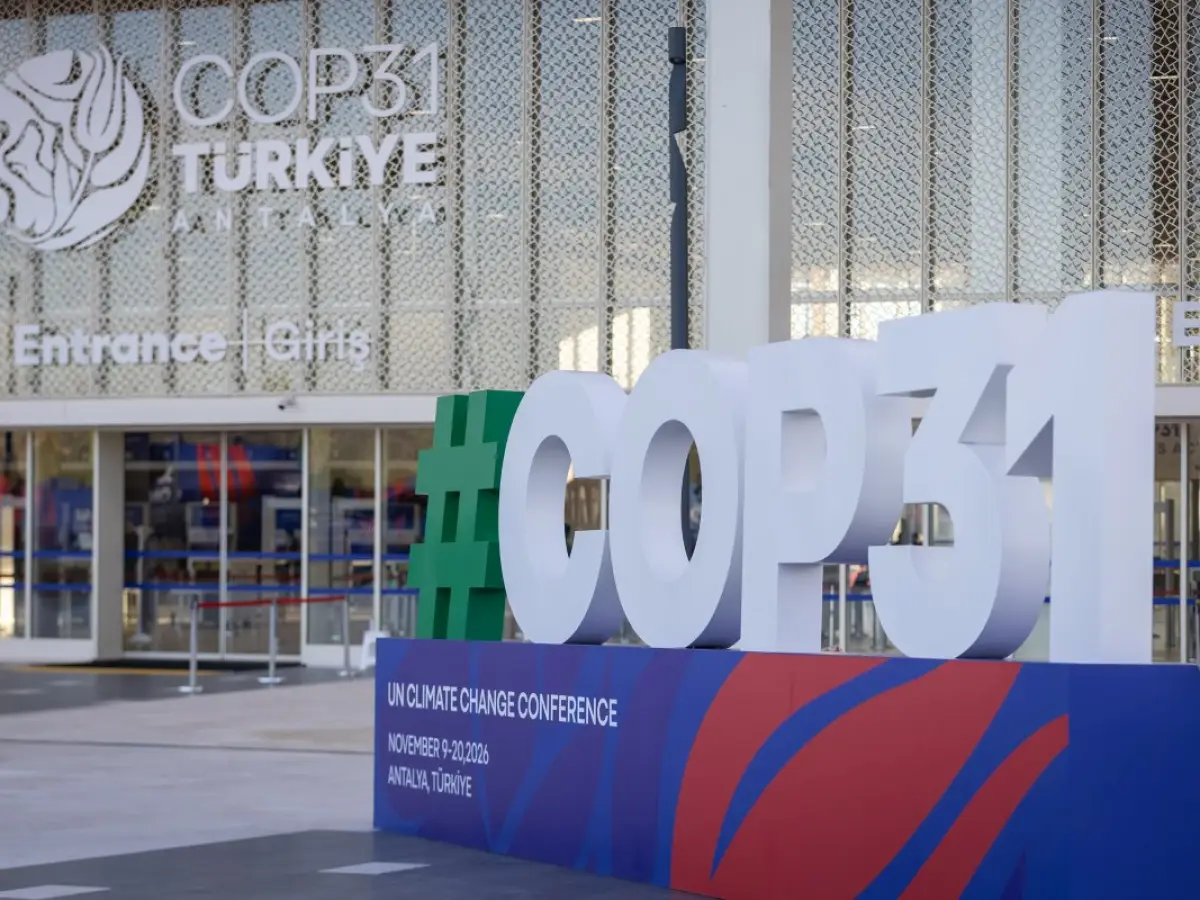
Cover image: COP31, Antalya (ph UNclimatechange, via flickr)