


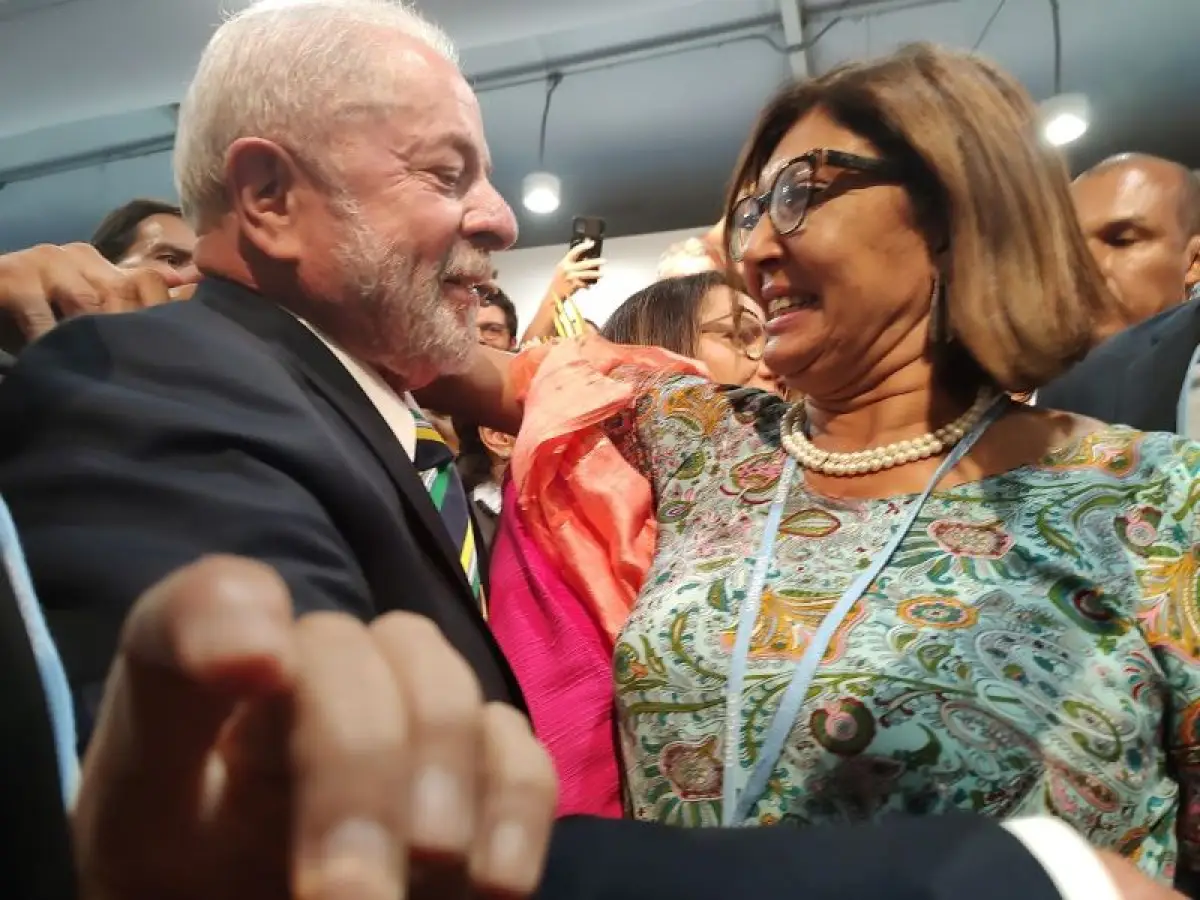

Lula has been elected president of Brazil for the fourth time. At the end of a gruelling election campaign marred by irregularities, yesterday, Sunday 25 October, he beat his right-wing opponent Flavio Bolsonaro, backed − among others − by Donald Trump, by a margin of two percentage points. Bolsonaro has called for the result to be annulled because polling stations were kept open for an extra two hours (at the request of committees from both sides) due to logistical issues relating to transport in certain key states. Rarely has an election been more important for the balance of power in South America: Lula’s victory halts the populist wave that has swept across the continent in recent years.
His first victory came in 2002 after three failed attempts, while his first two terms benefited from the commodities boom, which helped fund the programmes that lifted tens of millions of families out of poverty. GDP growth was also strong during his last term. Looking ahead to his new term, the president has promised “investment in the digital, green and creative economies”, partly to reduce dependence on the United States and China.
But how is the environment faring in this South American country after four years of Lula? And what has become of the Tropical Forest Forever Facility, the fund that was supposed to save the Amazon? Let’s take a look. It should be noted that the Amazon is not just the world’s green lung: it is also a strategic resource for Brazil, a country that accepts no lectures on the matter.
Over the years, the country has undergone extensive deindustrialisation and tends, like many resource-rich nations, to rely on an extractive economy. Furthermore, agribusiness plays a key role in exports, and the associated lobby wields enormous influence: for these stakeholders, the forest is first and foremost an opportunity for development and business. No government can completely renounce this, not even the administration led by Lula. This position has been made clear at international conferences such as the COPs: beyond the superficial proclamations, without funding from the international community, deforestation will continue.
Brazil does not wish to be penalised by its geography, having to shoulder the burden alone of a forest that is the world’s green lung; needless to say, other countries are reluctant to loosen their purse strings, especially when it comes to regular donations. Consequently, efforts are being made to establish a revenue stream that would make such transfers automatic. But it is best to start with the figures.
The environment after four years of Lula
The figures speak for themselves: deforestation has fallen under Lula. The socialist president has significantly reduced the felling of trees in the country's green lung. The figures released by the NGO Observatório do Clima – a network of 172 organisations including NGOs, research institutes and social movements – show a figure of 3,335 km², the lowest since satellite observations began in 1988: a 41.81% slowdown compared with the 2025 figures (5,731 km²) and a 71.2% reduction over the last four years.
In the Cerrado ecoregion, a vast tropical savannah and the area where chainsaws have advanced most rapidly, the deforested area has reached its lowest level since records began, at 5,516 km², representing a 23.76% reduction from last year and a 48.4% reduction over the last four years. The Cerrado was largely undeveloped until the mid-1970s, when agricultural activities driven by new techniques, arson and other human activities significantly increased pressure on the ecosystem.
“Reducing deforestation is possible,” the NGO writes. Lula’s administration took office after four years of openly denialist policies under Jair Bolsonaro, “which led to the greatest deforestation during a single presidential term in living memory”. In total, during Lula’s third term, the Amazon lost 24,648 km² of forest, 46% less than the total lost under Bolsonaro (45,586 km²).
But “political will”, concludes Observatório do Clima, “is essential”. This refers to the commitment of the former Minister for the Environment and Climate Change, Marina Silva, to combating environmental crime, as well as to the work of IBAMA (the Federal Environmental Agency), which includes satellite monitoring.
The Amazon Fund and the Tropical Forest Forever Facility
Monitoring is not a simple matter. The Amazon is as big as a continent, and setting up and maintaining a monitoring system takes equipment and personnel. For years the Amazon Fund (Fundo Amazônia) has worked to raise resources to prevent, monitor and curb deforestation, while promoting conservation and favouring the legal and sustainable use of the Amazon.
However, the brightest hope comes from the Tropical Forests Forever Facility (TFFF), established at COP30 in Belém. The 2025 climate conference took place in the state of Pará, amid a lush vegetation that gave many delegates a firsthand sense of what a tropical forest is like, lending momentum to the negotiations. It is then no surprise that the fund was launched during this conference, backed by billions of dollars in pledges. The official website describes it is as the kind of initiative that comes along “once in a generation”.
The principle is simple: investing the money raised in a way that generates a steady stream of income to protect the world’s forests, including the Amazon. “The TFFF can turn conservation into an asset class that investors can invest in and that can deliver a range of benefits to climate, nature and the economy,” said Abid Karmali, managing director of the Global Environmental Group at Bank of America. “Dialogue with financial institutions has given us valuable insights into how to mobilize capital from the broadest possible range of institutional investors.” So, let’s take a look at how it works.
How the global fund to save tropical forests (and the Amazon) works
The mechanism is complex and has two arms: the Tropical Forest Investment Fund (TFIF) and the Tropical Forest Forever Facility (TFFF). The first is the financial arm, with the goal of raising $125 billion to create a fund capable of generating steady returns over time. It will have a mixed capital structure. The plan is to raise 20% of the total capital ($25 billion in sponsor investments) from governments, foundations, and philanthropic sources, and the remaining 80% ($100 billion in senior debt) through the bond market, by issuing bonds purchased by sovereign wealth funds and institutional investors.
Let’s take a closer look to the $25 billion expected from sponsor investments. The money is intended to come from donors who support the cause of tropical forests. Private philanthropy – such as Bill Gates deciding to open his purse strings – would be welcome. However, governments are also expected to make donations. Several have already made pledges, and these will help get the fund off the ground. Moreover, governments are also expected to provide long-term loans, preferably at concessional rates. This is important because these funds will eventually have to be repaid. We’ll see how.
As for the remaining $100 billion, the fund plans to raise it by issuing bonds issued to be placed on the global markets, particularly to investors such as pension funds, insurance companies, and sovereign wealth funds. The bonds will offer buyers a fixed return. Why would they be attractive? On the one hand, they provide portfolio diversification, on the other, they allow investors to claim that they are helping finance the protection of the planet. In other words, they offer a marketing opportunity by making portfolios look green. The idea is to leverage the market and, to some extent, the appeal of greenwashing among financial players. The approach is broadly similar to the one behind the carbon market.
The cost of borrowing for the sponsor investment portion is intended to reflect the interest rates on U.S. Treasury debt across different maturities. For the senior debt portion, instead, rates will reflect those prevailing for high-rated bonds at the time of issuance.
It is a fund, so it carries risks
Let’s get to the point: how does the TFIF expect to generate returns and, ultimately, profits? By investing in sustainable projects around the world, including green bonds and blue bonds. Fossil fuels are, of course, excluded. The fund’s earnings will come from the difference between the interest it pays on loans and issued bonds and the returns its managers achieve, after deducting operating costs. The money will go to countries with tropical forests that have applied to participate in the mechanism and can demonstrate, through independent verification, that they have protected their forests.
Once fully operational, the fund is expected to generate around 7.6% of annual returns, equivalent to approximately $9.5 billion. This is no small sum. Some 4.9% would go toward paying interest to investors, while the remaining 2.6% would be the key figure available for distribution to countries actively protecting their forests.
Investing is not easy: why expect this to work? Because the mechanism was designed with the help of expert financial advisers. However, it remains exposed to market fluctuations, and the documents explicitly state that the priority is repaying investors, as it should be. If profits decline, payments to countries that meet their conservation commitments will also fall.
The other arm, the Tropical Forest Forever Facility, will manage and distribute the funds. Countries that engage in deforestation will face penalties: between $400 and $800 will be deducted from their payments for every newly deforested hectare, and $140 for every newly degraded hectare.
How much money there is now
Figures – compiled by the NGO Plant for the Planet and updated through June 2026 – show $6.8 billion in pledges coming from Norway ($3 billion), Germany ($1.15 billion), Brazil ($1 billion), Indonesia ($1 billion), France ($577 million), and the United Kingdom ($540 million), plus a contribution from the Minderoo Foundation. Luxembourg, where the TFFF will be headquartered, has pledged $50 million a year through 2030 and it intends to continue contributing afterwards. So far, 67 countries have reportedly expressed support, along with around 20 sovereign wealth funds. The main beneficiaries will be Brazil, Colombia, the Democratic Republic of Congo, Ghana, Indonesia, and Malaysia.
The fund is not yet operational. An official document describes 2026 as “a transition year to move from political momentum towards a durable institutional architecture” for the facility that will manage the capital. As for the fund itself, the same document says sponsor countries are moving “from pledges to budget commitments,” while the transition committee that is currently overseeing the mechanism is “stress-testing the model” to verify its soundness and “refine” it. In Luxembourg, the necessary legal steps to establish the headquarters are underway. Once these are completed, a bank account will be opened. Meanwhile, as for the facility, countries that have applied to receive funding are preparing systems to monitor deforestation and plans for how they intend to use the money.
If everything worked as planned, Brazil would receive $864 million at the 2024 deforestation rate, rising to $1.3 billion if deforestation were to stop. The Democratic Republic of the Congo would receive $228 million and $460 million; Indonesia would receive $333 million and $447 million. China could also become a beneficiary in the future.
The goal is to make conservation more profitable than logging. In other words, the economy is being harnessed to serve environmental interests. This approach addresses the lack of pragmatism that undermined many initiatives. The figures are certainly modest for a country like Brazil. And for President Lula, the Amazon is first and foremost a matter of national interest. Will the Tropical Forest Forever Fund succeed? It is too early to say. But why not give it a try?
The capital will come from private investors, governments, and philanthropic sources, and will be reinvested in a high-yield portfolio. At least 20% of the funds will go to local communities and Indigenous peoples. Some of the returns will be transferred to countries with tropical forests, based on forest area and conservation results, with penalties for failing to protect them and satellite monitoring to verify compliance. The current target is $125 billion: $100 billion from private investors and $25 billion from sovereign investors and philanthropy. The money will be invested in government bonds and bonds issued by large private companies, while the financial management will be handled by highly rated multilateral development banks, which have yet to be selected.
Cover: Luiz Inácio Lula Da Silva, Carneiro Images, Agenzia IPA