



At the end of November 2025, as the COP30 UN climate negotiations closed in Belém, the most notable absentee was the delegation of the United States – about to formally withdraw from the Paris Agreement the following January. The conference’s final text arrived once again with no binding reference to the gradual elimination of fossil fuels for the second year in a row: a clear snapshot of a broader transformation.
The scaling back of U.S. commitment regarding 66 multilateral instruments dedicated to climate, sustainable development and international cooperation is reshaping the balance of the global ecological transition. This is not simply a financial matter, but a deeper political shift: when a major power reduces its participation in shared mechanisms, the entire system loses predictability, coordination and the capacity for collective action.
The vacuum left by the United States
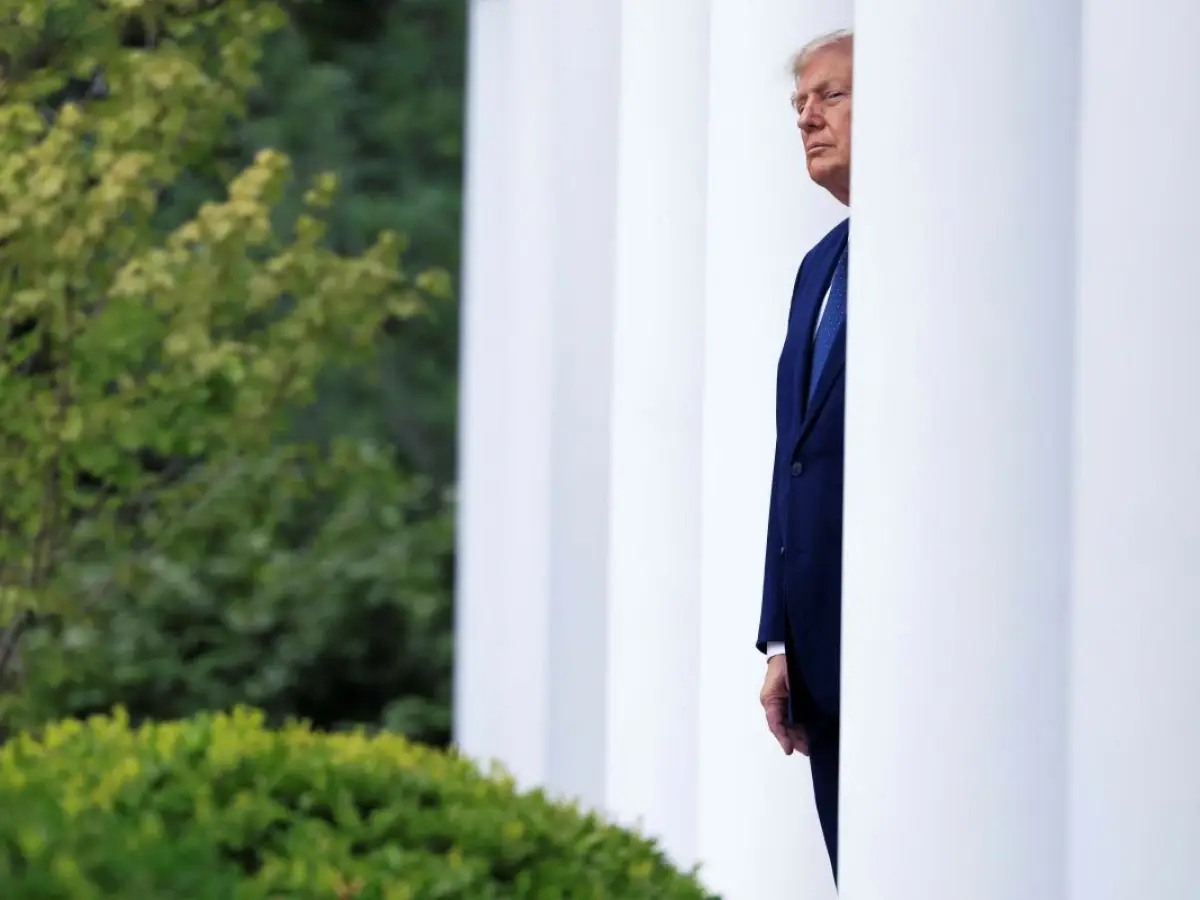
The path of such withdrawal begins on January 20, 2025, the very day of Donald Trump’s second inauguration at the White House, during which the United States left the Paris Agreement for the second time in eight years. Then, in March 2025, Washington pulls out of the Loss and Damage Fund (designed to provide economic assistance to developing countries suffering from the adverse effects of extreme climate change) and cancels the financial commitments made through the Just Energy Transition Partnership with South Africa, Indonesia and Vietnam, bound to receive more than a billion dollars each. Later, in early January 2026, the U.S. administration announced its withdrawal from the United Nations Framework Convention on Climate Change (UNFCCC) and from the Intergovernmental Panel on Climate Change (IPCC), whose funding relied on US voluntary donations, consisting of around 30% of all funding, along with other international organisations including the International Renewable Energy Agency (IRENA).
The United States’ progressive disengagement from these international instruments signals a rupture from its traditional leading role in the Western multilateral order. Washington increasingly appears to favour selective agreements, bilateral logic and immediate national interests, reducing the centrality of structured cooperation on climate and development.
China and transition diplomacy
The vacuum left by the United States is not staying empty. On the contrary, it is being progressively filled by other global actors - China is one of the most important among them. Beijing is intensifying its economic and diplomatic ties with Africa, Asia and Europe as well, expanding its presence into sectors linked to energy transition, infrastructure, green technologies and strategic supply chains. The numbers highlight the scale of this phenomenon: in 2024 China invested over $625 billion in green energy, almost a third of the total global investment which amounts to $2.03 trillion, and clean technologies account for a third of China’s GDP growth in 2025.
As for its global approach, the Chinese model differs from the traditional Western one. It does not rest on the promotion of abstract multilateral rules, but on investment, bilateral relations, infrastructure, industrial supply chains and long-term economic partnerships. While pursuing its own strategic interests, China increasingly presents itself as a stable partner, able to offer continuity precisely as other actors appear to be withdrawing.
This dynamic needs a non-ideological reading. Beijing’s international projection is, in fact, not exclusively green: in 2025, the Belt and Road Initiative (BRI) energy investments and contracts were mainly directed toward projects involving fossil fuels — over $71 billion in oil and gas contracts, instead of merely $18 billion for renewable energy generation. Likewise, on the climate finance front aimed at aiding developing countries, China’s contribution remains modest compared to its domestic investment: around $24.5 billion combined since 2016. China is not simply replacing the United States, nor does it automatically represent an alternative model beyond criticism. Nevertheless, its growing international projection is helping redefine the balance of global sustainability. At a time when America appears increasingly inward-looking, Beijing is strengthening its presence where the transition infrastructure is under construction.
The European Union as a regulatory power
The European Union, too, faces a growing responsibility. Unlike China, Europe exerts its influence mainly through rules and norms. One of the most concrete cases is the Carbon Border Adjustment Mechanism (CBAM), introducing a carbon pricing mechanism on products imported from non-EU countries, which came into force on January 1, 2026.
This example shows that anyone claiming access to the European market has to face increasingly strict environmental standards: this is a form of leadership that, in this case, rests not on industrial financial capacity but on the sheer size of the market itself, capable of shaping behaviour in a global way. In this sense, Europe can become a point of leverage point between American fragmentation and Chinese industrial strategy.
The risk, however, is that sustainability might become a battleground for competition among major powers — one that, in this case, would end up hollowing out the very regulatory leadership around which Europe has built its international role. On the other hand, if European rules are not reconceived with cooperation, technology transfer and adequate financial tools in mind, they could turn into barriers that the most fragile countries might struggle to overcome.
A more fragmented governance
The new geography of sustainability is thus not linear. The United States retains a decisive role in innovation, research and private finance, but its political orientation appears less stable. China is strengthening its influence through investment and economic diplomacy, despite the ambiguities already noted. The European Union is trying to lead through standards and regulation.
What emerges is a multipolar climate governance, more complex and less predictable. The main question is not only who will finance the transition, but also who will be able to coordinate it. Without a shared framework, sustainability risks turning into a set of competing strategies, each tied to the geopolitical interests of individual actors.
Beyond the American withdrawal
The real matter is not the replacement of the American leadership with Chinese or European leadership, but the building of an international governance capable of surviving even when a major power shifts its political orientation. The ecological transition cannot depend on the electoral swings of a single country, nor on occasional agreements lacking a systemic vision.
The U.S. withdrawal thus opens a delicate phase. It can produce fragmentation, competition and uncertainty. But it can also push the world to imagine a sustainability governance less dependent on a single centre of power and more grounded in shared responsibility.
In this scenario, China and Europe will play a growing role. But the real test will be whether sustainability becomes a new arena of geopolitical rivalry, or the ground where a more mature, stable and genuinely global system of international cooperation.
Cover: photo by SIPA US/IPA Agency