



This article is part of the thematic channel The Carbon Observer: subscribe to the newsletter
Within the framework of the new EU Regulation on Carbon Removals and Carbon Farming (CRCF), the Commission and the Carbon Removal Expert Group are defining the rules for certifying carbon stored in timber construction products. Nevertheless, the tightening of life-cycle reporting requirements, as envisaged in the latest draft from May, has been perceived by many industry operators as an additional bureaucratic burden. Habitech, a Trentino-based technology cluster and benefit corporation, instead sees it as an opportunity to begin structuring the supply chain around Environmental Product Declarations (EPDs), ahead of changes to the regulatory framework which, according to current indications, will lead to the adoption of a dedicated calculation methodology for structural timber structures in the second half of 2026.
“When calculating the net benefit in terms of CO2 captured, the use of average database values will be strongly discouraged (if not outright prohibited): specific EPDs for individual timber construction products, able to fully describe the product’s life cycle, will be required (or will instead be prioritised),” Vittorio Vezzali, technical coordinator and head of decarbonisation at Habitech, explains to Renewable Matter. “This point is especially relevant for timber constructions that store CO₂, where the future generation of credits will increasingly depend on accurate and verifiable data on the materials actually installed, thus reducing the scope for generic estimates. This means looking closely at the actual processes of companies, their suppliers and material flows, going beyond the logic of flat-rate approximations which have so far allowed certain phases to be estimated using standard coefficients.”
The lifecycle is extending: logistics and installation to be included in the calculation
Another new feature involves extending the reporting to life cycle stages A4 and A5. “Phase A4 covers the transport of the product from the factory to the construction site, while phase A5 concerns assembly and installation operations,” continues Vezzali. This shifts the scope of the analysis from the individual timber product to the building as a whole, including logistics, site organisation and installation methods.
While this may initially appear to add complexity, this approach can increase the competitive edge of the timber supply chain. It requires greater detail and more structured expertise in data collection but also introduces a more realistic approach compared to methods based on average values, which favour the choice of bio-based materials and an increase in the credits generated. “The European approach is moving towards a more precise and representative quantification of actual processes,” emphasises Mauro Carlino, ARCA certification manager at Habitech, a condition deemed essential for the future credibility of carbon credits.
EPDs as infrastructure for the credit market
In this context, Habitech has chosen to use EPDs as the first step in its work with companies (or in its support for companies). “It is not merely a compliance tool but an industrial analysis process. It allows us to analyse production processes, suppliers and material flows in a structured way, identifying the stages with the highest emissions,” continues Vezzali.
In addition to their technical value, EPDs are playing an increasingly important competitive role. “A third-party verified environmental declaration allows the product to position itself with a higher level of transparency, supported by recognised LCA indicators,” explains Vezzali. For wood, this means making both the carbon footprint and the capacity for biogenic carbon storage visible. In the future, this information infrastructure will form the basis for accessing carbon credits.
“EPDs are set to be a basic requirement for their generation, to be integrated with supply chain certifications and additional requirements,” adds Carlino. “Habitech has already launched an operational support programme for businesses, including updating product families and structuring data flows. In a European context where carbon credits will be increasingly linked to data quality, anticipating this shift becomes a key competitive factor for the entire supply chain.”
Additional advantages for competitiveness
The benefits of EPDs, however, extend beyond the prospect of future credits. In the short term, environmental declarations offer practical advantages in voluntary certification schemes and sustainability protocols. “We’re talking about international schemes such as LEED, BREEAM and WELL, but also national certifications,” notes Carlino, “as well as the increasingly central role of minimum environmental criteria (CAM, criteri ambientali minimi), where EPDs and LCAs are becoming key requirements.” In addition to regulatory pressure, the role of demand is also growing: investors and developers are assuming an increasingly active role.
“The developer could become a key player in generating credits: the focus is gradually shifting from the production chain alone to this level,” concludes Carlino. “The objective becomes twofold: reducing the impact of materials and selecting solutions capable of generating carbon credits. In this context, EPDs become a central element of portfolio strategies. It is no longer just a matter of selecting the material with the lowest environmental impact but one that also allows for the generation of credits for reporting purposes or for a faster return on investment.”
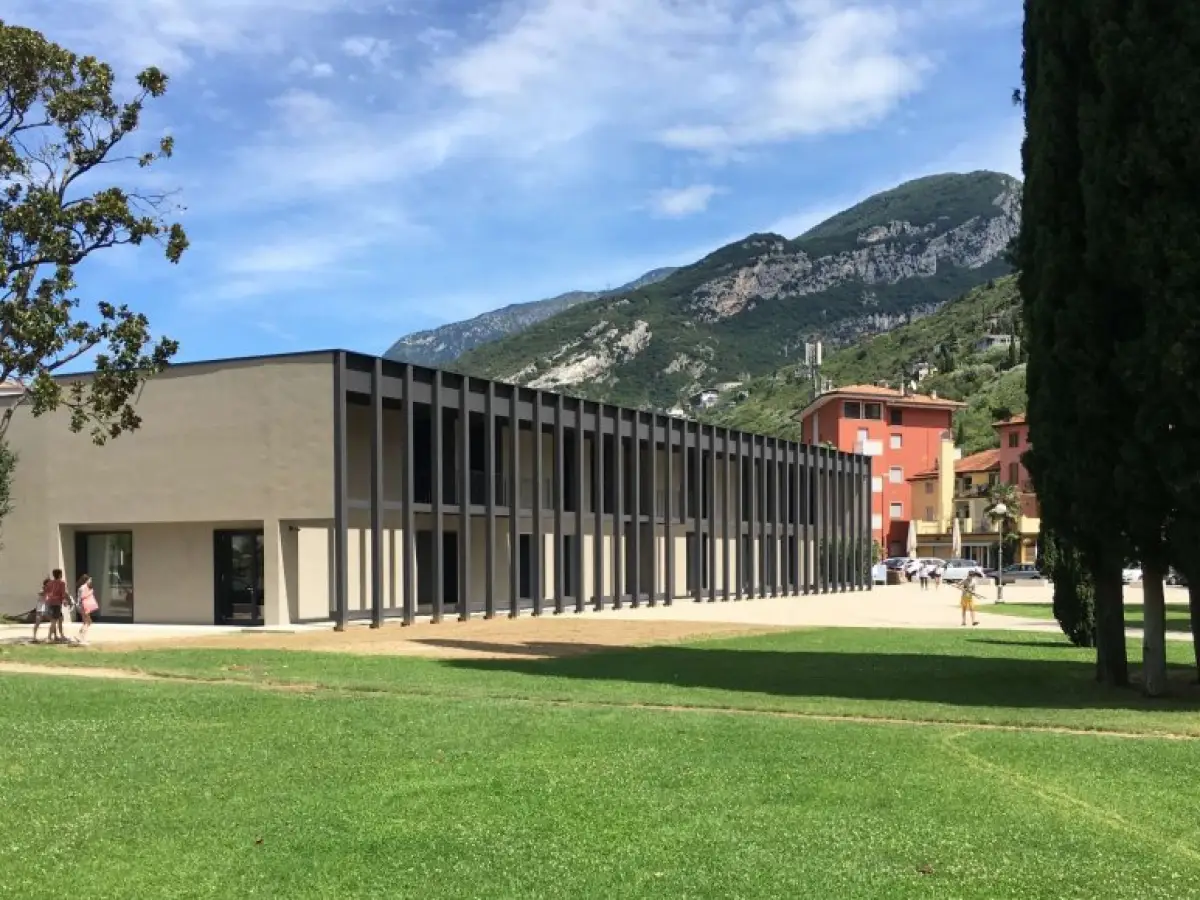
Cover: Nago-Torbole Town Hall, photo by Habitech