



On Friday 17 July, the European Commission presented its proposal to revise the Emissions Trading System (ETS), the EU’s carbon market, which since 2005 has helped halve emissions from the bloc’s most polluting sectors, including electricity and heat generation, heavy industry, shipping and aviation.
The long-awaited overhaul of the European carbon market faces the difficult task of bringing the ETS into line with the target, approved by the European Parliament last year, of cutting the EU’s overall emissions by 90% by 2040, while also addressing concerns, voiced by a number of right-wing governments, that the system undermines the competitiveness of European industry.
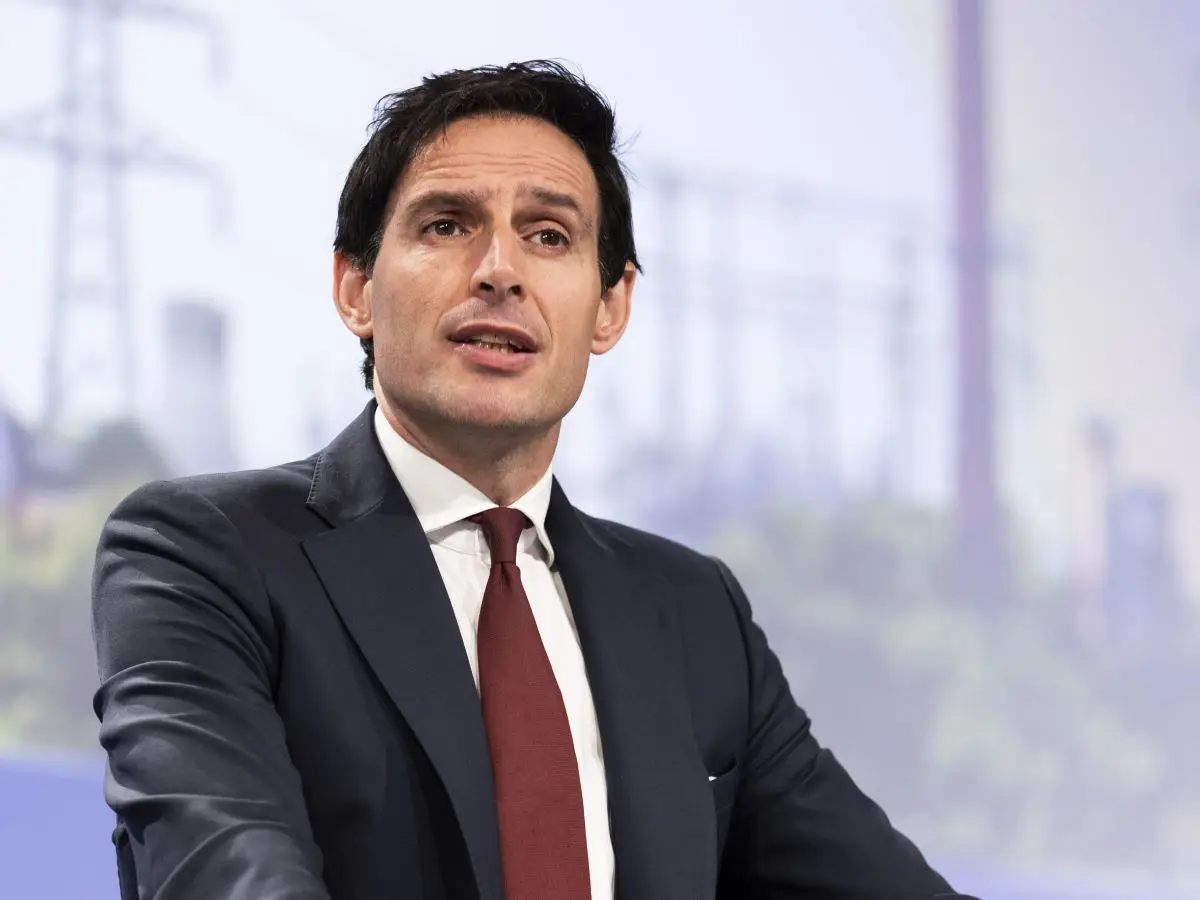
Speaking at the press conference, EU Climate Commissioner Wopke Hoekstra described the reform as more “business-friendly”, while insisting that Europe has not abandoned its climate ambitions. The result is a proposal that weakens the ETS without undermining it, despite strong pressure from several governments – led by Italy – which had called for the system to be suspended.
“The Commission’s proposal for reforming the ETS is a positive one because it strikes a balance between the effectiveness of the instrument and addressing the needs of industries that are hardest to decarbonise,” said Davide Panzeri, Head of Italy-Europe Policy at ECCO, the Italian climate think tank.
More free allowances, but with revenues tied to specific conditions
The proposal meets industry demands by granting an additional 6 billion euros in free allowances until 2030, provided companies submit and implement credible decarbonisation plans. Eighty per cent of the allowances will be released in annual instalments once corporate strategies have been approved, with the remainder linked to completed investments.
“We welcome the decision to strengthen measures supporting investment in industrial decarbonisation,” said Gilberto Pichetto, Italy’s Minister for the Environment and Energy Security. “However, crucial issues remain to be addressed during the negotiations, starting with the system for allocating free allowances.”
According to Emanuele Orsini, President of Confindustria, industry is concerned that only a very limited share of free allowances will be made available, and only on condition that companies invest in decarbonisation, while the proposal contains no measures to curb CO₂ price volatility or financial speculation. “We will continue this battle in a constructive spirit and with even greater determination,” he said.
For companies at risk of relocation and therefore covered by the Carbon Border Adjustment Mechanism (CBAM), the reduction in free allowances will be slower, with their phase-out postponed until 2038. Since 2021, more than 2.6 billion allowances have been allocated free of charge, with a total value of 170 billion euros that could have been used to accelerate decarbonisation.
Another issue that Brussels wants to address is the allocation of revenues. The approximately 270 billion euros collected by governments through the ETS have not all been invested in decarbonisation – quite the opposite. Hoekstra refers to a meagre 10%. Take Italy, for example: of the 18 billion euros collected through ETS auctions between 2013 and 2024, only 1.6 billion euros (9% of the total) were allocated to clearly traceable climate measures.
Perhaps the most debated and controversial aspect concerns the “linear reduction factor”, the fixed annual percentage by which the overall emissions cap is reduced. Officials opted for less ambitious targets: a reduction from the current 4.4% to 3.7% for the four-year period 2031–2035. From 2036 onwards, the rate would fall to just 1.7% per year. In practice, this means that after 2030 the ETS emissions cap will shrink more slowly than previously planned, extending the decarbonisation pathway over a longer period and allowing higher residual emissions.
“The proposal on the linear reduction factor will introduce a further 67% of CO₂ into the carbon budget, extending the maximum limit until 2048,” commented Lidia Tamellini, an expert at Carbon Market Watch, speaking to Renewable Matter. “This represents an increase of 2 GtCO₂e compared with the current trend up to 2048. In addition to the flexibility provided by removals and international credits, this inflates supply and significantly reduces the incentive for rapid decarbonisation. Too much ‘emissions space’ and too many flexibilities: overall, the proposal weakens the ETS system.”
Making way for carbon removal within waste-to-energy plants
The reform of the European carbon market includes the possibility of incorporating up to 2% of international carbon offsets, compensation instruments already approved under the European Climate Law. It also makes room for carbon removals – carbon removal technologies which, with the introduction of 250 million allowances, will provide industries with a new mitigation lever.
Private and commercial flights on routes shorter than 5,000 kilometres will also be included. For the maritime sector, meanwhile, the scope of the ETS will be extended to several types of vessels with a gross tonnage below 5,000. Further incentives are also planned for sustainable fuels, clean propulsion technologies and hydrogen.
Despite opposition and strong pressure from industry, Brussels is also proposing to include the energy recovery of municipal waste within the ETS system. The approach will be gradual and will include exemptions for waste co-incineration plants located in outermost regions. A month ago, Andrea Ramonda, CEO of the utility company Hera Ambiente, which operates nine waste-to-energy plants in Italy, described the measure in an interview with Renewable Matter as “nonsense” that discourages the construction of facilities in southern Italy. Estimates from Utilitalia, the federation representing Italian water, environmental and energy companies, suggest that the measure could increase costs by up to 350 million euros a year. For the reform to become law, it will now have to be negotiated and approved by the European Parliament and the Member States, a process that will take several months.
Cover: Wopke Hoekstra photographed da Lukasz Kobus © European Union 2026