


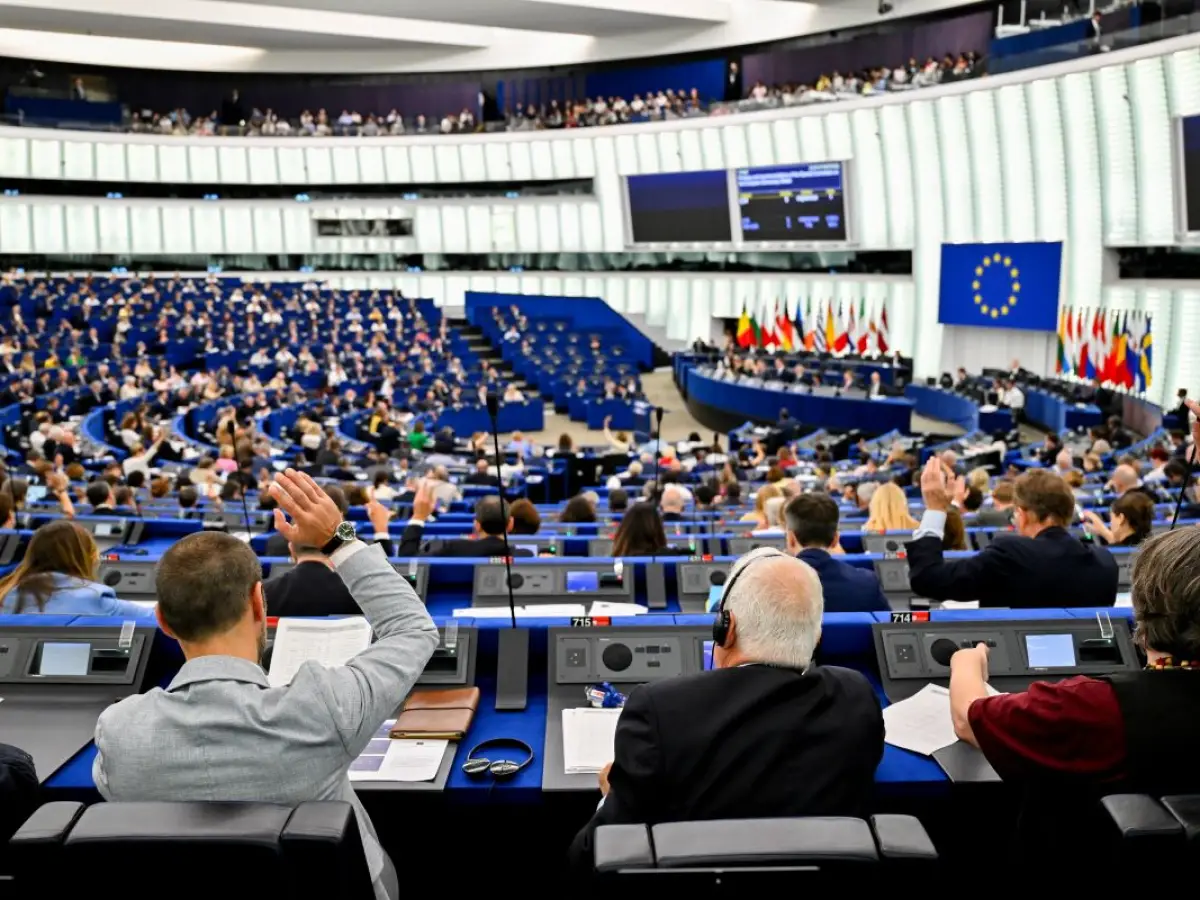

Yesterday, 15 September, the European Parliament voted on the revision of the Carbon Border Adjustment Mechanism (CBAM), the EU system that taxes the emissions contained in certain goods imported from non-EU countries. Among the most controversial elements of the text was Article 27a, an “emergency clause” suggested by the Commission last winter to allow for a temporary suspension of the CBAM on certain products should exceptional circumstances arise that could cause serious distortions in the European market.
However, the European Parliament chose not to retain the clause. The amendment striking out Article 27a was adopted with 464 votes in favour, 50 against and 159 abstentions. The result reflects a widespread concern that the clause could become a loophole for granting subsidies to highly polluting products from abroad (such as non-EU chemical fertilisers), thereby reducing the incentive for businesses to decarbonise and penalising those who have already invested in low-emission solutions. MEPs who voted against or abstained, on the other hand, consider the flexibility provided by Article 27a necessary to prevent the CBAM from causing cost increases when markets are subject to severe shocks.
How the vote on the CBAM revision will change things
The CBAM was introduced by the European Union in 2023. After an initial two-year transitional phase (2023–2025), it came into force on 1 January 2026. For the time being, it covers cement, iron and steel, aluminium, fertilisers, electricity and hydrogen, but the recently adopted revision broadens its scope and proposes to include numerous downstream products as well, including fasteners, wires, springs and certain household items. The rationale behind this is that limiting the scope to raw materials leaves out precisely those goods through which carbon leakage can occur – that is, the risk that a European company might relocate production to countries with less stringent emissions rules.
The most sensitive issue remains Article 27a. The European Commission had proposed it as part of the CBAM revision approved in December 2025, while the European fertiliser market was already under pressure due to geopolitical tensions that had made imports from certain producing regions more vulnerable. The clause would have allowed the Commission to temporarily remove certain products from the relevant list until the circumstances that had caused the price rise had ceased, with the additional possibility of applying the measure retrospectively.
The alternative solution to the suspension of the clause put forward by Parliament, on the other hand, is based on the idea that part of the revenue from the CBAM could be used in times of crisis to support affected businesses, protecting both the economy and the environment at the same time. “This compromise makes the CBAM stronger, fairer and more resilient,” CBAM rapporteur Mohammed Chahim (S&D, NL) said. “We have closed important loopholes, strengthened enforcement against circumvention, and expanded the mechanism’s scope where it matters most. It is a balanced package that protects European industry as it decarbonises while safeguarding the environmental integrity of the mechanism.” The financial support provided under the Temporary Decarbonisation Fund (TDF) could be made available to businesses importing goods subject to the CBAM as early as 2027, and these could also include ammonium nitrate, ammonium sulphate and urea.
Parties abstaining or opposing, and reactions in Italy and Europe
The supporters of the “emergency brake” find their political base within the European People’s Party (EPP) group, historically sensitive to the issues raised by the agricultural sector, and within the European Conservatives and Reformists (ECR), traditionally sceptical of the Green Deal. In recent months, strong pressure has been exerted by Italy and France, whose governments are responding to the strong demands of the agri-food sector and the manufacturing industry. Yesterday, however, the groups led by the Socialists (S&D) – represented by rapporteur Mohammed Chahim – the Greens, the liberals of Renew Europe and a faction of the EPP opposed to watering down the measure voted unanimously to eliminate the CBAM exemption and prevent it from becoming a loophole for polluting non-EU products.
“Today’s vote is a missed opportunity, particularly for the agricultural sector, which remains exposed to the cost of fertilisers,” stated in a joint statement, as reported by ANSA, Nicola Procaccini, co-chair of the ECR Group; Carlo Fidanza, head of the FdI delegation to the European Parliament; and Stefano Cavedagna, the ECR Group’s rapporteur on the CBAM regulation. “The removal from the final text of the safeguard clause proposed by the European Commission to protect farmers and strategic sectors of the European economy led us to abstain from the final vote.”
Coldiretti was quick to react, describing the vote as “a slap in the face to farmers that will have a direct impact on families’ grocery bills at a time of great volatility in energy costs due to the international situation”.
Paolo Fantoni, president of Assopannelli within FederlegnoArredo, also criticised the vote because it “deprives the system of an important flexibility tool for intervening in exceptional circumstances”. For the association, the issue concerns the impact that the cost of the CBAM may have on the panel supply chain. Urea, in fact – one of the main nitrogen fertilisers and among the products covered by the European mechanism – is also used as a raw material in the production of resins and adhesives for wood-based panels. FederlegnoArredo believes that the additional cost imposed by the CBAM on urea imports therefore risks being passed on throughout the timber-and-furniture supply chain, increasing the production costs of panels.
A different view, however, is expressed by Fertilizers Europe, which considers Article 27a to be a source of uncertainty for investment. According to the association, the possibility of suspending the CBAM for certain products, including non-EU fertilisers, and above all of doing so with retroactive effect, would risk weakening the economic signal intended to drive the industry towards decarbonisation. While excluding fertilisers from the EU’s carbon border adjustment mechanism would reduce costs for many European farmers, it could deal a severe blow to European fertiliser producers – whom the measure was intended to support – by preventing them from being undercut by cheaper imports from countries with lax climate regulations.
The Parliament’s vote, however, does not settle the matter. The European Parliament has set out its position and is now ready to begin negotiations with Member States on the final form of the legislation. The main point of contention will be the emergency clause: the Parliament has removed it, while the Council has retained it in its position. Italy and France, which have already requested its use to suspend the CBAM on fertilisers, therefore advocate retaining this provision in the final text.
Cover: The European Parliament during a vote on 15 September 2026, photo by Philippe Stirnweiss © European Union 2026 – Source: EP