



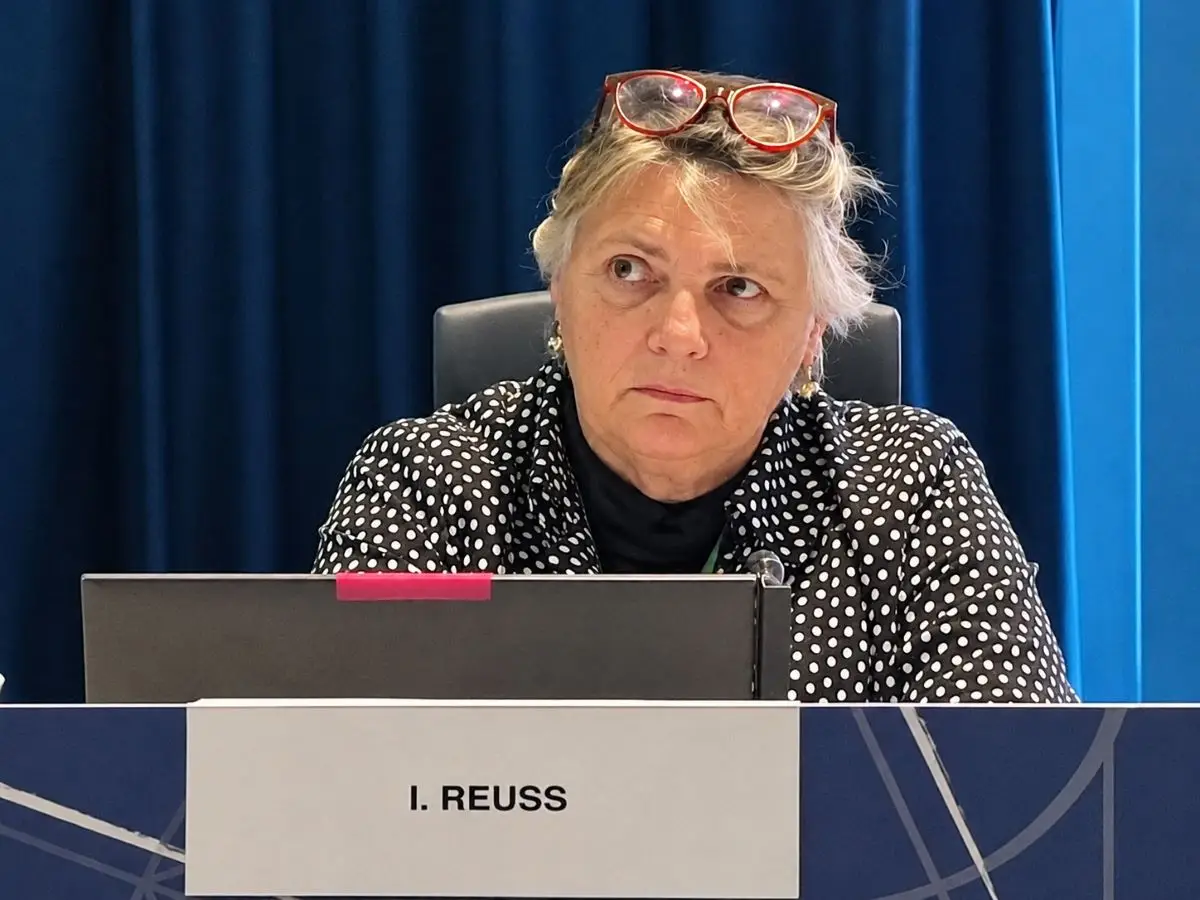

From risk assessment to the development of financial tools capable of supporting long-term initiatives, biodiversity raises challenges that call for greater integration between finance, public policy and knowledge of ecosystems. We discussed this with Isabel Reuss, Senior Climate and Social Advisor at the Forum for Sustainable Finance, a non-profit organisation founded in 2001 to promote awareness and practice of sustainable and responsible investment in Italy.
As the Forum for Sustainable Finance, in 2024 you published the paper Sustainable Finance and Biodiversity: A Guide for Practitioners. It was at the height of the European regulatory cycle, which subsequently gave way to a phase of simplification. Does this pose a risk to biodiversity finance, or is the market now mature enough to continue even without stringent requirements?
Not everything that is happening should be viewed in a negative light. Regulatory simplification, which must be distinguished from a reversal of regulation, can also have positive aspects, particularly when it helps reduce the costs and burdens associated with data collection and analysis. I also welcome the changes introduced in the SFDR, with the creation of a transition category, as biodiversity must also be understood through this lens: it is useful to recognise that there are not only activities already fully sustainable and those that are not, but also pathways for improvement. The reduction in the information required from companies, for example within the framework of European sustainability reporting standards, is a different matter altogether. If the number of indicators and the number of companies required to report are reduced, important information risks being lost.
Are companies backing away from sustainability reporting now that they are no longer obliged to do so?
Not necessarily. In my experience, companies that already started working on these issues will continue to do so, even if they have to report less data. Other companies are, however, becoming more aware of the risks associated with the natural environment, as the effects of floods, droughts and heatwaves are becoming increasingly evident.
Simplifying, therefore, does not mean taking a step backwards.
No. Simplification does not mean abandoning obligations: awareness amongst operators is growing, but this does not mean that everyone is ready to act independently just yet. Draghi himself spoke of simplification, not deregulation. It is important, however, that simplification does not become a pretext to stop considering risks and impacts. In this regard, another positive aspect I see at this stage (I am referring to the Nature Restoration Law) concerns the opportunity to analyse not only measures that improve the situation, but also those that worsen it. I am thinking, for example, of subsidies and incentives that may have negative effects on biodiversity: if we focus exclusively on how to improve things, without considering what is simultaneously continuing to cause damage, we are unlikely to achieve results.
How have financial operators been operating in recent years?
I see considerable activity in both the insurance and banking sectors, albeit in different ways. The insurance sector is probably where the changes are most visible. Operators are realising that a significant proportion of the damage caused by catastrophic events is not covered by insurance and that, if this situation continues, certain risks could become difficult to insure. Initiatives are therefore being developed at the national and European level to encourage collaboration and data sharing. Tools such as parametric insurance are also being trialled. This is a sign that the sector is seeking solutions to risks it can no longer regard as marginal.
What about the banking sector?
For banks, this shift involves a growing focus on businesses’ dependence on nature and the consequences this may have on financial performance, as shown by a number of major global analyses. This is an important step, as it highlights the link between nature and financial risk. If a business is heavily dependent on a natural resource, the deterioration of that resource can jeopardise its operations and, consequently, its ability to repay a loan. Biodiversity is thus beginning to feature in risk management: it is not merely a question of financing projects that have a positive impact on nature, but also understanding how dependence on ecosystems and the impacts that businesses have on them can influence the risk profile.
Is the volume of investment sufficient to meet requirements?
In this regard, the situation remains concerning. Among the recent figures released by UNEP, one struck me in particular: in 2023, approximately $7.3 trillion was invested in activities harmful to biodiversity, compared with around $220 billion allocated to support biodiversity. Estimates may vary, but the contradiction remains: we continue to allocate vast resources to activities that harm nature, while investments to protect and restore it remain insufficient. This is why I believe the financial gap is still very wide. It is not enough simply to increase positive investments: we must also tackle the financial flows that fuel degradation. This is an aspect that public policies should take into account.
Biodiversity is more difficult to measure than climate, because there is no single indicator comparable to a tonne of CO₂ equivalent. What metrics can financial operators use today?
First of all, a distinction between dependencies and impacts must be made. On one hand, we need to understand the extent to which a business depends on biodiversity and the services provided by ecosystems; on the other, we need to assess the effects its activities have on nature. In any case, I do not believe we will find a single metric applicable to every situation. Those working on biodiversity often tend to look for very specific indicators, suited to describing each individual project. However, when a financial operator has to assess an entire portfolio, they cannot analyse every activity in the same level of detail. We must find ways to aggregate the information and construct summary indicators, or proxies, to enable an initial assessment to be made.
The European project BIO-CAPITAL, in which the Forum for Sustainable Finance is also involved, combines three worlds that do not usually interact: conservation, finance and space technologies. What specific benefits can tools such as geospatial analysis and satellite technologies offer investors?
Satellite data can be very useful, first and foremost, as it enables the collection of large amounts of information about areas and the changes that occur over time. It can help to establish an initial situation, a baseline, against which to assess the effects of an intervention. It can also help to identify certain signs of improvement, but it is important to combine it with other information. In a forest, for example, the first signs of change may relate to the presence of mosses or fungi, even before any significant changes in tree growth become visible. It is important, however, to be aware of the limitations of these tools. A satellite can detect the presence of vegetation, but it is not always able to distinguish a natural forest from a monoculture plantation. From above, both may appear green, but from a biodiversity perspective, they are very different situations. For this reason, satellite data cannot replace all other forms of verification: they must be supplemented with observations and information gathered on the ground.
BIO-CAPITAL also explores the various financing mechanisms for biodiversity, ranging from payments for ecosystem services to biodiversity credits, and from the various forms of blended finance to debt-for-nature swaps. Which of these tools do you consider most promising?
The real challenge is to understand which combinations can lead to economically and financially sustainable solutions. The fundamental problem is that biodiversity can be funded, but often does not generate direct revenue. Such initiatives yield significant benefits, but in many cases these are collective: they do not necessarily translate into a cash flow for investors. It is a crucial difference compared to other investments, as private investors must still assess the balance between return, liquidity and risk. For this reason, I believe that many conservation and restoration projects will need to combine public and private resources, each serving different yet complementary roles.
There is the matter of available resources.
If we want to implement territory-wide projects, as required by restoration strategies, significant funding is needed. But many European countries must contend with the constraints of public debt. We must understand how to allocate funding between the public and private sectors, and which tools can be used to mobilise capital without passing on all the costs to the state budget. Public-private partnerships strike me as an important approach, precisely because they allow us to combine different resources and areas of expertise. However, it is not enough to combine public and private capital: we need to develop models that take into account the risks, the timeframe for implementation and the nature of the benefits generated.
Small scale of projects, lack of cash flow, regulatory uncertainty: what is the main obstacle to the widespread adoption of these instruments?
I think one of the main problems is aggregation. Many projects are small and, taken individually, do not reach the scale required to access the financial market. Large investors, including funds, require tools with a certain level of liquidity. We therefore need to find a way to pool several initiatives together in order to create transactions large enough to be attractive to the market. The question is who can fulfil this role. Development banks, foundations, insurance companies, commercial banks and trade associations could all be involved. The aggregator must also assume a share of the credit risk, and this is precisely one of the aspects that makes it more difficult to identify entities willing to do so. Foundations, particularly regional ones, could play an active role. In general, we need entities capable of bringing together different projects, structuring them and making them bankable. Valid initiatives from an environmental perspective are not enough on their own: they must also be capable of being transformed into transactions suited to market conditions.
There is also the issue of timing.
Ecosystems have long regeneration cycles: it can take decades to bring about significant changes to the conditions of a forest. Many investors, however, are looking for faster results. There are financial tools that can help manage long time horizons, but not all investors are prepared to wait that long. This is another reason why the combination of public and private resources is important. Private capital can help to finance initiatives, while the public sector can support collective benefits and make long-term commitments that would be difficult to expect from a single investor. Finally, I believe we should do more to consider how we assign value to biodiversity.
In what way?
The benefits to society are clear, but they are not always adequately reflected in economic terms. If an activity damages an ecosystem, the costs may be passed on to the wider community without appearing directly in the company’s accounts. On the other hand, benefits resulting from nature conservation may not translate into revenue for those who generate them. This problem is reminiscent of other socially useful activities that do not generate a direct cash flow, such as domestic and care work, for example, which creates significant value but is not always recognised in traditional economic measures. Something similar happens with biodiversity: the fact that a benefit does not have a market price does not mean that it has no value.
If you had to summarise, what priorities would you highlight?
I would pick three. Connecting existing tools more effectively, bringing projects together, and continuing to work on economic and financial models. We need interoperable systems capable of linking taxonomy, reporting, geospatial data and public policy. And we must learn to consider not only investments that deliver benefits for nature but also the activities and incentives that continue to cause its degradation. Lastly, change must be observed over time. Banks, insurance companies, pension funds and foundations do not change their policies overnight. But if, year after year, awareness grows and biodiversity is increasingly integrated into assessments, we can recognise a trend, even when the results are not yet fully visible.
Cover: Isabel Reuss