


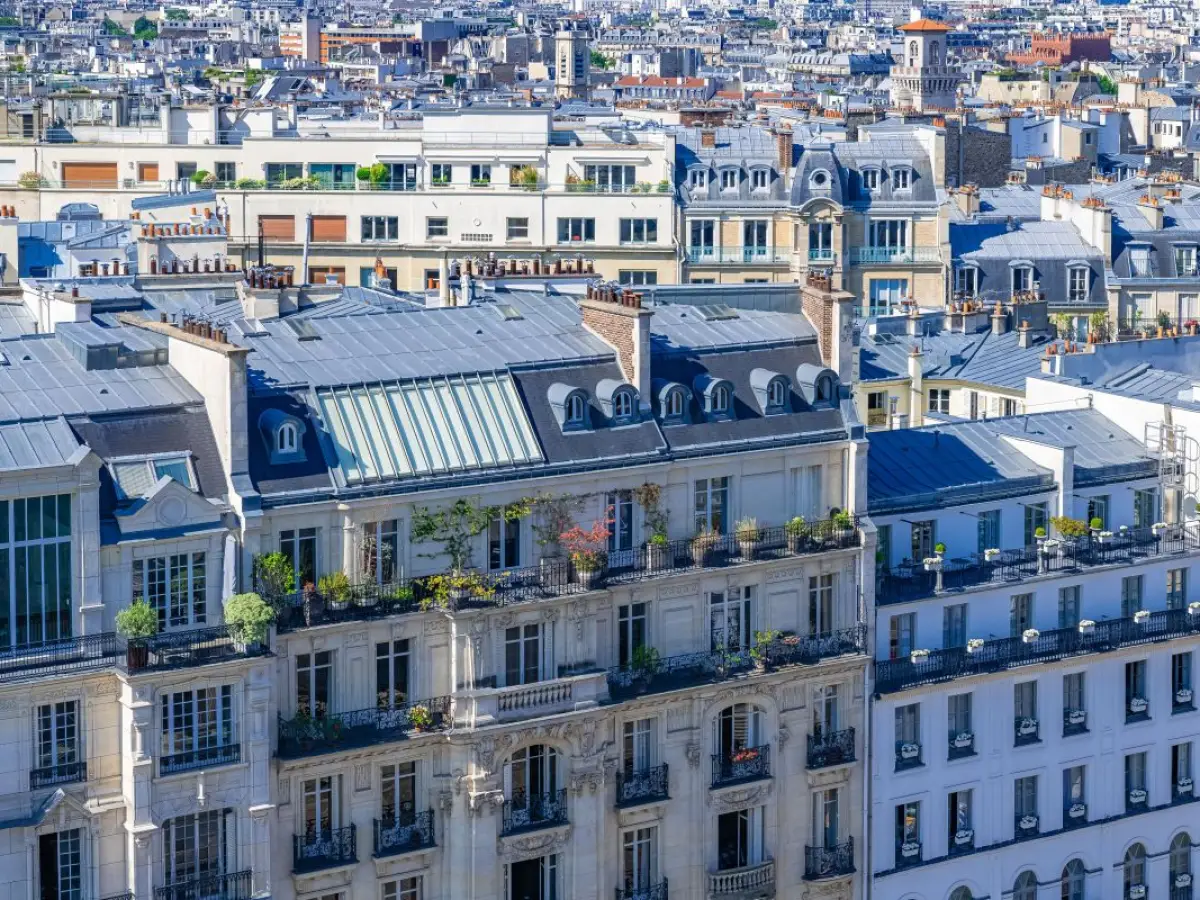

For decades, preserving heat to protect people from the cold has been the priority for much of the European construction industry. Today, however, architecture faces a different challenge, one increasingly difficult to ignore: keeping homes liveable, preferably with solutions that do not contribute to the climate crisis, when outdoor temperatures remain exceptionally high for days or weeks on end.
The summer of 2026 highlighted the extent to which the problem of prolonged heatwaves has now spread beyond the Mediterranean region. In Finland, temperatures exceeded 30°C for twenty-two consecutive days for the first time. In the United Kingdom, a new national record was set on 26 June, with 38°C recorded in Lingwood, Norfolk. July 2026 was the hottest month ever recorded in France, 3.8°C above the 1991–2020 average. The hot French summer will probably be remembered for the viral social media posts showing customers squabbling over the last fan left in the shop, and the surge in popularity of thermal blankets placed over windows to block the sun’s rays from entering homes.
The reason European buildings are ill-equipped to withstand heatwaves
Rather than a question of temperature spikes, the prolonged duration of extreme heat is what is really putting people and cities under pressure, with the now-familiar urban heat islands and buildings designed for climatic conditions different from those we face today.
In Paris, for example, apartment buildings with traditional zinc roofs can turn into full-blown greenhouses: temperatures exceeding 40°C have been recorded on the top floors of some historic buildings. Most residential buildings do not have air conditioning, and although its use is on the rise, it remains relatively low compared with other European countries: according to the French Environment and Energy Management Agency (ADEME), in 2025 only 24% of French homes had an air-conditioning system, up from 18% in 2023.
In older buildings, particularly in historical areas, carrying out such work can also be more complex. In Paris, the installation of air-conditioning units and shutters that alter the external appearance of a building is subject to town planning regulations – restrictions that can make it more difficult to adapt the existing building stock quickly.
According to Julien Hans, Director of Research and Innovation at the French Scientific and Technical Centre for Building (CSTB), “Around 50% of French buildings are not adapted to heatwaves”. He explains to Renewable Matter that simulations have been carried out on the entire national building stock using the National Building Database to determine an indicator of overheating in homes.
To gauge the impact of heatwaves, degree-hours values were used, a parameter that captures both the duration and intensity of thermal discomfort (DH). Experiencing a temperature just one degree higher for ten hours is equivalent, in terms of cumulative thermal stress, to a peak of ten degrees above the threshold for a duration of just one hour. A value of 2,000 degree-hours, well above the limit of 1,250 established by the French RE 2020 regulation – which introduced, in addition to energy consumption reduction targets, requirements relating to summer comfort, the reduction of a building’s carbon footprint throughout its life cycle, and resilience to heatwaves − is equivalent to living for around 27 days in a domestic environment with perceived temperatures constantly between 30 and 32°C.
“The results show that, compared with the mandatory standards for new buildings introduced in 2022 by the RE 2020 environmental regulations, around 50% of buildings exceed the threshold of 1,250 degree-hours of thermal discomfort,” he adds.
Nevertheless, this is a problem that affects not only France’s building stock but also much of Europe’s. In Scandinavia, the lack of light during the colder months has historically encouraged the widespread use of huge south-facing windows to capture every ray of sunshine. In the UK, Victorian brick houses lack modern insulation and external sunshades, while newly built homes are designed to be hermetically sealed to prevent the loss of winter heat.
“Homes in the UK were historically designed to retain heat and are not well prepared for warmer weather,” explains Anna Mavrogianni, professor of Sustainable, Healthy and Equitable Built Environment at the University College London (UCL), to Renewable Matter. “Modelling studies indicate that around 90% of existing homes will overheat in a 2°C global warming scenario, if nothing is done to make them cooler. All homes will face overheating in a 4°C scenario.”
Energy-efficient homes, but not necessarily cooler
For years, energy retrofitting has been associated primarily with reducing heating consumption. The European Directive on the Energy Performance of Buildings (EPBD), known in Italy as the Green Homes Directive, entered into force in 2024, aims to progressively reduce energy consumption and emissions from Europe’s building stock through the retrofitting of existing buildings and stricter standards for new constructions.
The transition to more efficient buildings, however, will also need to consider their ability to adapt to increasingly hot summers, as insulating a home and making it more airtight may reduce energy demand in winter but prove inadequate for coping with heatwaves. As Hans points out, “Clearly we can’t afford to design building with no consideration of summer overheating anymore. Whether mandatory or not.”
Air conditioning should be deployed alongside other solutions. “First of all, if you can reduce the heat island effect around the building, you should do it (i.e., by the introduction of trees, choice of colour of the pavement, and so on),” Hans states. “Secondly, protecting your facade from the direct sun exposition. Then when your facade is exposed, covering the windows form direct sunlight is crucial. Not doing it would be equivalent to a heater on each window.”
“Insulating your roof to protect the dwelling on the last floor from this significant heat source, renovating your facade by designing and choosing the correct material to protect from the sun (also adding shutters or sun protection, insulation, opaque walls). Finally, adding fans, and train the occupants to know how to operate the dwellings (closing the shutters and windows during day, night ventilation when possible). If you perform all these actions, you can maintain satisfactory living conditions without the systematic use of air conditioning in the majority of cases. And finally of course the use of AC is solving the sanitary and comfort subject,” concludes the expert.
Anna Mavrogianni highlights the concept as well: “We should continue prioritising passive cooling measures and good architectural design. This includes: reflecting or blocking solar radiation before entering the building through high reflectivity external surfaces, green infrastructure and shading (external shading being more efficient than internal), delaying peak indoor temperatures by using thermally heavyweight materials that absorb heat, combined with purging heat using intelligent ventilation, reducing unnecessary internal heat gains, and using personal measures to improve thermal sensation, such as fans. These measures could be combined with low carbon active cooling systems, such as reversible heat pumps, where necessary.”
Therefore, air conditioning cannot be regarded as the only strategy for coping with the heat. It cools indoor spaces by transferring heat to the outside and requires energy precisely when temperatures are at their highest and the electricity grid is under the greatest strain.
“Active cooling may be necessary in some cases, such as in vulnerable settings, but needs to be smart and efficient. A rapid increase in air conditioning might have negative impacts on carbon emissions, grid resilience, outdoor thermal comfort due to waste heat at the street level, and summer fuel poverty due to operational costs,” the professor states.
In short, the most resilient home is not necessarily the one with the best air conditioning, but the one that needs the least air conditioning.
From the house to the city
A house forms part of an urban system in which other buildings, roads, public green spaces and infrastructure all help determine the microclimate. An energy-efficient building situated on a fully tarmac-surfaced road, devoid of trees and shade, will remain exposed to the effects of the urban heat island. Cities are increasingly introducing climate refuges, libraries and other cool public spaces, such as fountains and shaded areas, but their distribution remains very uneven. The issue is also a social one: the risk of overheating tends to be greater among the most economically vulnerable sections of the population, who often live in denser urban areas with less access to green spaces and cooling systems.
“Heat disproportionately affects those with the least capacity to adapt, recover or avoid harm,” Mavrogianni adds. “This includes older people, low-income households and people with chronic conditions. More than 2,700 people are thought to have died from heat-related causes during the May and June 2026 heatwaves in England and Wales.”
Climate adaptation therefore risks becoming a matter of inequality as well: those who can afford to live in a well-insulated home, fitted with shading, ventilation and perhaps air conditioning, have means of protection that are not necessarily accessible to the most disadvantaged members of the population.
Furthermore, the issue of adaptation is closely linked to that of decarbonising the construction sector. The operation of buildings has a significant impact on global emissions, while construction materials such as concrete and steel contribute to the sector’s carbon footprint. According to research by C40 Cities, Arup and the University of Leeds, changes to design, reducing the use of high-carbon materials, reusing existing buildings and designing for more efficient use of materials could significantly reduce emissions associated with the construction and infrastructure sectors by 2050.
“The construction industry is a major contributor to the climate crisis,” declared Mark Watts, Executive Director at C40 Cities. “The mayors of Oslo, Copenhagen and Stockholm recognise that without urgent action to cut emissions generated in the construction of buildings and infrastructure, there is no chance of delivering on the Paris Agreement and preventing catastrophic climate change. [...] Now it is up to businesses and industry to recognise the risks of inaction and work with mayors and consumers to make sure everyone benefits from the huge opportunities that lie ahead from clean construction.”
The challenge, therefore, is twofold: to construct and renovate buildings that produce fewer emissions while also providing better protection for people against global warming.
Cover: Paris, typical ancient buildings, photo by Envato