


For years, the price of sewage sludge was a marginal item in water service operators’ budgets, summarised by the metric of one euro per tonne. However, this indicator is now increasingly inadequate in describing a sector set to play a growing role in the circular economy.
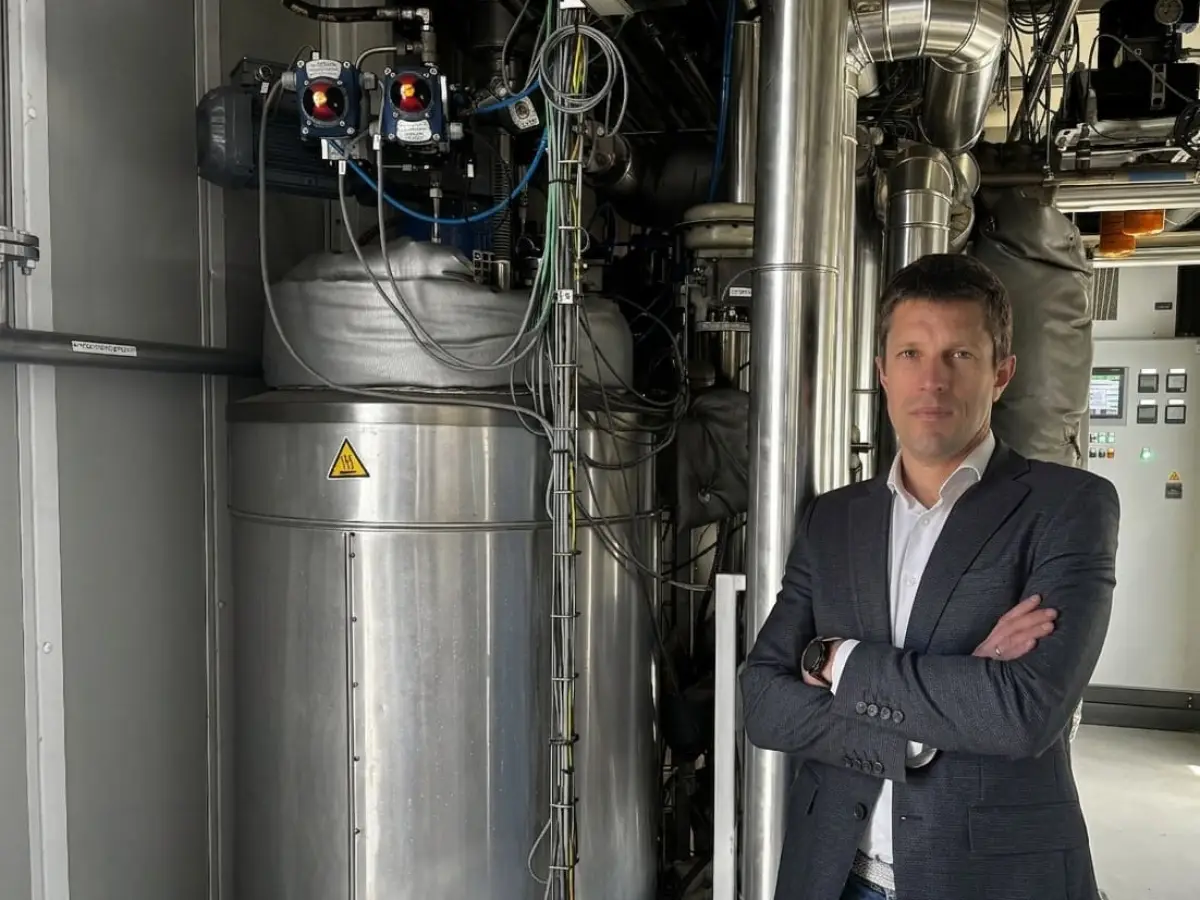
“In the linear paradigm that has dominated for decades, the goal was to remove sludge from the plant at the lowest possible cost, relying on landfill, incineration and agricultural use, and limiting accounting to transport and disposal,” explains Daniele Basso, CEO of HBI, a company active in the development of technologies for sludge recovery, to Renewable Matter. “In this logic, the parameter of euros per tonne was more than enough. But the numbers tell a different story: according to ENEA, sludge management can account for up to 65% of the total costs of a wastewater treatment plant.”
In other words, an item once considered purely operational has now become central to the system’s economic structure. Sludge, once merely waste to be disposed of, is now the real crux of the entire process and a key indicator of how the sector is evolving towards a more circular and resilient model, especially in light of new European regulations on urban wastewater.
Cost volatility and a failed old benchmark
According to Daniele Basso, continued reliance on the euro per tonne as a benchmark is equivalent to sailing blind in a structurally unstable market. “Price volatility clearly proves this. Between 2015 and 2021, average costs in Northern Italy almost doubled, rising from €62/t to over €120/t, while recent studies report fluctuations of up to 50–60% in just a few months, depending on the availability of agricultural outlets, regulatory changes, plant capacity and speculative dynamics.” Furthermore, according to Bioreal’s technical report, the current period of low prices – with historic lows in 2023–2024 ranging from €90 to €120 per tonne in the north, €110–130/t in the north-east, and €130–150/t in the centre-south – represents a temporary condition linked to an increase in plant capacity, supported in part by PNRR (National Recovery and Resilience Plan) funds.
A “historic low” whose days are therefore numbered. On the horizon, factors are emerging that could reignite upward pressure. “Just consider the scope of the treatments required by the new Directive (EU) 2024/3019 on urban waste water treatment, with stricter obligations on energy neutrality, nutrient removal and the reduction of emerging micropollutants,” adds Gabriele Mazzoletti, Director of Public Affairs and Regulatory Affairs at HBI. “There is also an estimated 20% increase in sludge volumes due to the completion of infringement procedures and, indeed, the likely saturation of treatment facilities once the extraordinary boost from PNRR investments has run its course.”
The need for a new pricing model
This situation is exacerbated by the regulatory ambiguity of Legislative Decree 99/92, which currently governs the agricultural use of sludge through a scheme designed for a different era. “The decree does not adequately address emerging contaminants and fails to meet current environmental safety requirements,” adds Gabriele Mazzoletti. “The ambiguity over conditions of use in agriculture is one of the factors fuelling price volatility, contributing to transforming the old management model into a financial as well as an environmental gamble.”
Hence, the need for a new pricing model and, even before that, a new industrial paradigm. “Moving to an advanced treatment system means enabling operators to gain certainty over costs for the next 15–20 years, meet European targets for material recovery – in particular phosphorus – and energy, achieve energy neutrality, and eliminate emerging micropollutants, such as PFAS, on-site. It is no longer a question of paying to ‘destroy mass’, but rather of investing in a bioeconomy industrial ecosystem that offers expertise, ensures legal compliance, protects soil health and stabilises budgets.”
In this innovative model, HBI believes that the price incorporates three pillars, which the old euro per tonne metric ignored. The first is resilience to volatility: an integrated technological system stabilises costs, removing exposure to unpredictable markets and creating the certainty needed to plan investments spanning decades. The second concerns the benefits of energy neutrality and quality: the new pricing system expresses the ability to achieve energy self-sufficiency for plants and to ensure the reduction of emerging micropollutants in line with Directive 2024/3019. The third cornerstone is the strategic value of the supply chain: being part of the new circular phosphorus chain means participating in the synergies of an industrial ecosystem that also includes smaller operators.
Strategic consequences: the phosphorus supply chain as a test case
The European Union has identified phosphorus as a critical raw material, and its recovery along the national supply chain could generate €2.9 billion in value. Recovering sludge could yield 222,000 tonnes, equivalent to 21% of fertiliser consumption in the EU. “Comparing the costs of future recovery services to the old historical disposal costs is methodologically flawed: the benchmark is no longer how much it costs to ‘throw away’, but how much value can be created in terms of strategic autonomy and food security,” continues Daniele Basso.
But how can this challenge be addressed at an industrial level? “We need to build a resilient and inclusive ecosystem based on the integration of advanced technological solutions – such as the combination of HTC and gasification – and long-term contractual frameworks, including public-private partnerships that can transfer much of the technical complexity and operational risk to specialised entities. Working as an industrial ecosystem is about connecting multiple operators; fostering economies of scale even in fragmented contexts; and enabling small and medium-sized operators to tap into value chains that would otherwise be out of reach. The cost of ‘not being there’ will become a new form of risk: being left out of these value chains means exposing oneself to increasing volatility, regulatory pressure and the loss of industrial opportunities throughout the entire value chain.”
Leaving behind the euro per tonne metric is therefore not merely a technical or regulatory decision, but rather a phase transition: a sign that sludge management has entered the circular economy era. “Integrated technological solutions are paving the way for a future in which sludge is a source of critical phosphorus, clean energy and fertilisers that regenerate the soil,” concludes Basso. “Sewage sludge is already included in the National Strategy for the Circular Economy and has dedicated investments to convert plants into innovation hubs. The question for utilities and public decision-makers is no longer how much it costs to ‘hide’ the problem, but how much value they want to create in the long term.”
Cover: photo HBI