


Spending at least 120 minutes per week surrounded by nature is associated with good health and mental wellbeing. A study involving 20,000 people by the University of Exeter confirmed this, noting that benefits emerge only above this minimum threshold, regardless of whether the time is spent all in one go or distributed throughout the week. Contact with the natural environment is shown to be a powerful ally of good health: it helps combat stress, lowers blood pressure, strengthens the immune system, reduces anxiety and aggression, boosts mood, and increases focus.
Forest bathing at Parco del Respiro
In the heart of Trentino, one of Italy's most forested regions, Parco del Respiro ("Breath Park") in Fai della Paganella offers a true oasis of mental and physical health. Visitors here can practise forest bathing, or shinrin-yoku, an ancient Japanese discipline that invites reconnection with nature through a simple yet profound experience: walking slowly through the woods, breathing deeply, taking in the enchanting landscape, listening to its sounds, and, above all, taking time for oneself, away from the hectic pace of everyday life.
"Spending at least two hours in the woods has tangible benefits for our health: it lowers stress hormone levels, rebalances our heart rate and blood pressure. These are some of the parameters monitored in Japan back in the 1980s, when initial research into shinrin-yoku sought to find effective solutions to the problem of techno-stress," explains Massimiliano Corrà, a forest bathing teacher and trainer.
Parco del Respiro is open to everyone, 24 hours a day, and extends across 36 hectares of fir and beech woodland, offering four interconnected paths. The only “entry fee” is to respect the forest, which provides wellbeing and the connection with nature that modern humans are forgetting and must rediscover. "Forest bathing sessions average 3 hours but can last up to 6, to fully benefit from the immersive experience. Tree-hugging is also practised here," says Corrà.
The park also hosts various complementary activities, from yoga to children's workshops, as well as cultural events like the literary salon and the Orme Festival. "We bring activities outdoors to experience nature in all its forms and enjoy all its benefits, even through culture."
Thermal waters and woodland in Comano
Parco del Respiro is not the only place in Trentino where nature offers healing. At the nearby Terme di Comano, good health springs from the natural environment, but in a different form: here, water is the star of wellbeing. "These waters are rich in bicarbonate, calcium, and magnesium, all beneficial elements for the human body, particularly in the field of dermatology. Furthermore, microbiological research has shown that the waters contain a highly diverse microbiome, including microorganisms with strong anti-inflammatory, regenerative, and immune-regulating properties," explains Elena Andreolli, Executive Director at Terme di Comano.
Comano's waters, which originate from the union of a Jurassic aquifer with rainwater filtered through Dolomitic rock, are at the heart of therapeutic pathways for treating conditions related to the skin, the respiratory tract, and the gynaecological system. "The primary strength of this water lies in its dermatological action: it effectively addresses atopic dermatitis, which affects over 20% of children. By bathing in and drinking the water, the skin can rebalance defects in the skin barrier and return to health."
Wellbeing in Comano, however, isn't solely about water. The 14-hectare park that surrounds the spa is currently being certified as a site for forest therapy, in collaboration with the National Research Council of Italy (CNR). "We are monitoring the monoterpenes emitted by the plants; these have been shown to reduce stress and improve sleep," says Andreolli. "To integrate the landscape into the wellness stay at our facility, we organise daily activities in the woods, such as barefoot walks, yoga, Nordic walking, and forest bathing."
The spa complex is also a model of sustainability: 74% of its electricity comes from renewable sources, primarily hydroelectric. Furthermore, the park, which is home to 870 surveyed trees, absorbs approximately 250 tonnes of CO₂ annually. The social element is no less important: "the company is publicly owned, founded on a bequest from 1826 that returned it to local communities with the aim of helping the less fortunate. The statute focuses on creating activities that support the local area, which is why we prioritise hiring local staff, fostering loyalty, and adopting solidarity-based policies in times of crisis, as we did during the pandemic,” says Andreolli.
This content is produced thanks to the support of sponsors
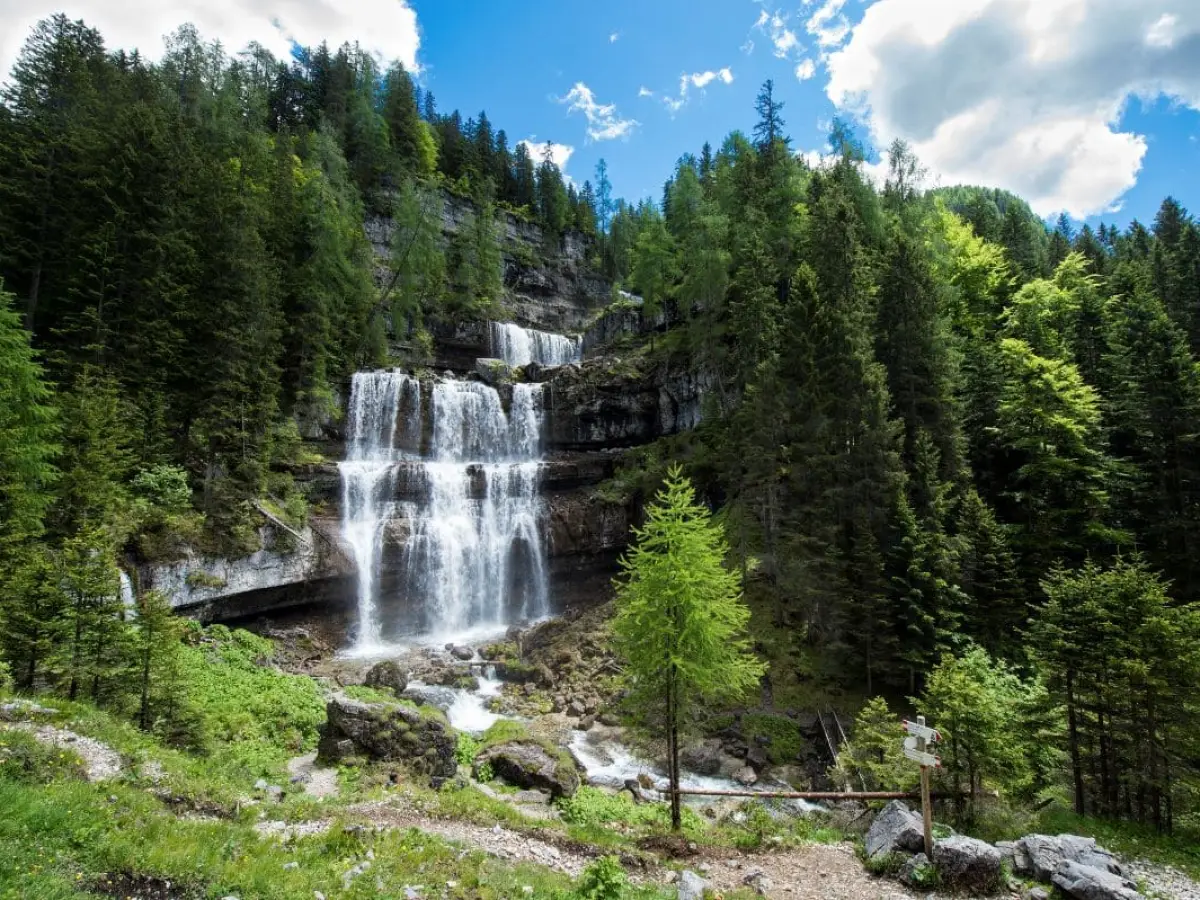
Cover: Madonna di Campiglio, Val Rendena, Cascate Vallesinella, foto di Paolo Bisti Luconi