



This article is part of the thematic channel The Carbon Observer: subscribe to the newsletter
Italy has 11.8 million hectares of forest, equivalent to 39% of the country’s territory, yet it is importing ever-increasing quantities of structural timber: 757,000 cubic metres of glulam and CLT panels in 2025, the highest figure since 1999, worth more than 410 million euros in total. Some 84% came from a single country, Austria. An obvious paradox, highlighted by Angelo Luigi Marchetti, president of the Federation of the timber supply chain (Federazione filiera legno), in the Sole 24 Ore: the problem is not a lack of resources, but a lack of knowledge, planning and industrial policy.
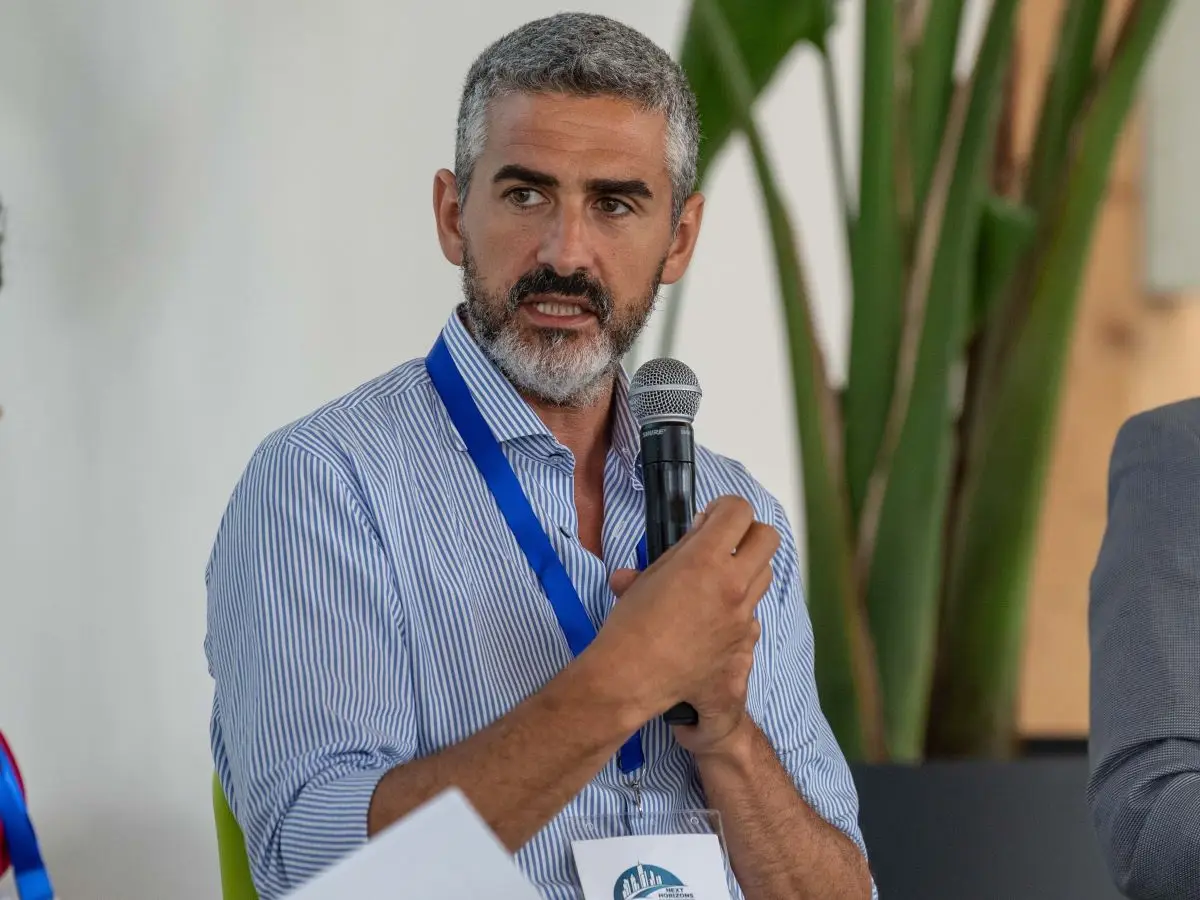
Could the forest carbon credit market be a lever capable of unlocking this situation, making forest management more economically viable? In this regard, from 18 November 2025, Italy adopted guidelines for establishing the National public register of voluntary carbon credits in the agri-forestry sector, entrusted to CREA (the Council for Agricultural Research and Economics), which explicitly recognises sustainable forest management and long-lasting wood products. In Brussels, meanwhile, the CRCF framework adopted methodologies for afforestation, agriculture and peatlands in July 2026, but not yet for active forest management. We spoke with Riccardo Fraccaro, CEO of Carbon Planet.
Let’s start with the figures highlighted by Angelo Luigi Marchetti: 11.8 million hectares of forest and 757,000 cubic metres of imported structural timber, 84% of it from Austria. What does the carbon market have to do with this imbalance?
It is relevant because it offers a different perspective on the same problem. Our country’s timber is not underused because it is of inferior quality: the strength and stiffness values of Italian spruce are fully comparable with those of Central Europe, as demonstrated by research carried out by the Federazione filiera legno together with Conlegno, MiCROTEC and the Technische Universität München. It is underused because much of Italy’s forest is not managed. An unmanaged forest does not produce assortments, generate income or support a supply chain. Carbon credits fit into this picture precisely here: they are one of the elements that can make the management of a forest asset that is currently often just a cost or an unproductive immobilised asset economically viable or more profitable. The starting point concerns the country as a whole, which today has a third of its territory abandoned: a significant natural, environmental, energy and even tourist resource that should be put to better use.
Is the market mature enough to drive the creation of managed areas?
Not quite yet, but we are in the final stages. At the European level, the CRCF took its most important step last July by adopting the first carbon-farming methodologies. Two pieces are still missing that directly concern Italian forests: the European methodology for active forest management, and the methodology for carbon storage in products (wood in buildings), which is expected by the end of the year. These are the two elements that bridge the gap between the forest and the supply chain.
If these pieces are still missing, why do you argue that territories should act now rather than wait until the framework is complete?
Because technical timelines do not coincide with regulatory ones. A forest carbon credit does not come into being with the stroke of a pen: it starts with an in-depth assessment of the area, which leads to a management plan. Drawing up such a plan takes time, potentially a year. The plan then has to be approved and implemented, because only a forest that is actually managed generates credits. Years, not months, pass between the decision and the first credit that can be registered. Anyone who waits until the methodology is published before getting started will find themselves three or four years behind those who already have a plan in place. That is a competitive advantage that territories can build for themselves now, and it cannot be made up later.
A question many people will probably ask you: how much is a forest worth to its owner?
The value varies enormously, and I want to be clear about why: it differs from one forest to another, even within the same region. It depends on the specific composition, the age of the stands, the initial state of management and accessibility. There is no per-hectare figure that can simply be put in a brochure, and I would be wary of anyone offering one: a case-by-case analysis of the area is needed. But there is something else that is even more important to add, a point on which I see a great deal of confusion. The carbon credit is not the profit. It is an additional source of income, on top of the sale of timber produced through sustainable management. It is this combined income that makes forest management economically viable, or at least more cost-effective; in many parts of Italy, timber revenues alone would not make it viable or economically attractive.
How much forest is needed for the numbers to add up?
Between 500 and 1,000 hectares. Below that, it probably does not make sense to start a project to generate credits from active forest management: the costs, including area assessment, third-party verification by accredited bodies and ongoing monitoring, do not scale entirely with the size of the area, and below that threshold they eat into the benefits. This means that in Italy, where forest ownership is more fragmented than anywhere else in Europe, aggregation is not an option: it is a prerequisite that needs to be considered from the outset. That is why I believe the first to act should be public authorities - municipalities and regions, for example - and collective ownership bodies. They have areas that exceed the threshold or come close to it, already have an administrative structure and have a mandate that extends beyond immediate financial returns. They can lead the way and, by aggregating holdings, bring in private owners who would not be able to reach the necessary critical mass on their own. But this requires a change of approach within public administrations: they need to start familiarising themselves with these tools, understand how to develop and implement a management plan, know whom to turn to and how to coordinate the different players in the supply chain.
Is anything already happening?
In some areas, consortia involving municipalities and private owners have already been formed, partly driven by PNRR funding for forestry and by forestry supply-chain contracts, which have asked applicants to join forces and put planning in place. Aggregation not only makes it possible to achieve a critical mass, but also to create more specialised structures, often coordinated by forestry professionals with an in-depth knowledge of the local area. In some respects, it is a model reminiscent of energy communities: bringing several properties together to make possible a project that an individual owner could not support alone. It should also be said that forest management involves many different stakeholders, often with different needs: public authorities, private owners, civic uses, citizens and the timber supply chain. Coordination between these stakeholders is essential for implementing effective management plans. There are also businesses looking to purchase large areas of forest specifically to build up a bank of carbon credits, but in Italy this is no easy task: large estates are often owned by public bodies or collective ownership bodies, while private ownership is highly fragmented.
And what about those who already have a managed forest? Do they risk being penalised, given that additionality is measured against a baseline?
This is the most delicate technical issue, and the honest answer is that there is no single or definitive answer. Owners of already managed forests can also embark on accounting paths, but each case has to be considered individually: these are necessarily bespoke projects. Under the national guidelines, it is necessary to establish what local regulations stipulate regarding the maximum permitted level of harvesting and to demonstrate that the interventions planned would involve harvesting below the potential level. It is this difference that determines the amount of additional carbon sequestered. In some cases, there is significant scope; in others, there is not. It will also be necessary over the coming months to see whether the Commission’s approach confirms the model set out by the Italian government or not, changing the calculation system. Those who promise that any forest can generate credits are doing the sector a disservice, because it sets the stage for disappointments that ultimately undermine the credibility of the entire market.
Beyond the credit itself, what changes for a local area?
Risk management changes, and after storm Vaia, this is no longer an abstract issue in Italy. Long-term planning - 20 years is the minimum period required by the National Register - forces us to consider what is putting our forests at risk today: the vulnerability of monocultures to pathogens, wildfires and drought. A well-designed management plan diversifies, and diversification reduces exposure. Then there are the associated benefits. Ecosystem services, skilled employment in the local area and an effect that is only now beginning to emerge: with heatwaves becoming increasingly frequent and intense, a managed and accessible forest becomes a tourist destination. These benefits extend not only to the owner, but to the wider area. It is not a matter of importance to individual owners, but to the country as a whole.
If a landowner or mayor is reading this today, who can they turn to?
Once the European methodology is complete, the Commission will identify the bodies authorised to apply it. The so-called certification schemes, which are being established through a specific process, as well as the third parties authorised to carry out certification. But that comes later. The stage that can and should be tackled now comes further upstream: preliminary area assessment, economic pre-feasibility and support in developing the process. The advice here is to seek out people with demonstrable expertise and, above all, those who know how to work in partnership with local forestry professionals and the timber supply chain. Local experts are the linchpin of this development: it is not just expertise in carbon credits that is needed, but people who work as a team with the local community. The supply chain is also essential: without someone to purchase and process the assortment, the cycle remains incomplete and the credit alone is not enough. Because the carbon credit is merely the final link: before that come planning, management, monitoring, making the most of the timber and coordination between owners and public authorities.
Cover: Riccardo Fraccaro