


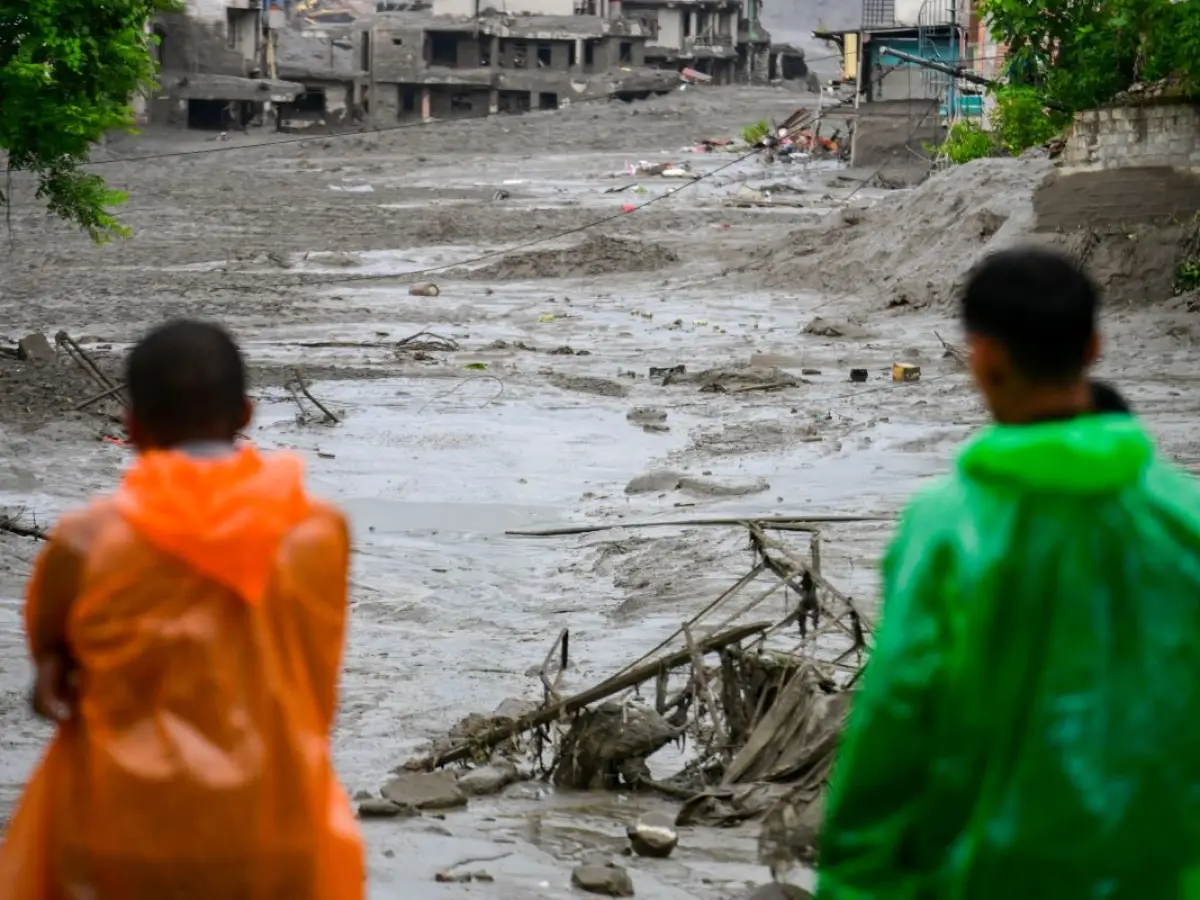

An enormous mass of debris, water and mud swept away buildings, roads, bridges and thousands of people within moments, many of whom are still missing. Terrifying images are emerging from Nepal, where, on Wednesday 26 August, a flash flood struck Rasuwa District, on the border with China’s Tibet Autonomous Region. As of 1 p.m. CEST, on 27 august, the confirmed death toll stood at 332, according to Reuters, citing local police. Among those missing are numerous tourists of different nationalities.
Several hours after the event, as rescue operations continue, the precise circumstances that triggered one of the most serious disasters in the Himalayan region in recent years remain unclear. However, initial analyses of satellite imagery indicate that the event may have been caused by a glacier collapse. The collapse of part of the glacier is thought to have sent a mass of ice, rocks, water and sediment down into the valley, triggering the flood.
According to local authorities, there is still a risk of a further collapse, while rescue and evacuation operations have been made more difficult by the destruction of roads and infrastructure.
The glacier collapse and the formation of the flood
Satellite images taken by Planet Labs before and after the event and analysed by Reuters show a dramatic change in the landscape: an area of mountain slopes previously covered in vegetation is now buried beneath debris and sediment.
According to Vikram Gupta, an engineering geology specialist and lecturer at Sikkim University in India, who was interviewed by Reuters, “It’s confirmed that a substantial portion of that glacier snout collapsed to initiate the event – probably including or entraining a fair amount of rock and sediment”.
The collapse is believed to have generated a large avalanche of ice and rocky material, which swept down towards the valley floor. Along its path, the mass may have mobilised additional sediment and interfered with the course of the Lhende Khola, contributing to the flood, which then rapidly propagated along the valley.
The exact dynamics are still being analysed, but satellite imagery represents one of the most important elements in reconstructing the event. Comparing images taken before and after the disaster makes it possible to identify the area from which part of the glacier is thought to have detached, as well as the path taken by the debris as it moved downstream.
The risk of a natural dam
What is now causing concern, however, is an accumulation of debris upstream that continues to obstruct the Lhende Khola, creating the risk of another flood. When a landslide, rock avalanche or mass of ice temporarily blocks a river, water can accumulate behind the natural dam. If the barrier subsequently fails, even partially, the sudden release of water can generate another flood wave, capable of carrying sediment and debris throughout the valley.
For this reason, Nepal’s authorities have evacuated the area and urged communities living along the river to remain alert, while India has issued flood warnings for the states of Bihar and Uttar Pradesh, which are crossed by several rivers flowing from the Himalayas towards the plains.
Meanwhile, India has sent 10 tonnes of aid, while the International Federation of Red Cross and Red Crescent Societies has allocated one million Swiss francs through its Disaster Response Emergency Fund to support the Nepal Red Cross. European Commission President Ursula von der Leyen, expressing her solidarity with those affected by the disaster, announced the activation of Copernicus to help map the affected areas and support the response, while also making further assistance available.
Nepal’s Prime Minister Balendra Shah urged the country to remain united. “The pain and loss you have suffered is not small. But I want to assure you that you are not alone in this difficult time – the state is with you with all its means and resources,” Shah said in a statement posted to social media. “Please be patient. The government takes full responsibility for your rescue, treatment, food and shelter. In times of such a disaster, we all need to stand together.”
Cover image: photo by JNA via ZUMA Press Wire, IPA Agency