
 Google Calendar
 Outlook Calendar
 Apple Calendar
 Yahoo Calendar

There is one thing that every European company today seems to prioritise: establishing new ties with the Chinese superpower. At the start of 2026, President Xi Jinping reached a series of important agreements with several European leaders, setting the course and providing strategic guidance for the development of relations between China and Europe. Added to this is the uncertainty of relations with the United States, complicated by tariffs and American instability.
Despite the geopolitical climate, the Chinese economy continues to demonstrate a solid foundation, with numerous strengths, strong resilience and enormous potential for companies from the Old Continent. From trade missions to trade fairs, demand is growing for networking opportunities with Chinese companies, clusters and public bodies, in an economic and cultural environment that is not always easy to navigate for Western entrepreneurs.
One of the key areas covers the green economy, the circular economy and decarbonisation. Over the past ten years, China has built the world’s most comprehensive industrial supply chain for green technologies: solar panels, batteries, electric vehicles and waste treatment. However, the domestic decarbonisation market still requires know-how, plant engineering and environmental control systems. This is where Italy, with its manufacturing heritage in engineering systems, water treatment, waste management and environmental monitoring, still has a competitive edge.
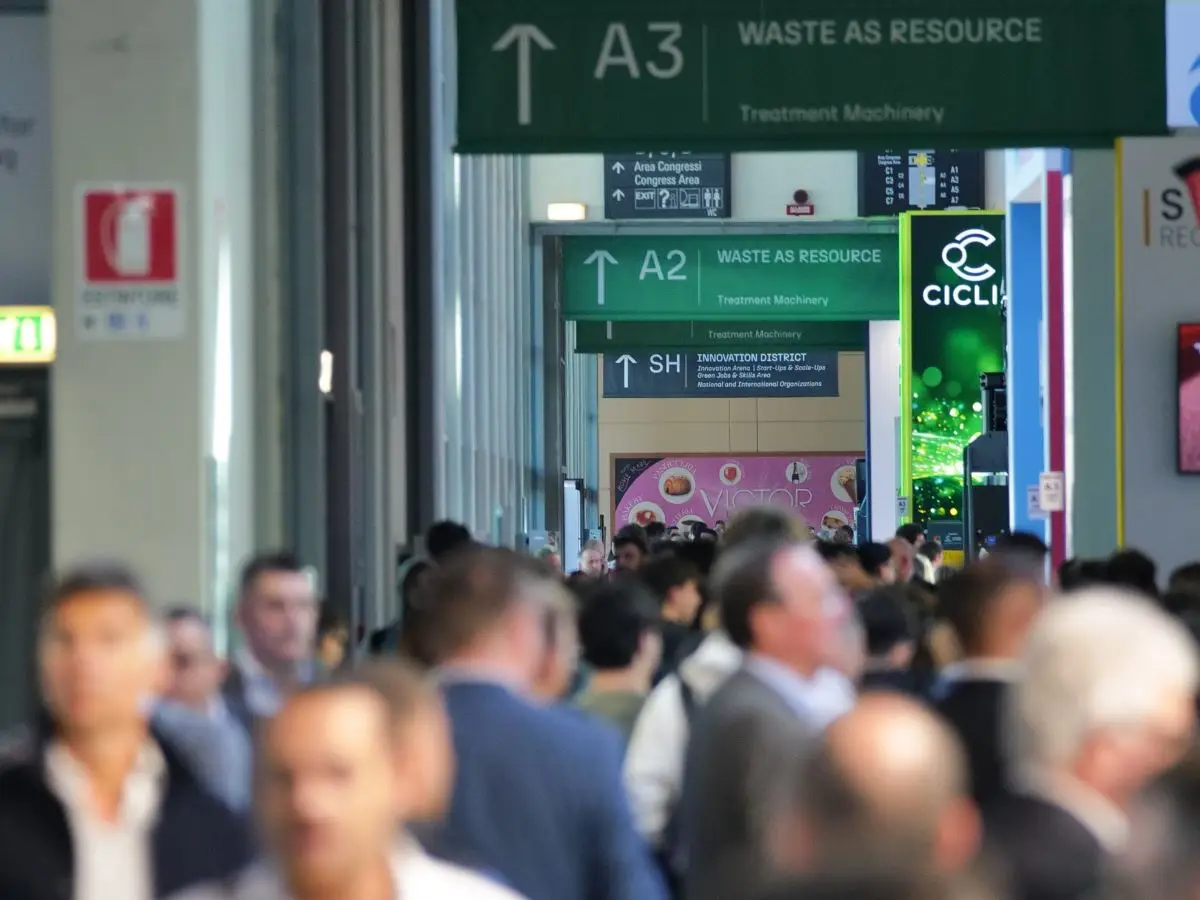
It is in this context that the Italy-China Circular Economy Forum is positioned. Organised by the exhibition group IEG, it builds on the work previously done with Ecomondo China. The B2B event, which will be held in Shanghai on 11 and 12 June, aims to create a high-level meeting point for companies and institutions, with support from the Italian Trade Agency (ICE), which promotes Italian businesses internationally. Renewable Matter will act as the media partner and moderator for the event.
Networking in Shanghai
“Set against the backdrop of Shanghai, China’s international business hub, the Forum was created to offer European companies a concrete and targeted opportunity to present themselves to the Chinese market,” explains Alessandra Astolfi, Director at IEG – Italian Exhibition Group and head of international initiatives for the Ecomondo trade fair. Over the course of two days, companies will be able to showcase their business to stakeholders who genuinely represent and drive the market: Chinese government representatives, European institutions operating in the region, research institutes and decision-makers from leading companies.
“The programme also includes targeted business meetings with selected buyers, as well as guided visits to local companies and industrial parks. This is a strategic opportunity both for companies already active in China looking to consolidate their presence, and for those entering this market for the first time,” explains Ilaria Cevoli, International Project Manager at Ecomondo, who is overseeing the Shanghai event.
IEG has decided to transform the trade fair format of previous editions into something more. “The context had changed: we found ourselves operating in a market with very large, well-established players, and we realised that replicating the traditional trade fair model no longer made the same strategic sense,” Cevoli continues. “We have therefore converted the event into a bilateral forum, a day and a half of high-level discussion with two distinct strands: a more institutional component, involving the embassy, consulate and the Ministry of Foreign Affairs and International Cooperation, alongside Chinese technological and governmental counterparts; and another more oriented toward markets and technological exchange. There are three key themes: industrial decarbonisation, advanced waste management and natural capital.” These are topics on which European companies have a lot to contribute, and on which China, for various reasons, is feeling increasing pressure.
“China has ambitious targets for the decarbonisation of heavy industry (carbon neutrality by 2060), but feasibility in hard-to-abate sectors remains an open challenge,” notes Astolfi. “Over thirty years, Europe has built a system of engineering excellence in the circular economy and waste management, both in terms of processes and systemic vision. Then there is the issue of natural capital: China has paid a very high price for decades of growth without concern for the natural environment. Restoring that relationship is also a matter of competitiveness, not just environmental ethics.”
Among the brands that have already confirmed their attendance are Nextchem, a leader in sustainable and green chemistry; Danieli, specialising in steel technologies and green steel; Loccion, an Italian leader in energy and industrial efficiency with a Green Factory model developed fifteen years ago in the Marche region; COBAT, a consortium for material recycling and end-of-life battery management; CIC, which focuses on biowaste and compost; and Versalis, active in green chemistry and biomaterials. A diverse ecosystem covering a significant portion of the European circular economy supply chain.
However, Ecomondo is not looking only towards China, concludes Astolfi: “For those interested in diversifying their business, the IEG group is also looking closely at Mexico, where we are already present with Ecomondo Mexico, but also at India, Africa and Canada, where new and important international initiatives may soon emerge, drawing interest from the entire European industrial ecosystem”.
Cover: photo by IEG