


18 September 2025 marked a historic milestone for European engineering: the cross-border breakthrough of the exploratory tunnel in the Brenner Base Tunnel (BBT) for the first time created a continuous underground link between Italy and Austria. Upon completion in 2032, the BBT will become the world's longest underground railway tunnel, with a total length of 64 km, including the Innsbruck bypass.
Of the companies involved in the construction of the infrastructure, Heidelberg Materials Italia plays a key role in supplying high-performance cement and concrete, developed specifically to withstand the extreme chemical and mechanical conditions of the tunnel inside the Alps.
Brenner, a historic underground connection between Italy and Austria
The BBT is a strategic axis in the SCAN MED Corridor and the European TEN-T network, intended to shift freight and passenger traffic from road to rail. Trains will reach speeds of 250 km/h, reducing travel times between Fortezza, Italy, and Innsbruck, Austria, from the current 80 minutes to 25 minutes. The infrastructure promises to improve safety, sustainability and economic connectivity in the Alpine region.
In particular, the project includes two main single-track tunnels, exploratory tunnels, safety cross-passages every 333 metres and side access tunnels that allow the work to be divided into multiple lots, optimising time and logistics. Much of the excavated material is reused for the production of concrete or for filling construction sites, with the remaining areas being re-naturalised.
Due to its complexity, the project involves dozens of European companies and consortia, including Webuild, Strabag, Porr Bau, Marti GmbH and Consorzio Cooperative Costruzioni. Among these is Heidelberg Materials Italia. “We are extremely proud to have taken part in the opening of the last diaphragm of the tunnel,” Alfonso Di Bona, Managing Director and General Manager of Heidelberg Materials Italia Calcestruzzi, told Renewable Matter. “Since the beginning of the construction site, Heidelberg Materials has contributed to the construction both by supplying cement from the cement plants in Sarche (TN) and Rezzato (BS), and through the concrete production plant of Consorzio Stabile San Francesco, in which Heidelberg Materials (as well as Colabeton and Luigi Metelli) participates.”
The role of companies: Heidelberg Materials and the challenges of specialised concrete
Heidelberg Materials has developed two types of ad hoc concrete, designed to guarantee durability and chemical resistance in the extreme conditions of the Alpine tunnel. For the prefabricated segments of the tunnels excavated with the tunnel boring machine (TBM), sulphate-resistant Portland Ferrico cement was chosen to protect the structure from the aggressive action of water. In traditional excavation, instead, a unique plant produces up to 180 m³/h of concrete 24 hours a day, in a closed circuit, returning the water to the production cycle.
At the same time, Heidelberg Materials is active in the Ponte Gardena area with Gardena Beton, where it contributes to the construction of preparatory lots. Overall, Consorzio Stabile San Francesco has already produced over 750,000 cubic metres of high-performance concrete, combining safety, durability and sustainability. “We now have a well-established standard when it comes to large-scale projects: maximum attention to safety on site; maximum quality in the supply of our products by interfacing with contractors, designers and clients; maximum attention to sustainability issues by using, where possible, secondary raw materials and alternative materials, while respecting the quality of the finished product,” concludes Di Bona.
This content is produced thanks to the support of sponsors
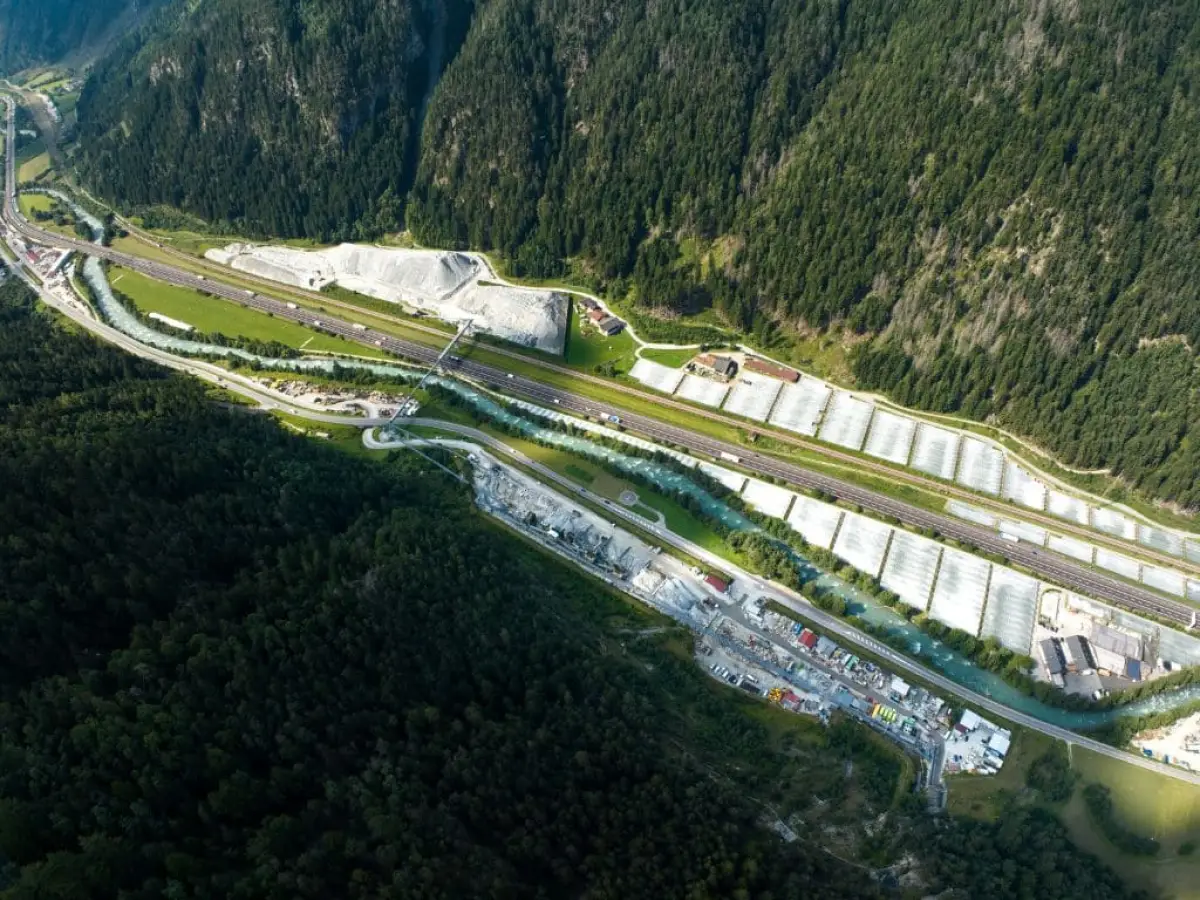
Cover: The Mules construction site (Italy), the largest within the entire project area, photo by Heidelberg Materials