


Cities account for less than 3% of the Earth’s surface, and yet they are responsible for over 70% of global CO₂ emissions. For decades, this imbalance has fuelled an uncomfortable narrative: urban centres are seen as part of the problem, never part of the solution. But today, things are changing. Several examples demonstrate how farmers, activists and local authorities are finding scalable solutions to sequester carbon, close organic cycles, produce locally sourced food and regenerate soils.
Melbourne, the city that envisions itself as a forest
In 2012, the City of Melbourne, Australia, set an almost utopian goal: increasing the city's tree cover from 22% to 40% by 2040. The aim was not merely to plant a few more trees but to rethink the entire metropolis as a living ecosystem.
The first step was a census. Seventy thousand trees were mapped, geolocated and catalogued by species, age and estimated carbon sequestration capacity. Each tree was assigned a public email address. Citizens began writing love letters, testimonials and poems. A seemingly whimsical gesture that built something more substantial: an emotional bond between people and the urban greenery, transforming every resident into a guardian of the city’s tree heritage.
On a technical level, the strategy has placed soil health at the forefront. Melbourne’s urban soils, as in many other cities around the world, are compacted, depleted and often contaminated. Regenerating them has required mechanical decompaction, biochar, organic soil improvers and the reintroduction of microbial communities. The species planted have been chosen for their resistance to the drought and heat stress expected in the coming decades, thereby avoiding the monoculture that renders urban green spaces vulnerable.
Tree distribution followed an explicit criterion of climate justice, known as equity planting, giving priority to neighbourhoods with lower tree cover and greater vulnerability to heat. The result is that in areas with high tree cover, the average summer temperature is down to eight degrees lower than in areas lacking greenery. The programme is now recognised by ICLEI and the C40 Cities Network as an international benchmark.
Growing Power, climate justice and soil
Another project that has successfully combined carbon sequestration with climate justice is Growing Power, launched in the 1990s in Milwaukee, Wisconsin, on the basis of a simple principle: a city’s organic waste is a resource, not a problem. The project has built an integrated composting system that transforms tens of thousands of tonnes of local waste – kitchen scraps, market waste and garden waste – into compost, which has been used to create soil from scratch. Starting with asphalted surfaces and degraded land, Growing Power layered waste materials to create fertile soil where previously there wasn’t even a centimetre of humus. The approach drew on millennia-old farming practices of organic fertilisation, adapting them to an urban scale with replicable methods and a comprehensive logistics system.
In addition to composting, Growing Power has developed aquaponics systems in which organic waste from fish feeds the plants, whilst the plants purify the water for the fish – a closed-loop system that eliminates waste and mimics natural processes. Every year, over a thousand young people are trained in regenerative farming techniques, transforming vegetable gardens into a tool for social mobility in a neighbourhood once classified as a “food desert” – an urban area where fresh food was simply inaccessible.
Brooklyn Grange, the garden floating above the city
In 2010, a group of New York farmers planted soil on the rooftops of Brooklyn. The idea seemed bizarre. What began as an initial urban vegetable garden covering over 2,000 square metres on the roof of a building in Long Island City, Brooklyn Grange now manages more than 10,000 square metres of farmable land across Brooklyn and Queens and has become a global benchmark for integrated urban agriculture.
The technical secret lies in the substrate. Brooklyn Grange uses Rooflite mixes, formulated specifically for rooftop environments, which are lightweight enough not to overload the structures yet rich enough in organic matter to support an active microbial ecosystem capable of sequestering stable carbon. These substrates are continuously regenerated through the composting of locally collected urban waste: kitchen scraps, market residues and pruning from parks. The aim is not merely to produce food. It is to build soil year after year.
The benefits go beyond direct carbon sequestration. Green roofs retain between 75 and 80% of rainfall, thereby reducing the load on the drainage system. The vegetation cools surfaces through evapotranspiration, mitigating the heat island effect and reducing the energy consumption of the buildings below by 10–15%. Each year, Brooklyn Grange’s vegetable gardens produce over 22,000 kilograms of organic vegetables, compost more than 40,000 kilograms of urban organic waste, and bring hundreds of state school pupils to work the land, converting urban vegetable gardens into open-air classrooms.
Todmorden: an entire village becomes a vegetable garden
In 2008, in Todmorden, a town in Yorkshire with a population of 15,000, Mary Clear and Pam Warhurst grew some vegetables in a neglected public space near the station – without any permission, funding or formal plan. That simple act gave rise to Incredible Edible Todmorden. Each public flowerbed, every spare patch of land, and every roundabout has been gradually converted into a community vegetable garden accessible to everyone: herbs in front of the police station, fruit along the canal, vegetables in the hospital gardens.
This model of institutionalised guerrilla gardening has generated a multiplier effect: residents have also begun to grow crops in their own private spaces, swapping surplus produce and knowledge. Urban soil, tested before and after, showed documented increases in organic carbon. Pollinator populations have grown. Dependence on imported food has decreased.
The most innovative aspect of the Todmorden case is political. Urban carbon farming requires neither major investment nor sophisticated technology; rather, it demands a shift in mindset towards public space as a productive resource. Thousands of small-scale initiatives, coordinated by a shared culture rather than a centralised plan, produce cumulative effects that no masterplan could have generated. Today, the Incredible Edible network is active in over eight hundred communities worldwide.
The key elements
Comparing Brooklyn, Melbourne, Milwaukee and Todmorden allows us to pinpoint some common themes. Soil is always treated as a living system to be developed and regenerated, not as a passive substrate. Composting is not an afterthought but the key to projects that close organic cycles at a local level, considering that transforming urban waste into agricultural inputs reduces dependence on external sources, lowers costs and creates tangible ties between farmers, restaurateurs and citizens. It builds communities, in fact.
Another key element is measurement. Projects that are able to rigorously quantify the carbon sequestered, the water saved and the emissions avoided are the ones that attract funding, replicate themselves and influence policy. Measurement of results is the act through which urban carbon farming can become recognised urban infrastructure. Cities that invest in these approaches in the coming years will not only reduce their ecological footprint but will also build less vulnerable food systems, more liveable public spaces and more cohesive and resilient communities.
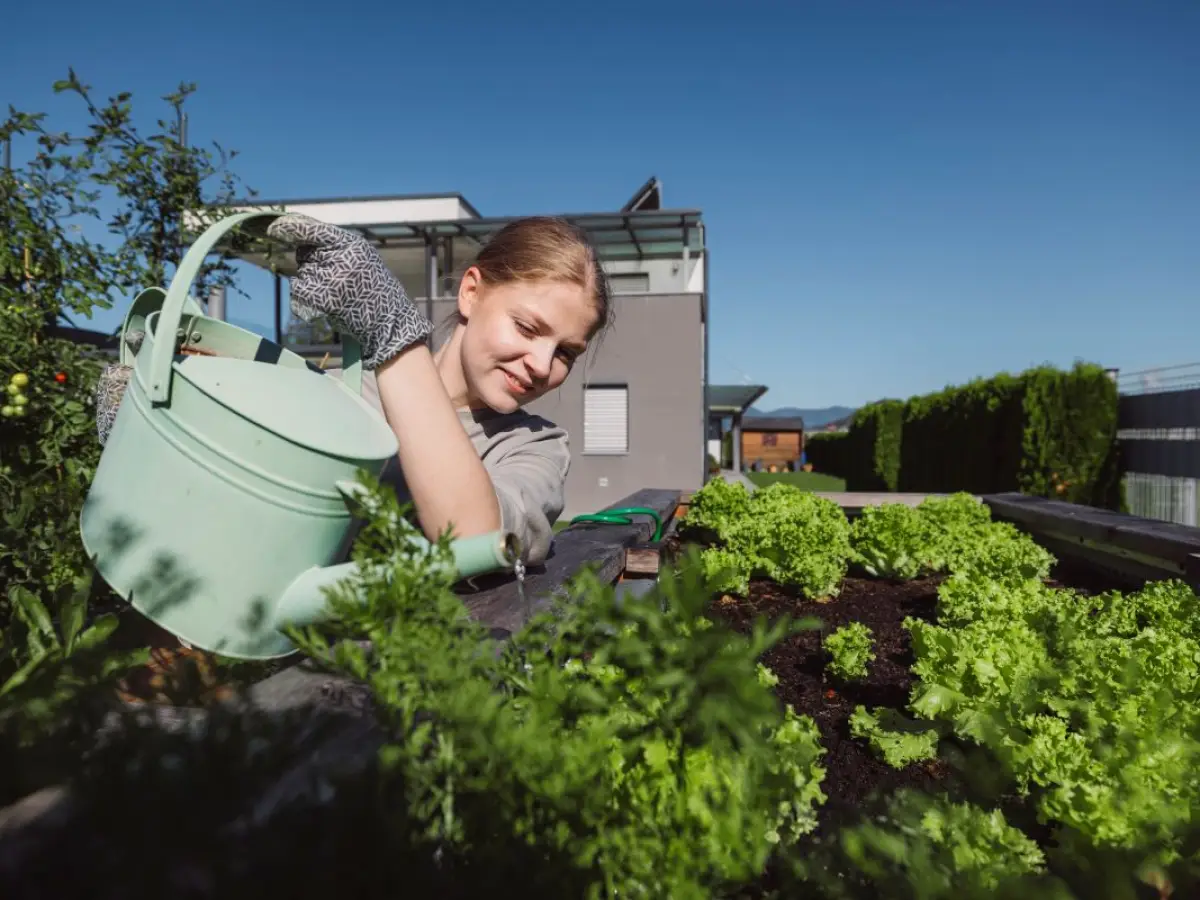
Cover: Envato image