


This article is part of the thematic channel The Water Observer: subscribe to our newsletter and receive exclusive contents from the world of water
2022 was the year in which the Po River basin suffered the worst drought in the last 216 years. Nationwide, according to ISPRA estimates, the natural water supply fell to around 67 cubic kilometres – an all-time low and almost half the 1991–2020 average. A few months later, in May 2023, there was once again a surplus of water: the floods in Emilia-Romagna claimed 17 lives and caused €8.5 billion worth of damage. Yet, in the face of these fluctuations, public spending tends to react to emergencies, that is, to follow events rather than anticipate them. Not to mention that, according to the National Association of Building Contractors (ANCE), over the last 15 years, 21.6 billion has been allocated for prevention, and 24,000 projects have been funded to the tune of 19 billion, yet the completed projects amount to only 3.9 billion, or 20% of the funds.
The problem is not just how much is allocated, but how much actually gets spent. Even the Court of Auditors points to Italy’s difficulty in utilising the resources earmarked for hydrogeological risk mitigation. Elsewhere, the imbalance concerns the allocation of resources rather than the ability to spend them. In the United States, Forest Trends’ report Living with Fire and Water, citing FEMA data, shows that between 2020 and 2024, 88% of the $158.9 billion in federal disaster funds went towards infrastructure reconstruction and debris clearance, and only 1.9% towards mitigation. This has led to a growing focus on collective action: coalitions of businesses, public bodies and communities working at the basin level, where the risk is shared and the response must be as well.
A risk reflected in the financial statements
Europe is the fastest-warming continent (+0.56°C per decade, according to Copernicus), and ISPRA has recorded a statistically significant decline in water resources since 1951, with a projected reduction of between 10% and 40% by 2030 and peaks of 90% in the south in the worst-case scenario. Brussels has responded with the Water Resilience Strategy in June 2025 and the EU Framework for Climate Resilience in October 2026, but the most visible change concerns businesses.
“Water has found its way into financial statements, not just into people’s minds,” observes Alessandro Leonardi, managing director of Etifor | Valuing Nature, a spin-off from the University of Padua founded in 2011, which has focused its efforts on this issue following years of working alongside land reclamation consortia, river basin authorities and park authorities. “Water is the third key issue after carbon and biodiversity, and the second most important aspect of nature in corporate reporting. While carbon is declining, the number of companies setting water targets is rising, because it is no longer just about sustainability but about business continuity and risk.”
“Translating” between public and private
According to a GlobeScan and WWF survey quoted in the recent WWF and Earth Finance paper on funding collective action, over 70% of experts believe that their water problems cannot be solved without acting together, and cite the lack of funding models as the main obstacle.
It is within this context that collective action comes into play, which the Alliance for Water Stewardship describes as a coordinated set of activities amongst stakeholders with complementary roles, working together to pool knowledge and resources to tackle shared water challenges. Standards are now making this a requirement. “The business world itself recognises this,” observes Leonardi. “The Water Resilience Coalition asks signatories to participate in at least one collective action in their local area within a year, and the AWS standard goes so far as to reward those who lead joint investments at the basin level.”
The first obstacle, in his experience, is language: “The public and private sectors use the same words – impact, indicator, risk – to mean different things. Our work, even before it is technical, is one of translation.” Underlying the linguistic issue is an economic one: “Those who pay for prevention are rarely the ones who reap the savings; collective action serves to reconnect these resources.”
In Lombardy, that connection is made through the Water Resilience Initiative, promoted by the region in an area where 20% of the land and €80 billion in productive capital are exposed to medium and high flood risk. Etifor acts as the technical coordinator, while Fondazione Cariplo is the co-funding body. The starting point is clear: the region has the borrowing capacity to build the 75 planned flood retention basins – 45 of which have already been completed – but is struggling to cover their operating costs. This is where the initiative brings in the private sector, with operations set to begin in January 2027 and a 3.5 million call for proposals in June. Further east, between Padua and Vicenza, Etifor has established a new governance structure for the river basin in collaboration with Parco Fiume Brenta, the local councils, the water utility (ETRA), the River Basin Council, the consortia and local organisations, securing funding to finance it through the European LIFE Brenta 2030 project.
Arno: when competitors share a river
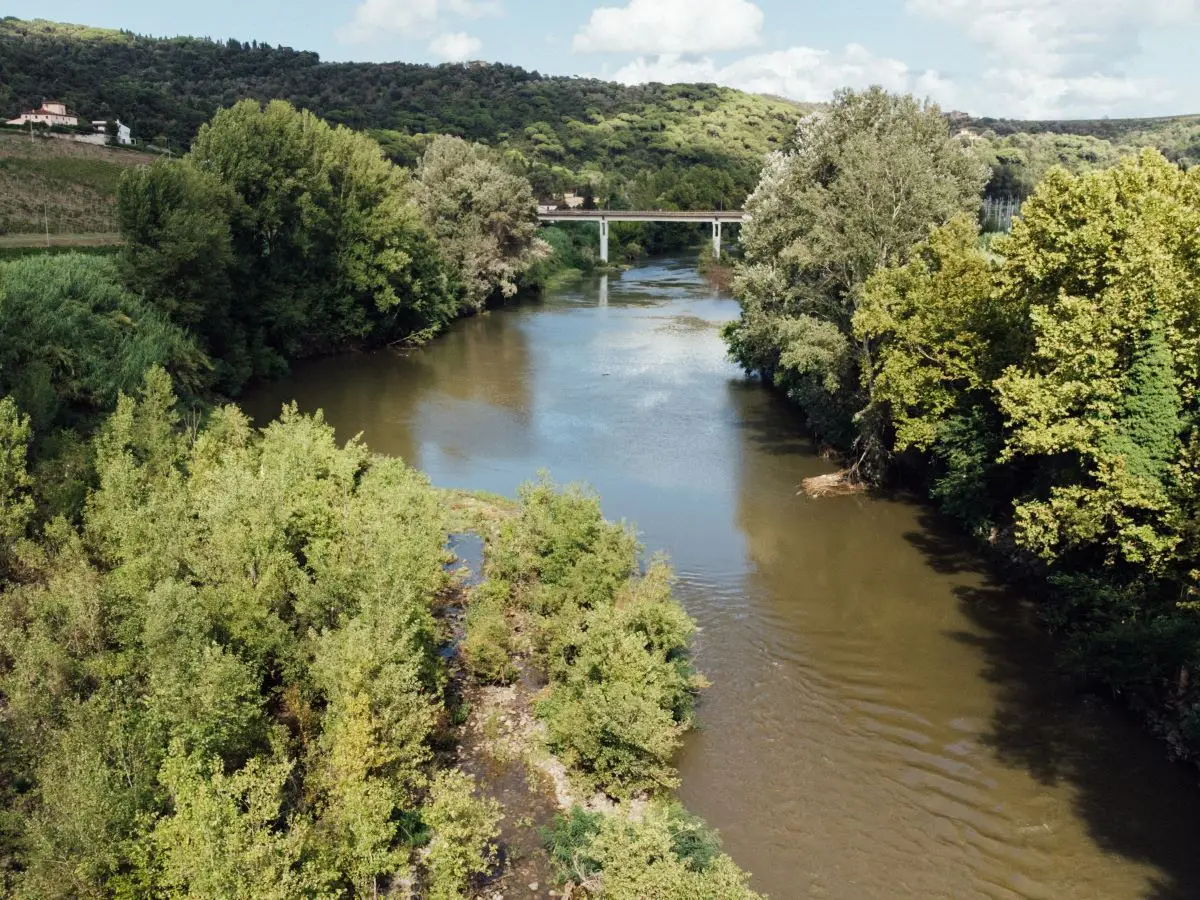
On the Arno, however, the impetus comes from a luxury group. The cross-sector initiative, the Arno Basin Water Resilience Lab, was launched by Kering, Conservation International and Etifor | Valuing Nature, and its motivations can be found in the geography of production. Hundreds of strategic fashion suppliers operate in the basin, concentrated in districts that cannot be relocated, from the leather trade in Santa Croce to the goldsmiths’ workshops in Arezzo. The 2023 floods in Tuscany caused damage estimated at €1.89 billion, and by 2030, more than 50 days a year of heat stress are projected. For a brand in the sector, floods that destroy facilities and dry spells that leave tanneries and workshops without water are, first and foremost, a supply security issue; the pressure from CSRD, TNFD and SBTN regarding the reporting of impacts, risks and dependencies on water and nature adds a further layer of exposure.
The Lab’s work starts from an analysis conducted by DAGRI at the University of Florence and Etifor, which identified six water risk hotspots. There are three main areas of investment: in Santa Croce, new technologies are being explored to reduce water abstraction and improve the quality of water used by tanneries; in Arezzo, nature-based solutions are under development; at Villa Petriolo, work is underway on wetland restoration, reforestation and the transition to regenerative agriculture. According to estimates by the European Commission, every euro invested generates 3.9 euros in benefits, with up to 34% of damaging flood volumes removed and a reduction in peak flow of between 8% and 16%.
The most significant aspect remains the coalition's structure. This was demonstrated by the launch event on 2 November 2026, part of the programme of events marking the 60th anniversary of the Florence flood, which brought together public and private stakeholders from across the region. The initiative is coordinated by the Municipality of Florence, the Region of Tuscany, the University of Florence and the Metropolitan City of Florence, which has also granted its patronage. Alongside businesses, the event was attended by the Northern Apennines District Water Authority, ANBI Toscana, the land reclamation consortia and ANCI Toscana.
On the private sector side, in addition to Kering and Etifor, LVMH – the first private group to join at the highest level – Burberry, Giardini di Toscana and Italpreziosi are also actively contributing to and funding the Lab. Other organisations, meanwhile, are supporting the project through co-funding initiatives across the region. The roadmap envisages the first interventions in 2027 and the sharing of the model with other European river basins from 2028.
Who coordinates and who monitors?
The two models address complementary needs: in Lombardy, attracting private capital where the region struggles to cover operational costs; along the Arno, establishing a coordinated supply chain to protect the industrial districts on which it depends. The same paper by the WWF and Earth Finance identifies governance as the least-funded component of collective action.
Leonardi insists on the credibility of the process, which requires “separating those who fund, those who implement and those who verify” and adhering to recognised standards: the CEO Water Mandate and the Water Resilience Coalition for processes; the Alliance for Water Stewardship to certify impacts; and Volumetric Water Benefit Accounting to quantify water benefits. Added to this is the cost structure.
“Grey infrastructure requires constant maintenance, and the capital market is able to finance it,” argues Leonardi. “A natural system restored beyond the threshold of degradation is self-sustaining, but requires a focused investment in the early years, which then decreases. Tailor-made instruments are needed, such as water bonds: the public sector acts as guarantor, absorbing the first loss, and lowers the return demanded by investors. The difference between the premium and the coupon finances mitigation measures, subject to independent verification, and spreads over several years a cost that no single company would bear on its own. There is a return: for forest fire prevention measures, a 2026 study in Science estimates savings of 3.75 dollars for every dollar spent.” Hence the proposal for water bonds with a public first-loss guarantee. “Today, the challenge is no longer to prove that NbS work,” concludes Leonardi. “But to convince governments to provide incentives for the private sector and to build this financial infrastructure with us.”
This content is produced thanks to the support of sponsors
Cover: Arno river, photo by Etifor