


This article is part of the thematic channel The Water Observer: subscribe to our newsletter and receive exclusive contents from the world of water
Water is becoming increasingly a matter of resilience, but turning this awareness into practical action requires combining very diverse stakeholders, expertise and resources. The public sector knows the local area and manages infrastructure and reservoirs but struggles to find funding to carry out and, above all, maintain these projects; the private sector instead has the resources and a growing interest in reducing risks to capital and supply chains but inevitably operates on a smaller scale.
Estimates based on figures provided by Italian regions indicate that between 2015 and 2024, landslides and floods caused over 19 billion euros’ worth of damage across the country. Emilia-Romagna tops this grim ranking, with over 2.5 billion euros’ worth of damage recorded in the region alone (around 13.5% of the national total).
Data updated to 2024 show that 6.8 million people live in areas exposed to flood risk, over 640,000 local business units are located in flood-prone areas, and more than 84,000 industrial and service enterprises are situated in areas with a high or very high risk of landslides. An incident in these areas would therefore not only cause direct damage to industrial units, but also disrupt production and supply chains. This means that while there is a struggle to allocate resources to prevention, between 10% and 13% of the country’s entire economic and residential infrastructure is situated in areas where, sooner or later, water will reclaim its space. Nature-based Solutions can help bridge this gap, but a crucial question remains: how can we demonstrate their economic value and attract sufficient capital to make them scalable? We discussed this with Alessandro Leonardi, CEO and co-founder of Etifor | Valuing Nature.
What are the priority areas and measures for water resilience in Italy and Europe?
Today, we have highly detailed maps of flood, hydraulic and hydrogeological risk: we know where the risk is high, medium, low and so on. Overall, 94.5% of Italian municipalities (7,463) are at risk from landslides, floods, avalanches and/or coastal erosion (according to ISPRA data from 2024). Furthermore, we know exactly where the civilian population, tourist areas and industrial zones are concentrated. In other words, these are the areas where, should an event occur, the damage would be greatest in terms of human lives or GDP. We estimate that over 640,000 local business units (13.4% of Italy’s industrial base) are located in areas at risk of flooding. Cross-referencing geographical risk data with data on exposed assets or people helps us locate interventions spatially and define their nature. Obviously, we must also take preventative measures upstream, taking into account the differences between mountainous and lowland areas, as the hydrogeological dynamics are entirely different. If we want to protect the lowlands, we must start with the maintenance and management of the mountains.
Let’s start with the mountainous areas.
The main issues concern landslides, slope stability and the clean-up of the drainage network and reservoirs. The latter is a priority: if this is not carried out (which also involves the forest management of riparian areas), blockages will form that prevent water from flowing downstream. In terms of reservoirs, stabilising the slopes is crucial: as we have seen in Nepal, if a slope collapses into a hydroelectric reservoir, it compromises its functionality and causes flooding downstream. Then there is the issue of the sponge territories: small- and medium-scale interventions can be planned to retain water when there is too much of it, releasing it when there is too little, thereby slowing the flow towards the sea.
How do priorities shift in the valley?
The risk of hydraulic and flood-related hazards increases. In Lombardy and Tuscany, for example, we are working on the construction and management of wetlands and flood retention basins, i.e., large areas which, during floods, help to smooth out the peaks. The problem is that public bodies only have the funds to build them, not to manage them: they need to be cleared after every flood, with sediment and rubbish removed, but the resources are lacking. These interventions are often purely hydraulic in nature and overlook the ecological aspects that would be useful in achieving restoration objectives.
What are the most common requests from businesses?
Sustainability departments are identifying water as a new priority issue, just as they did with carbon and biodiversity. Large companies are adopting standards such as those of the Alliance for Water Stewardship or joining the Water Resilience Coalition, setting targets and metrics to measure reductions in consumption, risks, dependencies and impacts. The next step is to raise awareness of water issues across different business units, showing the board and production units that investing in nature-based solutions reduces water and flood risks to plants or the supply chain. One specific case we are currently following is the tanning and fashion district in Tuscany within the Arno River basin, a hydrogeologically complex area: in the event of flash floods, water from the hills of Arezzo all flows into the same valley, posing a very high hydraulic risk. Local companies are asking us to demonstrate the effectiveness of nature-based solutions in reducing risk at their production sites and throughout the supply chain.
Water management is complex, and no single sector can tackle it alone: the public sector understands the scale of the problem, but is struggling to keep up as extreme weather events intensify; the private sector has the resources and is more agile, but operates on a limited scale. You have developed the concept of collective action to bring these two elements together: how does it work?
Collective action means, on the one hand, engaging with the public sector and ensuring we have a clear understanding of its policies, plans, programmes and priorities; and, on the other, gathering the interest of the private sector, seeking to align priorities, terminology and objectives. The point of reference and common ground is provided by international guidelines and standards, such as those of the Water Resilience Coalition, which offer a robust methodological framework and the necessary assurances to the public sector, ensuring that rigorous and scientific approaches are adopted. The process begins with a basin diagnosis: in the case of the Arno, together with the University of Florence (DAGRI Department), we analysed the hydrogeological structure, breaking it down into sub-basins and identifying the risks and dynamics of each. Next, a pipeline of nature-based solutions is developed, and institutional consultation begins: the river basin authority (ABDAS), the region, land reclamation consortia, local councils and the water authority.
How does the private sector get involved?
As far as the Arno is concerned, Kering has led the way: the group, comprising French and Italian fashion brands, has identified this basin, where a significant proportion of its production is still based, as a global priority for its economic interests. That is where we started, together with Conservation International, which supports Kering in managing its global water strategy.
How are companies acting at the international level?
The Water Resilience Coalition has identified 100 priority river basins worldwide, based on water stress conditions and the presence of significant economic activity, and is helping the 50 member companies to implement collective actions in various contexts. Around 21 collective actions are underway in six countries, not including Italy, where initiatives are currently being developed. The goal is to establish a blended finance system, allowing public funds and private partners to sustain the initiative over time. In Italy, we have launched an initiative in Lombardy for the Po River basin, as well as one for the Arno. In the latter case, Kering and LVMH are the two companies within the Water Resilience Coalition that have funded the launch of the collective action. Other companies are joining and funding individual projects. Our hope is to involve all the major sectors that depend on the water of the Arno: tourism, metallurgy and agriculture, as well as the fashion sector, which dominates the local economy.
How are the results monitored and validated?
The Water Resilience Coalition offers a monitoring portal. Etifor manages the portals for the Arno and Lombardy: each activity is entered via a data collection form, and for each basin, users can view funding details, participating companies and impact metrics. Based on the data entered, each action generates an output in terms of water resources, carbon and other environmental indicators. The Positive Water Impact framework is used to help companies develop a water stewardship strategy, while Volumetric Water Benefit Accounting is used to calculate water benefits. The Coalition thus ensures validation of the methodology, but this is not a third-party certification, as is the case with carbon: in the water sector, we have not yet reached that level.
From a financial perspective, how is the relationship between expenditure and outcome assessed?
This is the missing link, which is why nature-based solutions are not attracting significant capital. The return on investment is more difficult to prove before an extreme weather event occurs: the model is based on damage avoided, business continuity and risk reduction. In this regard, the Water Resilience Coalition uses water volumetric benefit accounting, a set of scientific methodologies to measure the impact of a project in terms of the volume of water infiltrated, damage averted and other indicators. We can express the cost of the project per cubic metre of water replenishment or per unit of damage averted, but making the figures add up within a business model remains the critical issue.
What is the difference between Water Resilience Coalition and Alliance for Water Stewardship?
The Coalition ensures that the methodology is validated, but it is not a third-party certification. The Alliance for Water Stewardship, on the other hand, is a genuine certification standard, covering both the industrial aspect (reduction in consumption, reuse, etc.) and any nature-based solutions implemented (thereby certifying the water recharge effect, etc.).
Are there different perspectives, apart from disaster risk, through which to view private investment in a collective system with the public sector?
Yes, the beverage sector focuses heavily on water replenishment: it withdraws a certain volume of cubic metres and creates a nature-based solution that replenishes the aquifer. Alternatively, it works on protecting the quality of the water source: a different risk, but one that is just as real.
What about the agricultural sector, then?
The situation is more complex. Farmers can act as stewards of the land and providers of nature-based solutions, but the sector, at least in Italy, is not yet taking the issue of adaptation seriously. Water demand and farming practices remain largely unchanged. It also depends on the context: in Tuscany, agriculture uses only 10% of the basin’s water, while the tanning sector uses 50%; in the Po Valley, however, the situation is the opposite, with 80% going to agriculture. The fragmentation of the sector makes it difficult to identify a single entity with which to engage in dialogue or hold accountable. There are, however, opportunities, such as a shift towards greater use of autumn-winter crops, which rely on rainfall rather than river water. For example, sorghum, which has much lower irrigation requirements, is more resilient than maize and now grows well even in the north. But suggesting a reduction in maize or other water-intensive crops is very complicated: it means changing the farming practices of thousands of farmers.
Which advantages does Etifor offer?
We started out as a consultancy firm in the forestry sector. For the past fifteen years, we have been working with the public sector (land reclamation consortia, river basin authorities, regions, park authorities), and, over the last ten years, we have begun working with the private sector. Our strength lies in our ability to speak the language of both sectors, because words such as “impact” and “mitigation” have completely different meanings in these two worlds: the challenge is to align these frameworks. We are scientists but also technicians who get involved on the ground, overseeing the creation of wetlands and the planting of new forests. Moreover, we have the capacity to incorporate innovative financial instruments such as blended finance, bonds and credits to ensure long-term financial sustainability.
How would a water bond work?
A bond is a financial tool: it is the mechanism through which investors, financial groups and banks make funds available. The region, or other public bodies, can provide guarantees to reduce the risk for investors and thus also lower interest rates. Businesses can use the funds raised through the bond to implement nature-based solutions. Each year, they repay the investment, reducing risks and achieving positive impacts on the climate, water and biodiversity. Alternatively, they could finance the initial investment directly, but this would not enable them to mobilise as much capital. Water-related projects require substantial capital; the bond allows the cost to be spread over several years. Our idea is to bring all the stakeholders together and, in a bespoke manner, develop an innovative financial product specifically tailored to the Arno, and perhaps even to Lombardy.
So the issue of financial innovation is important.
For me, it is the second key driver. On one side, there is risk; on the other, there is a great deal of interest in innovation, both from businesses and from the insurance and financial sectors.
What do you expect from upcoming international events, such as the UN Water Conference and the Euro-Mediterranean Forum?
I hope that a global framework on water will emerge, comparable to the Paris Agreement on climate change and the Kunming–Montreal Global Biodiversity Framework. It would give countries a common structure, with clear targets and shared metrics, and would help to connect the issue of water with that of biodiversity, rather than keeping them in separate boxes. A single framework on nature would be a step in the right direction.
This content is produced thanks to the support of sponsors
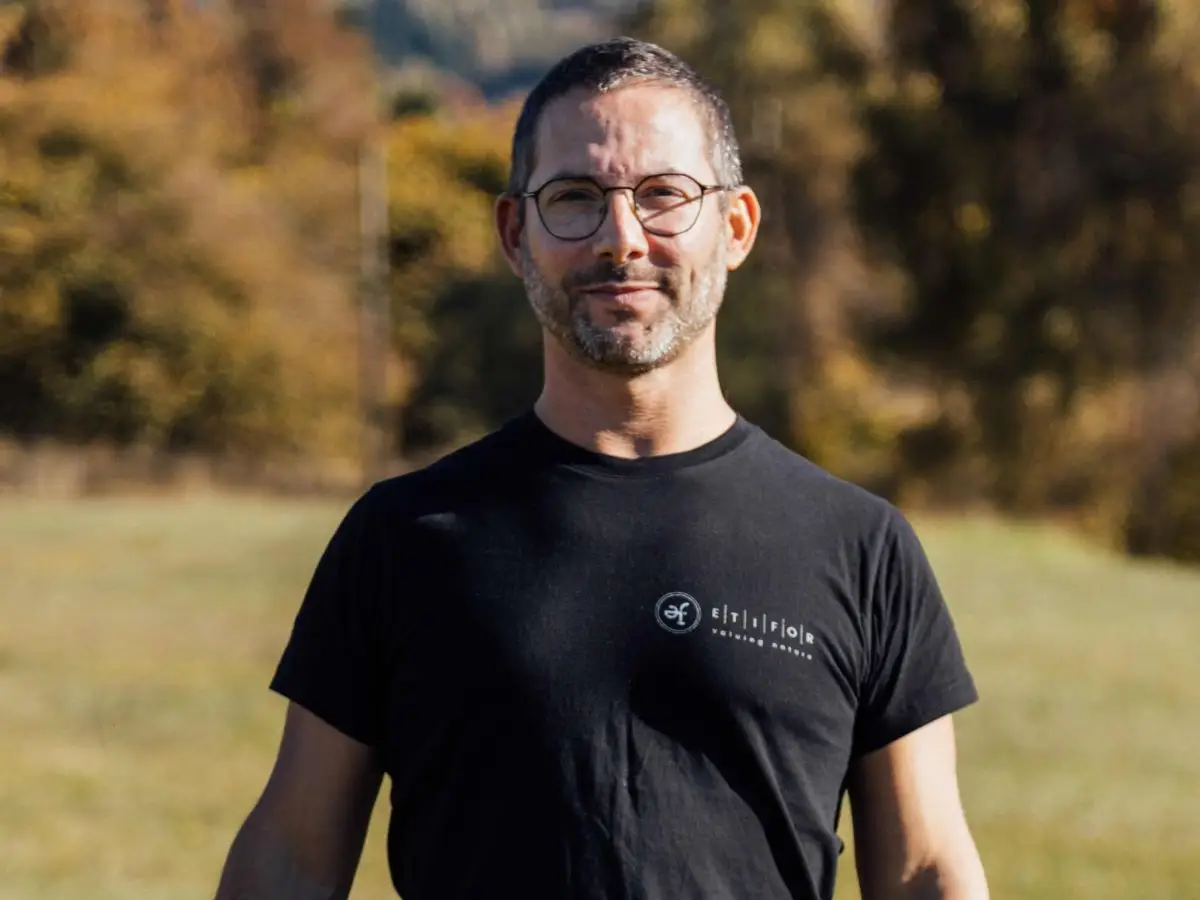
Cover: Alessandro Leonardi