


In one of Africa's major cities, Nairobi, Kenya, the seventh session of the United Nations Environment Assembly (UNEA-7) is being held in early December. In this context, UNEP has published the new Global Environment Outlook (GEO-7), entitled A future we choose. The report clearly points out that environmental degradation costs trillions of dollars every year and causes the deaths of millions of people. It also emphasises how a business-as-usual approach will only aggravate the effects of the ongoing global crises.
Alongside this alarming news, however, the outlook also outlines the steps needed to restore balance with nature. It lays out two pathways to reduce the risks of the climate crisis, halt biodiversity loss and curb pollution. At the same time, it illustrates how protecting the environment can generate macroeconomic benefits as early as 2050, reaching twenty trillion dollars a year by 2070.
As Inger Andersen, Executive Director of UNEP, stated, “the Global Environment Outlook lays out a simple choice for humanity: continue down the road to a future devastated by climate change, dwindling nature, degraded land and polluted air, or change direction to secure a healthy Planet, healthy people and healthy economies. This is no choice at all.”
Interconnected crises
The message that this seventh session of the UNEA wants to convey is the urgency of accelerating the development of sustainable solutions to make our planet more resilient. For today's society, this is no longer a choice but rather a requirement: crises generated by human activities already have an economic, social and environmental cost of trillions of dollars per year.
As highlighted in the UNEP report, over the last twenty years, damage caused by extreme weather events has been estimated at $143 billion per year, and greenhouse gas emissions are still on the rise. “There's no question the climate is warming faster than we thought,” recounts Sir Robert Watson, British chemist and former co-chair of the IPCC and IPBES. “In the last couple of years, we’ve exceeded 1.5°C for at least two years in a row. The last ten years have been the hottest on record. This is a significant change even from GEO-6. Land degradation also continues, clearing of forests, loss of soil fertility, and loss of species. Nothing is going in the right direction globally. Some countries have local successes, but at the global level things are significantly worse today than they were for GEO-6.”
Shifting from the climate crisis to pollution, the report notes that in 2019, health damage related to poor air quality alone caused costs exceeding 6% of global GDP. Environmental pollution, also affecting terrestrial, marine and freshwater ecosystems, is still the leading cause of disease and premature death, killing nine million people every year.
In addition, there is the rapid decline in biodiversity, on which not only the natural balance but also entire economic sectors such as pharmaceuticals and agri-food depend. According to UNEP, current efforts will not be enough to meet the 2030 targets set by the Kunming-Montreal Global Biodiversity Framework. Moreover, soil degradation threatens food security: according to 2022 data, between 20% and 40% of land was already compromised, a phenomenon bound to worsen due to unsustainable agricultural practices, the expansion of cultivated areas and urbanisation.
Paths for a better future
If the world proceeds with a business-as-usual approach, the state of the environment will deteriorate drastically. The progress made so far, from the Kyoto Protocol to air quality improvements in a few regions, is described as isolated successes that are far from enough.
The report, however, emphasises that change is still possible: a more decisive commitment and a reversal of current geopolitical trends is required to initiate real and lasting transformation. It also highlights how the various environmental crises are tightly interwoven and must therefore be addressed in an integrated manner, rather than as isolated problems.
“One of GEO-7's messages is that we must see all four crises together. We cannot just work on climate change alone,” comments Professor Edgar E. Gutiérrez-Espeleta, President of UNEA. “These big systems drive life on the planet, and we must act with this vision. Climate change is triggering processes in other systems, but we must look at all four crises together.”
Several future scenarios are examined in the report. In addition to business-as-usual, which, as we have seen, would lead to further environmental deterioration and a decrease in the well-being of nations; two possible transformation pathways have been developed. The first scenario focuses on behavioural changes in people, reducing pressure on natural systems through lower consumption and a redirection of values towards sufficiency. The second, on the other hand, focuses on technology: in a highly globalised world, it relies on technological progress to increase the efficiency of processes and reduce environmental impact.
Five areas of action to reverse the trend
Nonetheless, as Sir Robert Watson reminds us, “neither behaviour nor technology change alone is enough. We need both, plus governance change. Different countries will need different mixes. And underpinning all this is changing our finance and economic systems, including fossil fuel subsidies and internalising environmental and social costs.”
Eliminating or converting subsidies and internalising externalities will, however, inevitably drive up food and energy prices. In order to make these measures socially and politically acceptable, social protection tools will be required to safeguard the most vulnerable groups, while ensuring that economic and financial systems accurately reflect the real cost of resources.
To enable these transformations, the report identifies five key areas for action and, for each, outlines the steps needed to achieve real results: economy and finance, materials and waste, energy, food systems and the environment. At the same time, it draws attention to the need to advance parallel solutions, as these areas influence and interweave with each other.
According to the report, addressing environmental challenges within institutions is not the sole responsibility of environment ministries: other sectors, such as energy, agriculture, finance and defence, must also be involved, since environment policies are linked, for example, to economic, food and national security policies. At the same time, institutions, the private sector, NGOs and citizens must share a common vision and actively contribute to the ecological transition.
In this context, the message sent to businesses is clear: “The main message to businesses is that short-term thinking can no longer be supported: we must think about the future,” comments professor Edgar Gutiérrez-Espeleta. “You can still make a profit while operating in a sustainable way. Businesses must adopt circular practices, reduce emissions, explore new models, and improve the lives of the people who work for them.”
Additionally, in caring for biodiversity and nature, UNEP reminds us that the knowledge and values of indigenous peoples and local communities are a fundamental element to be integrated into environmental policies if we want to achieve a just and sustainable future. This is profound knowledge, rooted in a holistic vision and linked to the territories in which these communities live.
Action to address the four planetary crises will certainly come at a cost, but the costs of inaction, in terms of economic well-being and human lives, would be even higher. Moreover, the Outlook and other studies show that investing in nature conservation will bring long-term economic benefits. The transformation pathways outlined in the report point to a positive economic future if the Paris Agreement is met: no loss of GDP by 2050 and benefits of 6% by 2070, rising to over 25% by 2100.
In practical terms, these strategies could generate an additional value of twenty trillion dollars per year by mid-century and exceed one hundred trillion per year by the end of the century. Beyond the numbers, which may or may not come to fruition, the message of the report is the urgency of investing now to address the four planetary crises: by acting now, not only economic but also social and environmental benefits can be achieved in the long term.
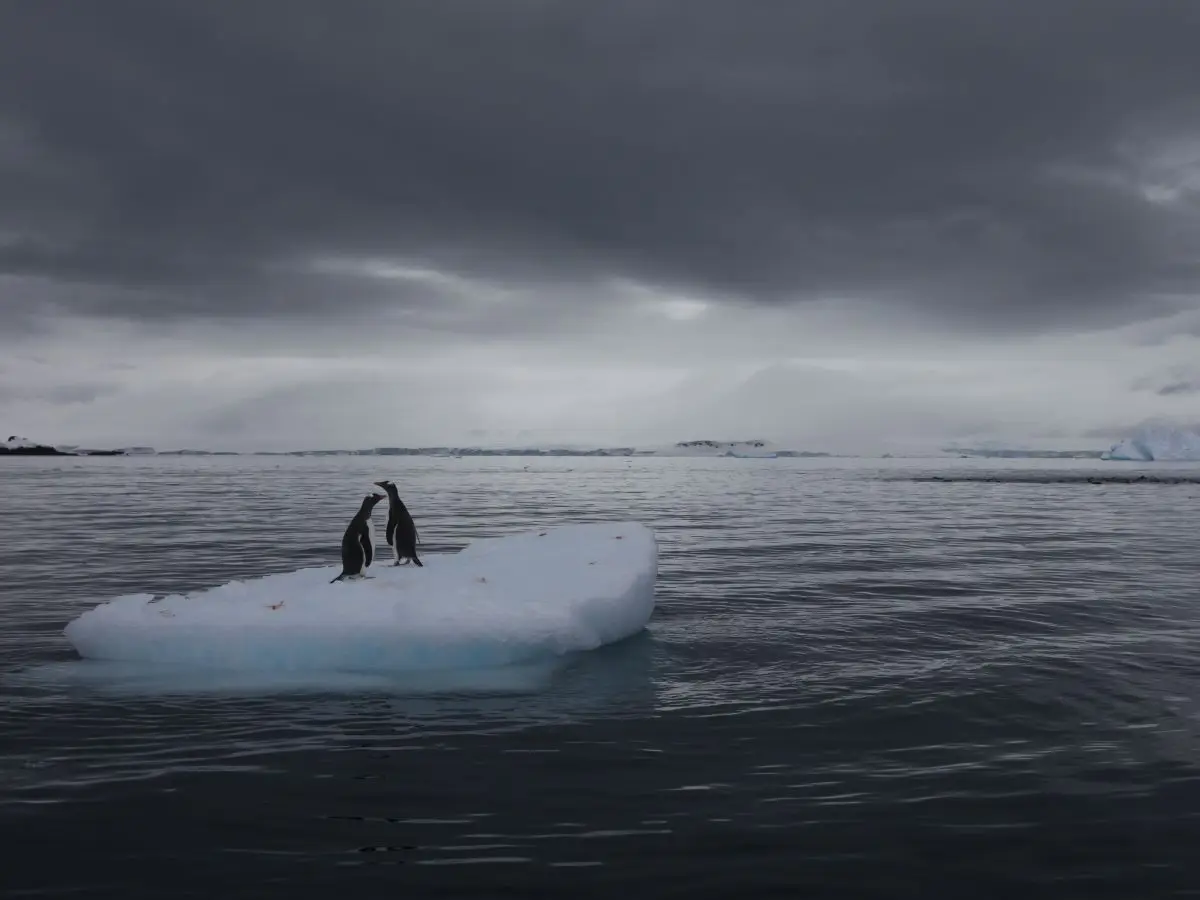
Cover: photo Envato