


Antalya – The second week of COP31 in Turkey begins with a draft final decision that speaks volumes about how the negotiations are progressing, particularly within a microcosm such as the UNFCCC, where form is often substance. And we are not there yet. But let’s take it one step at a time.
First of all, at this COP, a final agreement (a cover decision) is being negotiated transparently, through formal and open consultations, right from the very first day. This is unusual in itself, particularly given that these negotiations are taking place in parallel with all the others, in the more technical negotiating rooms – those, to be clear, which follow the technical agenda. Why is this unusual? Such a transparent process, except for what we saw in Dubai in 2023, is certainly not something common; but in that case, the cover decision served as the textual and legal instrument to consolidate and summarise the results of the first Global Stocktake – something the delegates certainly do not need to do here in Antalya (the second stocktake is, in fact, scheduled for 2028).
In Dubai, the work on the cover decision was, in a sense, a necessary step, identified by the countries, to transform the evidence that had emerged over two years of preparatory discussions into textual precedents. Nothing in the COP world is, in fact, more solid than a textual precedent, and the stocktakes serve precisely to establish key points according to a scheduled cycle. In Antalya, we are therefore faced with a process which, in a sense, resembles the stocktake but – forgive the light-heartedness – is, in this context, tinged with a sense of FOMO on the part of the co-chairs, who are aiming for a broad, strong decision that encompasses the concerns and aspirations of all countries. The aim is to leave the Antalya compound with a result that, if not memorable, is at the very least noteworthy in the history of climate action.
But was a cover decision really necessary? Have we not been witnessing, for years now at COP, a situation where host countries focus more on the visibility of a single final summary text than on making progress at the technical working groups, whose task is to advance the provisions of the 1992 Convention and the 2015 Agreement?
Speaking of the presidency: which one? Over the last few days at the COP, we have noticed a noticeable absence of the Australian presidency from the negotiations, more than offset by a strong Turkish presence. The closer we get to the end of the COP, the more tangible it feels that the Turkish are running the show in the conference halls, both behind the scenes and in the spotlight. Before the COP began, we had repeatedly said that this dual presidency (Australia leading the negotiations, Turkey chairing the conference) would be politically risky, even though the preparatory work over recent months might have seemed encouraging – after all, we are talking about two major countries with solid diplomatic experience. Here we are, 70 hours from the COP’s scheduled end, with a 144-paragraph compromise text in hand that looks like anything but a synthesis, while in the other rooms almost nothing seems to be moving towards decisions or consensus.
The way this COP is managed is, to say the least, chaotic or, to quote a member of the Secretariat with extensive negotiating experience, certainly inelegant. Dialogue between countries, and between countries and the presidency, has become rushed, stifled, confused and muddled due to the sheer number of issues being dealt with simultaneously. We began observing this new dynamic – politically accelerated and lopsided – at COP27 in Sharm el-Sheikh, when, amidst the deafening background noise, the G77 countries managed to take the Western delegations by surprise and secure the adoption of the Loss and Damage Fund. From then on, it has been difficult to restore order to the process, and this is probably the new normal of climate diplomacy. Everything, all at once.
The chaos, paradoxical as it may seem, is a consequence of the United Nations’ egalitarian democracy. The countries of the so-called Global South put forward proposals, block others and demand revisions and reformulations, wielding ever-greater influence in the negotiations, both numerically and politically. Not that they did not exist before: these negotiating groups have been in place since the end of the Second World War, and have been restructured since the 1990s. Simply, in this context of the gradual withdrawal of the Western dominus from the game (the United States foremost among them), the states of the Global South have more room for negotiation, and the Europeans find themselves alone in mediating positions, in effect, with the rest of the world, without any division of labour. It is no mystery – and we saw this clearly (by their absence) in Brazil a year ago – that without the United States, there is no one who really knows how to talk to the Arab bloc, and to the Saudis in particular.
The other paradox of this story is that the same countries of the Global South which, collectively, are calling for climate justice and funding to respond to disasters caused by the historical and current responsibilities of the industrialised North, often pursue, individually, fossil-fuel agendas that are completely at odds with the mitigation targets of the Paris Agreement itself.
But the chaos only worsens if it is not managed. The impression we have from Antalya is that the Australia–Turkey, or Turkey–Australia, dual presidency is not in control. Or at least not yet. And that it may, perhaps, have made some errors of judgement. Why, for example, include the global target on electrification by 2035 – the flagship measure of this COP, a voluntary, non-negotiated agreement – in the formal negotiations on the cover decision, before even having properly tested the waters outside the negotiations? After months of discussions, the global goal has very few signatories; indeed, the Presidency has been reduced to posting on LinkedIn to drum up support, while in the negotiating room the goal itself is being further watered down to accommodate the (obstructionist) demands of Russia, Saudi Arabia and others, leaving out the necessary references to clean energy. Could this be a strategy to salvage the overarching target, aiming for a realignment that involves sacrificing every other part of the text in preparation for a second draft, or is it truly a colossal political error of underestimation?
We have the impression that the so-called “implementation era”, begun in Belém with the definitive conclusion of years of negotiations on the rules of the game – while results were supposed to come from the practicality of coalitions outside the negotiating rooms – may not yet have truly started. In any case, we have not got off on the right foot.
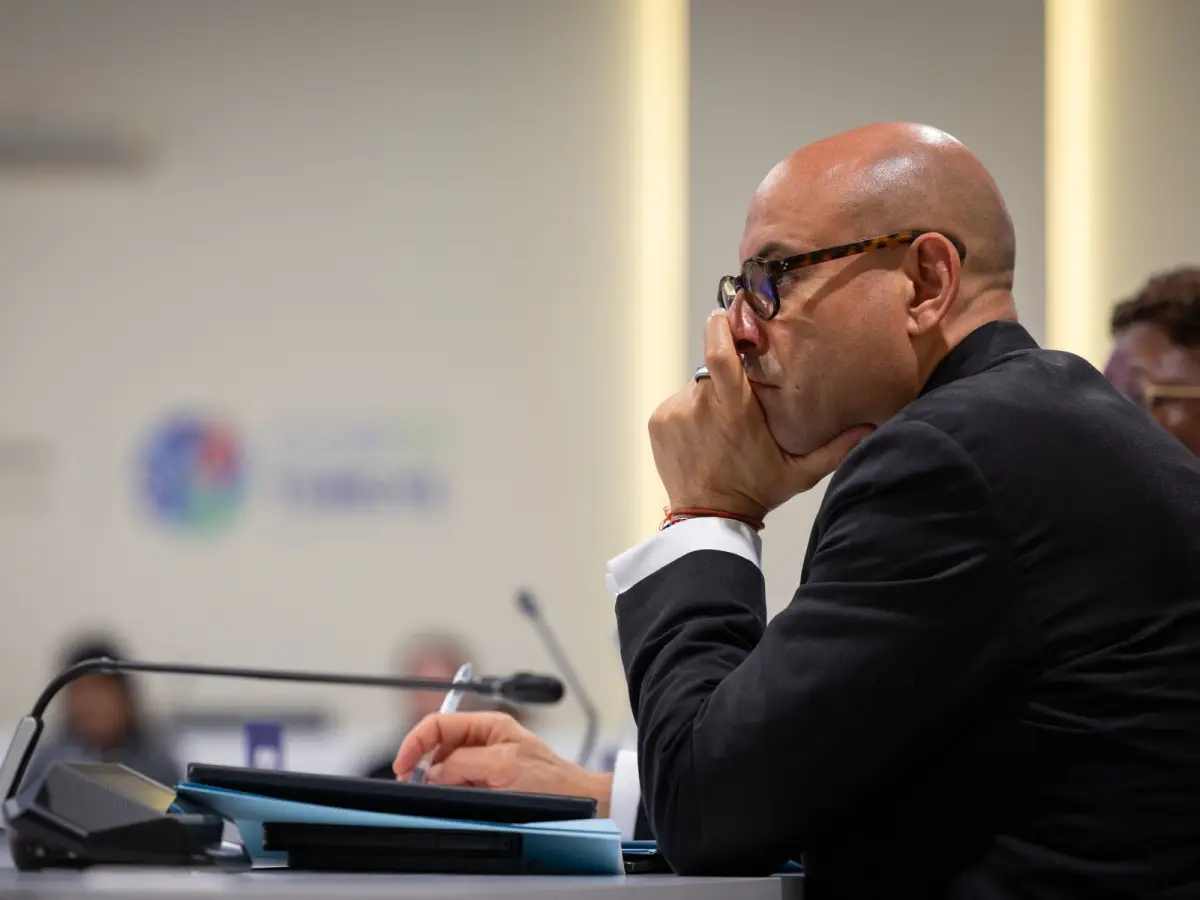
Cover: Simon Stiell photographed by Kiara Worth © UN Climate Change via Flickr