
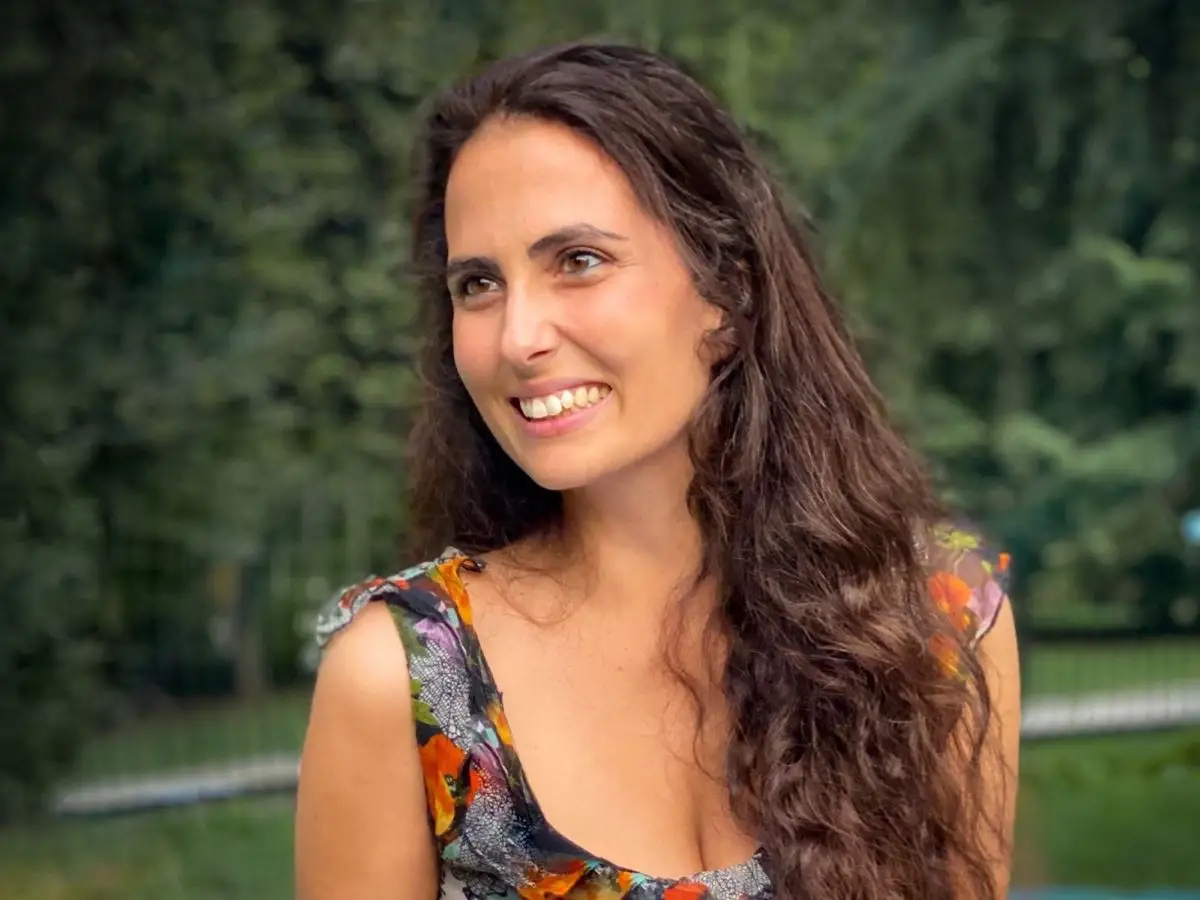

Antalya – In the draft COP31 cover decision circulated on 16 November, paragraph 79 calls on developed countries, climate funds and multilateral development banks to simplify and speed up approval and disbursement procedures, and to prioritise direct access for “national, subnational and regional institutions”. It is unlikely to survive in the final text. But it signals how cities of every size are increasingly at the centre of climate action and of the negotiations. We discussed it with Caterina Sarfatti, Managing Director for Political Strategy and Advocacy at C40, the network of major cities committed to climate action.
Are cities carrying more weight in the climate negotiations?
Cities account for around 70% of the world’s greenhouse gas emissions, but they are also where action is accelerating: three out of four C40 cities are cutting per capita emissions much faster than their national governments. Here at the negotiations we are united under a single umbrella, the LGMA, the Local Governments and Municipal Authorities constituency: all the networks follow the talks together and share a common position. There is also something new. C40 no longer represents only large cities. We have a very strong partnership with the Global Covenant of Mayors, which also brings together a great many medium-sized and small cities.
What are your priorities in Antalya?
There are three. The first is the just transition, one of the most anticipated outcomes of this COP and the previous one. The aim is to operationalise a just transition mechanism, which in practice means helping workers and communities be part of the transition. The second priority is finance. More money is needed, of course, but that is not all: the type of resources and mechanisms matters. The debate is always about how cities can make their projects more bankable, better suited to the requirements of large multilateral banks. We should also look at it from the other side: there are thousands of cities and almost forty multilateral banks. It is the banks that should develop programmes and financial instruments better suited to urban realities. The third is science. The IPCC special report on cities is expected in March, and it is very important that it comes out and provides scientific guidance on what cities are doing and how they can be helped. In a polarised world, after the conflicts and interference we have seen in recent IPCC sessions, that body must be protected.
You have also come to the COP with playing cards, one for each mayor who has delivered a major climate project. What are they?
We came to Antalya with an offer. Mayors are the first constituency of political leaders to say: we are not only interested in 2030 or 2050 commitments, we want to show up every year with a concrete offer of action, what we have done in the past twelve months and what we will do in the next twelve. It is our contribution to the COP, our “local stocktake”, to tell governments: we are doing this also to implement your national plans, so use us as allies. Each card is the commitment of a mayor. Bogotá states how many electric buses it will put on the road next year, Santiago is doing great things on food policies, another city sets out how many sponge parks it will build to manage floods, Tokyo has reached its urban solar targets two years early.
The second Global Stocktake concludes in 2028. Do cities want to be part of it?
Absolutely. The political question is: how much longer can this system of governing the transition go on without cities? Officially we are observers, that is what our accreditation says, but we are not really observers, for all the reasons I have mentioned. We believe the second Global Stocktake should be the moment when the work cities do to implement NDCs is finally recognised, and that it should include an assessment of what is moving faster at the local level. Mayors are not just implementers: they are the ones with their finger on the pulse of workers’ and residents’ conditions.
Today NDCs say little about the role of cities. Do you expect national contributions to give cities more space?
We have already seen a remarkable step forward thanks to the CHAMP coalition (Coalition for High Ambition Multilevel Partnership), launched at COP28 in Dubai: a coalition of national governments, around eighty today, committed to making their NDCs more “multilevel”, that is, more urban. Since it was created we have seen a rise in NDCs where the role of cities and local governments is more visible, and in some cases this has also meant more ambition: if you bring the most ambitious actors into the house, you raise your own ambition. COP initiatives usually live for a year and die the next; this one keeps growing, and some governments in the coalition are launching pilot projects and national programmes to support urban policies. We would like to see the same improvement in the multilateral governance of the transition, starting with recognition in the Global Stocktake.
Taxation is rarely discussed at COPs. In Europe labour is taxed heavily, while property, wealth and material intensity are taxed little. And cities are large concentrations of wealth. Is C40 discussing innovative urban taxation for climate?
There are many discussions. Internationally, we strongly supported Brazil’s initiative during its G20 presidency, which sought to put a fairer distribution of resources through taxation at the centre of the transition debate. The Urban 20 network, which brings together G20 cities and produces a common position every year, backed it. We know it failed to gather enough consensus; we hope that work continues. Locally, there are interesting examples of creative finance. New York State, so not a city, has set up a fund based on the “polluter pays” principle: major polluters pay, and the money is reinvested in local climate action. Freetown, in Sierra Leone, a city with few resources and a national government that does not help much, has created a reforestation model in which the trees that grow and survive, not just those that are planted, generate value through a token system that ends up on the carbon market. Cities also have a role in managing subsidies, reducing harmful ones and directing the right ones, as in the case of Warsaw. But the fundamental point is that large-scale global climate finance does not reach cities as it should. Some multilateral banks, such as the Latin American CAF, are doing interesting things, but we need many more urban programmes within development banks.
Can the next EU budget do more for cities and the climate?
That is a sore point. The European Union is certainly a great ally of cities: Teresa Ribera, Executive Vice-President of the Commission, also sits on the board of the Global Covenant of Mayors, and Brussels sees cities as an engine of sustainable development. Personally, I think it could do more on governance. UN Secretary-General Antonio Guterres created a group of mayors to advise him on his policies and positions: something similar at the European level would be an interesting innovation. Then there is the issue of cities’ social and climate budgets, which are too often kept apart. On the just transition, for instance, instead of looking only at disadvantaged regions, we need instruments truly aimed at cities. Think of the huge issue of housing: there is an alliance of European mayors, led among others by Barcelona, Rome and Paris, calling for levers to pursue sustainable housing policies. Housing is a huge climate policy, for energy efficiency and for reducing energy poverty. There are very interesting examples in Barcelona, Warsaw and Paris, but more political, institutional and financial support is needed.
Would it make sense, in the next generation of NDCs, to require cities above a certain population to produce their own “locally determined contribution”?
It would. But the opposite would also make sense: local climate plans, which are in effect cities’ NDCs, should have more influence on those of governments. Over these years we have seen that climate plans have accelerated action in cities; they have not stayed in the mayor’s drawer, they are built to be implemented. National NDCs should take a page of their book. We have also just created a reference framework, linked to the UN Secretary-General’s initiative on phasing out fossil fuels, under which climate plans are, for the first time, built and assessed from the perspective of the transition away from fossil fuels. We have adapted it to the local level, and it has become our tool for analysing and developing city climate plans.
Is the plan for transitioning away from fossil fuels promoted by Brazil a tool any administration can use?
It depends on each administration’s capacity. But we see that it works: some cities have already updated their climate plans on this basis, and the plans become genuine roadmaps out of fossil fuels. If I had to express one wish, it would be this: that NDCs increasingly become roadmaps for phasing out fossil fuels.
Cover: Caterina Sarfatti