

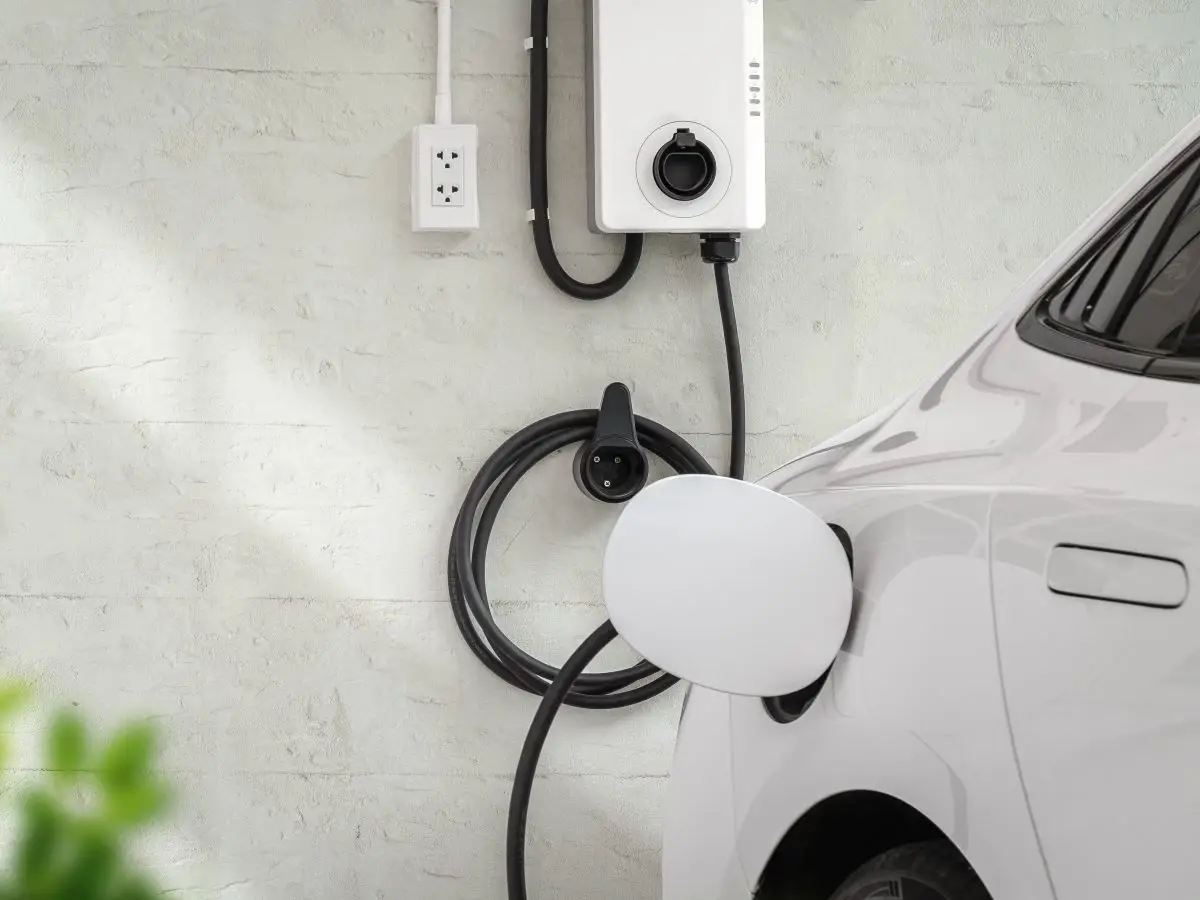

E.ON has announced the launch of BDL Next, a project designed to take bidirectional charging to the mass market. As the name suggests, the technology allows energy to flow both ways, effectively turning an electric vehicle into a storage unit. Working with a cross-industry consortium that brings together manufacturers, grid operators and research institutes, the company has begun the pilot phase, which recently got underway with the handover of vehicles to participating households at BMW Welt in Munich, Germany.
“At the end of the pilot, we want to have solid, real-world evidence of how bidirectional charging can be integrated into home energy systems and into the wider electricity market,” E.ON Italy tells Renewable Matter. “The point is to understand, in practice, how an increasingly decentralized ecosystem can function in a reliable and scalable way.”
The trial will continue for several months. The findings will feed into further technical development, as well as help shape the regulatory frameworks needed to support the technology, including issues such as controllability and metering. “We also want to make sure the benefits fit naturally into people’s everyday life,” the company adds. “It has to be simple to use, with no disruption to people’s routines. Flexibility must become an invisible service, yet one that remains tangible and accessible.”
From home to grid solutions
BDL Next, launched as a research project in November 2023, is designed to move beyond the idea of the home as an isolated unit and towards a system-level approach. The aim is to coordinate thousands of small, distributed energy assets in households to ease pressure on the grid, using the flexibility of electric vehicles in a controlled and responsive way.
“One expected outcome is the ability to get different parts of the energy system to communicate reliably and continuously, such as electric vehicles, rooftop solar and home energy management systems, even in day-to-day conditions,” highlights E.ON Italy. “At the same time, we want to show that household flexibility can be aggregated and actually activated, and can thus be used in both energy markets and for grid management.”
As the company points out, a key element will be gaining practical experience in the real-time management and coordination of diverse entities and infrastructure, from residential customers to grid operators, in an increasingly interconnected energy landscape.
Household flexibility is playing a growing role in the energy transition. It helps stabilise the grid, makes better use of renewables, and can also create new savings opportunities for customers. One important development in this space is Redispatch 3.0, a modern approach to managing grid congestion that, for the first time, leverages decentralized resources at the low-voltage level to help maintain grid stability in the energy system of the future.
“The development of bidirectional charging in Europe is not currently limited by technological maturity, but rather by the complexity of the ecosystem in which this technology operates,” E.ON Italia explains. “The main challenge lies in the ability to ensure that a variety of different systems and stakeholders can communicate with one another in a consistent, standardized manner.”
That is where interoperability becomes essential. Bidirectional charging depends on the interaction between electric vehicles, charging points, home energy systems, grid operators and market platforms, all of which are often developed by different economic actors. “Without common standards, a large part of the flexibility potential we could unlock simply stays unused,” the company says.
What it means for households
“For households, bidirectional charging changes the role of the electric vehicle within the home energy system,” E.ON Italy says. “It’s no longer just a means of transport, but it becomes part of how energy is managed.”
The most immediate benefit is self-consumption. “Surplus solar power can be stored in the vehicle battery and later fed back into the home when needed, reducing reliance on the grid,” the company explains. This also makes it possible to optimize charging times depending on the most favorable conditions, whether in terms of cost or the availability of renewable energy. More broadly, it signals a shift in role: “In this way, customers become an integral part of the energy transition, not only as consumers but as active participants in the system.”
Still, there are hurdles to overcome. Progress will depend on close cooperation between the automotive and energy sectors, as well as research and development, to establish shared standards that hold up over time. Beyond the need to connect different systems and stakeholders, it will be necessary to strengthen the regulatory framework and support the development of a still evolving market, including through the harmonization of technical standards at the European level.
“There are already early use cases emerging, but we lack a fully developed framework that would allow for the systematic use of distributed flexibility, whether in energy markets or grid services,” claims E.ON Italia. “Issues such as measuring energy flows, valuing flexibility and integrating it into market mechanisms are still areas under development.”
What is E.ON expecting from the pilot phase?
Over the coming months, the pilot will generate data to assess how the system performs in practice, which will be analysed through a comprehensive evaluation of three key dimensions. “On the one hand, the technical performance and interoperability of systems, paying particular attention to the ability to integrate technologies from different manufacturers through common standards. On the other hand, the impact on the energy system, both in terms of contributing to grid stability and the integration of renewable energy sources," explains E.ON Italia. “Lastly, a key role will be given to the customer experience, assessing user-friendliness, acceptance levels and the solution’s actual ability to integrate into everyday life without requiring habit changes.”
Cover: Envato image