



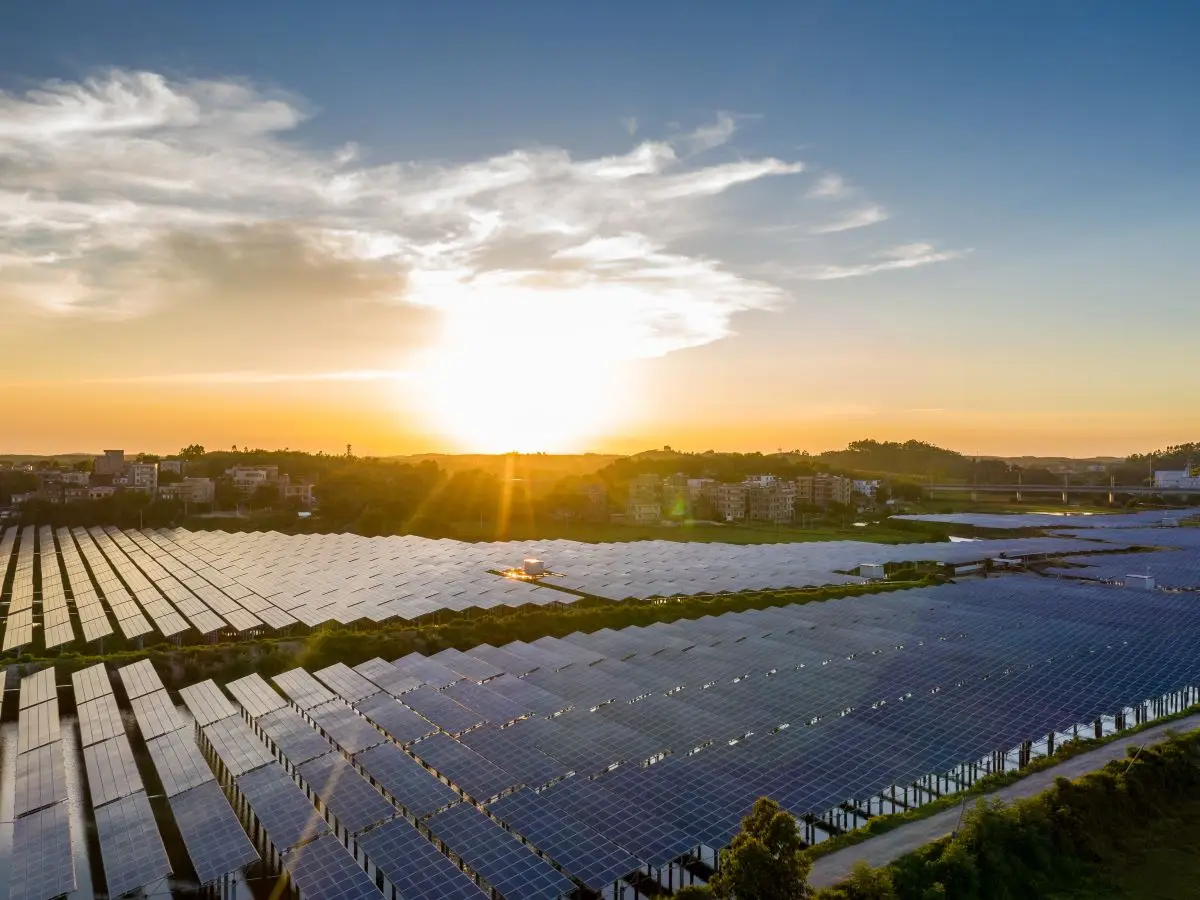

The issue with solar energy has never been generating electricity, but rather utilising it when needed. For years, photovoltaics have concentrated supply during daylight hours, leaving evening peaks uncovered. Today, this pattern is starting to shift: batteries are becoming a permanent fixture in the electrical system, not as a supplement but as an operational lever.
A new analysis by the energy think tank Ember quantifies the cost of using storage to extend the use of solar power beyond the middle of the day. The result is a significant proportion of the energy produced can already be shifted to the evening and night at costs which, in many markets, are compatible with electricity prices.
Kostantsa Rangelova, Global Electricity Analyst at Ember, explains the report's starting point in an interview with Renewable Matter: “The report looks at where we are today, at current battery costs, based on the data available at the end of 2025. Over the past two years prices have fallen significantly and today the economics of solar and storage are completely different compared to just a few years ago”. It is no longer a question of eliminating the intermittency of photovoltaics, but rather of reducing its effect on periods of peak demand and bringing renewable production more closely in line with actual consumption.
From cell prices to project costs
Cost reduction is not just a matter of cheaper hardware. Ember emphasises the shift from a focus on cell price to an assessment of the overall project cost: system lifespan, efficiency, financial risk, remuneration models. Currently, large storage systems are designed for an operational life of around twenty years, with cycle efficiencies of around 90%. This means that the same battery can perform a much higher number of cycles than in the past, spreading the investment cost over a longer period.
The risk perceived by investors is reduced and, as a result, the cost of capital also decreases. “If a battery lasts twenty years instead of ten, project risk decreases significantly and the cost of capital becomes lower. This has a direct impact on the final price of stored energy and is as important as the cost of the technology itself,” explains Rangelova.
At the same time, regulatory and contractual frameworks – long-term auctions, contracts for differences, capacity mechanisms – contribute to stabilising revenue streams, thereby making projects more bankable. According to Ember, this combination of factors explains why the actual cost of storage is much lower today than it was a few years ago.
The transition to LFPs and industrial standardisation
The role of LFP batteries, based on lithium, iron and phosphate, is a key element of the report. Compared to previous technologies, these batteries reduce the use of nickel and cobalt and offer greater thermal and operational stability. For Rangelova, the difference is clear: “LFP batteries are cheaper, more durable and use fewer critical raw materials than previous technologies. This has played a decisive role in reducing storage costs and stabilising supply chains.”
Today's storage systems are no longer tailor-made solutions for each site, but increasingly standardised products. “Today LFP cells are integrated into standard twenty-foot containers. This makes projects much easier to deploy and also reduces costs at the installation and grid-connection stage,” observes one of Ember’s analysts. And then adds: “This standardisation process is making batteries increasingly similar to a standard industrial product rather than a special technology for a few projects.” Standardisation reduces construction time and complexity, allows for economies of scale and facilitates the replication of similar solutions in different regulatory contexts, thereby impacting the cost curve.
The Chinese effect on the price curve
The report explicitly ties price dynamics to China's role. Over the past few years, China's production capacity for cells and storage systems has grown to exceed domestic demand by about three times. This oversupply is directly reflected in international markets.
According to data collected by Ember, importing hardware from China currently costs around $70-75 per kilowatt-hour. On top of this, an average of another $50 is added for installation, civil works and connection to the grid. A significant part of the economic value therefore remains in countries where the plants are built, especially during the integration phase into the electricity system.
Rangelova sums up this passage by saying: “Manufacturing capacity in China is now far greater than domestic demand and this is having a direct impact on battery prices globally. Oversupply is clearly visible in international markets.” Politically speaking, the question remains as to how to reconcile this cost advantage with the domestic industrial development goals that many economies, including Europe, are trying to build in the field of clean technologies.
Ember also devotes part of its analysis to the dynamics of raw materials. “After the 2022 peak, lithium prices fell sharply and this directly affected battery costs,” causing them to plummet, Rangelova recalls. “At the same time, we continue to see the development of alternative technologies, such as sodium-iron batteries, which use more abundant materials.”
Italy, a testing ground for prices
In the storage system, Italy plays a significant role. Not so much because it is a manufacturing hub, but because in 2025 it put significant volumes of storage capacity up for auction, rewarding flexibility services and tariffs over a multi-year horizon. For Ember, the Italian results are particularly interesting as they do not merely indicate the cost of the technology, but show how much the market is willing to pay for stored energy.
“In Italy, batteries are not purchased as products, but long-term tariff contracts are awarded. This means we are not looking at the theoretical cost of technology, but at what the market is willing to pay today for stored energy,” Rangelova points out. Ember interprets this convergence of prices between Italian auctions and those observed in very different countries, such as India and Saudi Arabia, as a sign of maturity in the sector. In other words, these are not isolated cases, but a trend affecting markets with different regulatory and cost conditions.
Cover: photo Envato