


"For decades, the water sector in Italy was managed by municipalities, rather than being entrusted to a series of companies, governed by a nationwide body, Arera, as is the case today. This led to a shortage of investments and a lack of coordination, causing problems whose consequences are still being felt, such as water losses, outdated networks, and a lack of infrastructure."
These are the words of Mauro Olivieri, technical director of Acque Bresciane, a public benefit corporation created in 2017 as the in-house utility for the Province of Brescia. It serves 114 municipalities, for a total of 658,600 inhabitants, and manages three sectors: aqueducts, sewers, and water treatment plants. In addition to everyday management, it is responsible for routine and extraordinary maintenance, design, and the creation of new plants.
Highly complex investments
"Italy is currently trying to make up for the delay it has accumulated by spending approximately 5 billion euros per year, equivalent to 60-70 euros per inhabitant: 50% is intended for aqueducts, the rest for sewer and water treatment systems." This is a significant increase compared to twenty years ago, when spending stopped at 1 or 2 billion per year. However, this is still not enough: the requirement is estimated to be at least 6 billion per year, or 90-100 euros per person per year. "This is the amount Acque Bresciane is spending, so we are more aligned with the real requirements than with the national average, thanks to an investment plan of over 50-60 million euros per year," notes Olivieri.
In the Brescia area, the main needs concern the creation of sewer networks where they are lacking, the regulatory compliance of water treatment plants, and, more generally, the construction of new plants. These are wide-ranging and highly complex interventions, worth tens of millions of euros, above the EU threshold. "The goal is to guarantee high performance, keeping costs low, because this is public money, coming in large part from the bills paid by citizens."
The challenge of BIM design
The sector is also facing a profound technical change, which is interlaced with regulatory developments: from 1 January 2025, it is compulsory to use BIM (Building Information Modelling) to design projects worth over 1 million euros, making plans on paper a thing of the past. "This means acquiring new expertise and complex IT and management systems, a not-insignificant change for smaller studios," says Olivieri. "Furthermore, I believe that the true advantage of digitalisation will be understood fully when it will also involve the management of infrastructural works: having an infrastructure with a digital twin will enable optimal planning of maintenance and cost optimisation. Otherwise, there is a risk that the added value generated by this new approach will be lost."
Acque Bresciane has many ongoing projects, managed and supervised by a technical office made up of some fifty professionals, including surveyors and engineers. "We have all the necessary quality, safety, and environmental certifications, as is clear from the sustainability reporting we have carried out since 2018, well before it was a legal requirement.”
In particular, there are three interventions funded as part of the National Recovery and Resilience Plan, which covers 50% of the overall budget, worth approximately 120 million euros: a large plan to reduce water losses, the expansion of several water treatment plants, and the construction of the new district water supply system for Val Trompia.
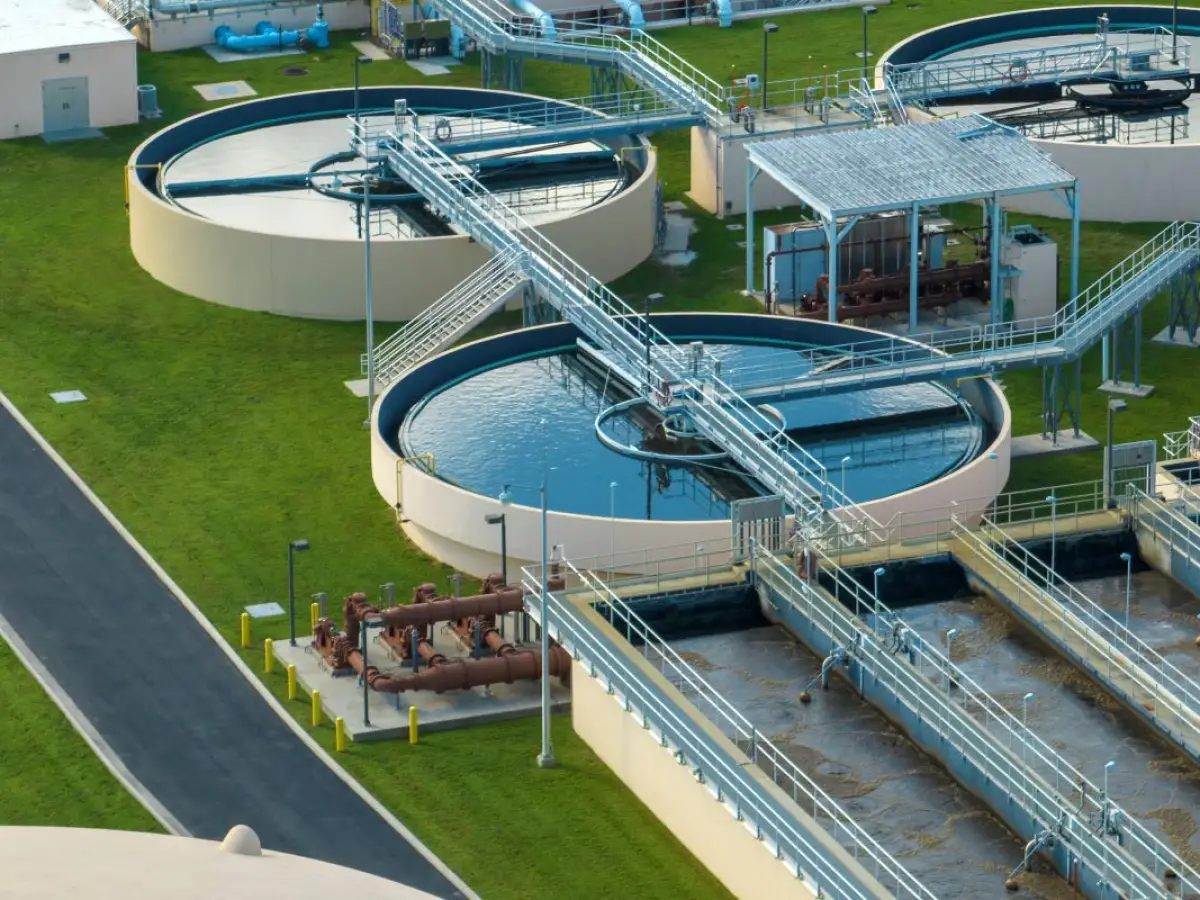
The most significant infrastructure, however, looks to the future of Lake Garda: a new, 250 million-euro water treatment plant, with 100 million in ministerial funding. The project, which involves 15 municipalities on the Brescia side of the shore, from Tignale to Sirmione, is among the largest nationally: the first lot is expected to become operational by 2030. "A strategic challenge not only for the local area but for the entire country, given that Lake Garda provides 40% of Italy’s freshwater, which is also used for drinking purposes."
This content is produced thanks to the support of sponsors
Cover: photo by Envato