

Twenty-four thousand square kilometres. Five hours. Fifty thousand people. In 2008, that was Estonia's answer to decades of illegal dumping: an entire country cleaned in a single coordinated sweep. The idea did not stay Estonian for long. On 20 September, it returns home in spirit for its ninth global edition, still coordinated by Let's Do It World, the NGO headquartered in Estonia that has run the movement since 2019, now active in three cities and more than 190 countries and territories.
World Cleanup Day 2026 carries a new threshold. The campaign message, "Strive for Five," names the tipping point researchers associate with lasting societal change: roughly 5% of a population acting together. "When a sufficiently large part of society acts together, it becomes a force that reaches far beyond a single cleanup day," says Heidi Solba, President of Let's Do It World in a press release. The ambition this year is explicitly to move past the cleanup itself. "We no longer want to focus only on cleaning up waste that has already been created," Solba adds, pointing instead toward consumption habits, community cooperation, and durable behavioural change.
The logistics reflect that ambition. Riga hosts the International Broadcast and a public WCD Village, backed by the Latvian Environmental Protection Fund and Estonia's Ministry of Foreign Affairs. Tallinn runs the global Call Center, keeping direct contact with national teams worldwide. Kyiv coordinates the global Media Center, gathering stories for international coverage. The central celebration itself moves to Shaoxing, China, from 19 to 21 September, held jointly with UN-Habitat as part of the UN's official calendar, since the General Assembly recognised 20 September as an international day in 2024. EarthDay.org joins as a partner this year, and Estonia's own Ministry of Foreign Affairs, alongside the Latvian Environmental Protection Fund, underwrites the 2026 edition, a reminder that the country that started the movement in a single afternoon eighteen years ago still carries much of its institutional weight.
The scale is no longer marginal. In 2025, 25 million people across 190 countries and territories took part; since 2018, the cumulative count reaches 139 million people in 211 countries, and more than 870,000 tonnes of waste have been collected. Meltwater data put last year's media reach at 2.4 billion people.
What gives this year's edition its sharper edge is where much of that organising is happening. Ukraine, Colombia, Nepal: national teams are running cleanups against the backdrop of war, earthquakes, and floods, not alongside them. It reframes the question the campaign is really asking. Not simply how much waste a coordinated public can remove in a day, but whether the habit of acting together, tested and rehearsed in ordinary years, becomes something communities can draw on when the crisis is not litter but survival.
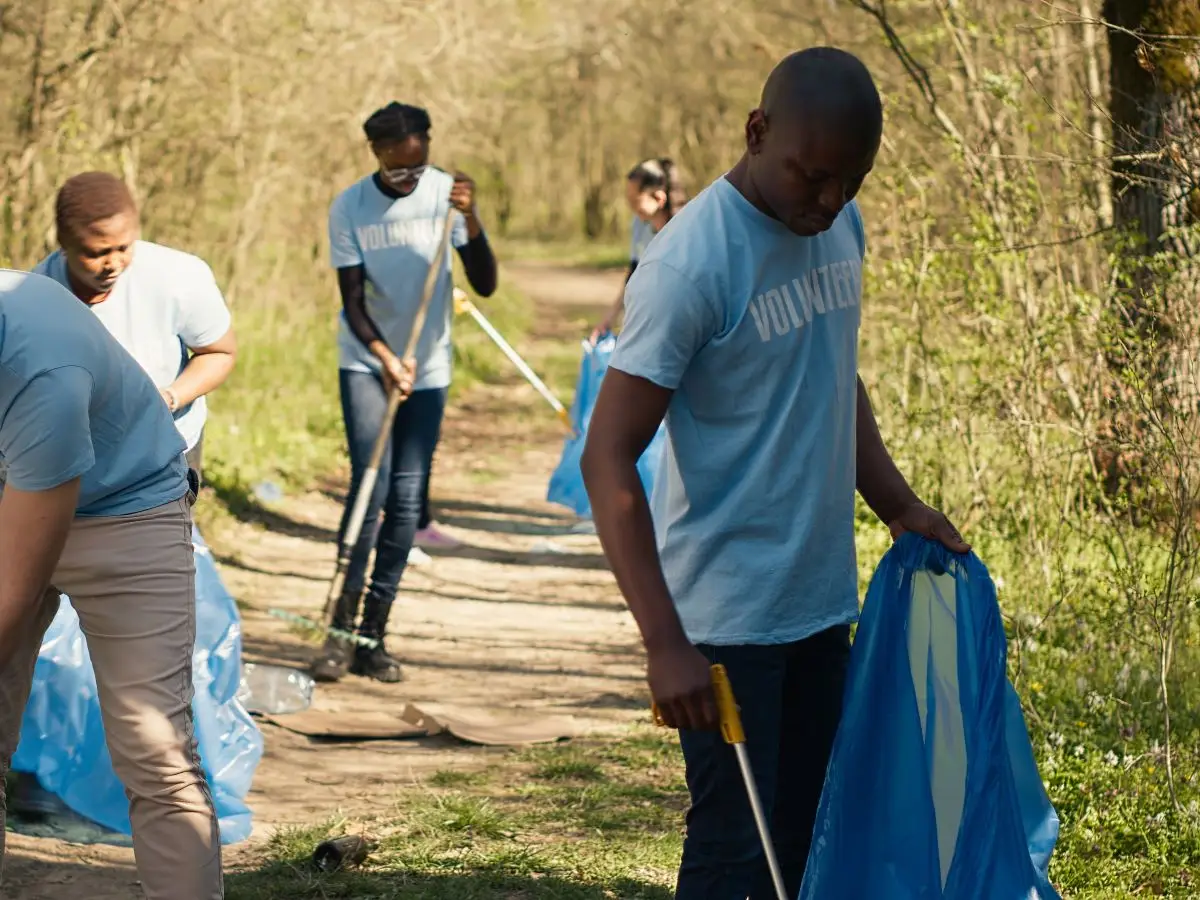
Cover: Envato image