


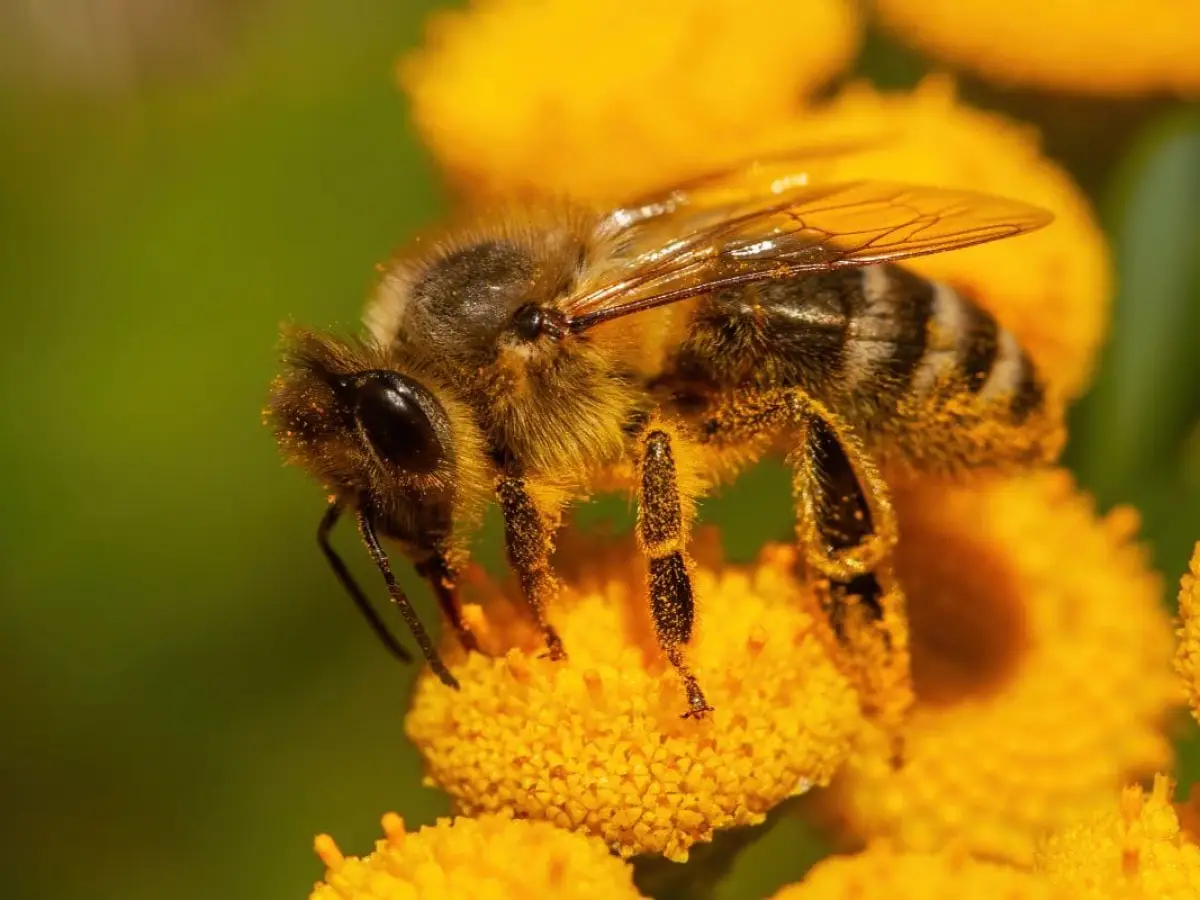

Who doesn't remember the cartoon Maya the Honey Bee, first released in the 1970s, in which a curious little bee explores the world with her friend Will? Over the decades, through advertising, television and marketing, honeybees have become one of the most recognisable symbols of biodiversity protection and conservation. But reality, as is often the case, is more complex.
Our planet is actually home to around twenty thousand species of wild bees and tens of thousands of other pollinating insects, including butterflies, moths, hoverflies, flies and beetles, responsible for most of the pollination: these wild species are the most threatened by human impact on the environment but also, in some cases, by marketing practices such as beewashing, a specific form of greenwashing. Indeed, a number of companies leverage their support for honeybee-related projects as a communication tool to build a positive image of caring for the environment and biodiversity. Often, however, these initiatives are mainly symbolic, with limited real impact on ecosystems and biodiversity and, in some cases, even counterproductive.
In the debate on beewashing, we must not forget that honeybees play an important role in honey production and pollination for food production. Unfortunately, however, in some contexts they are sometimes exploited and presented as the main guardians of biodiversity and ecosystems, a role that they do not actually fulfil.
Safeguarding biodiversity beyond the honeycomb: the bee hotel case
The term “beewashing” first appeared in 2015 in a scientific article by Scott MacIvor and Laurence Packer, researchers at York University in Toronto, who analysed one of the most widely used tools in campaigns to “save the bees”: bee hotels, small wooden structures designed as shelters and artificial nesting sites. As the researchers themselves write, however, “to reduce the risk of beewashing, it is essential to investigate the design and effectiveness of bee hotels through targeted studies.” Nevertheless, numerous awareness campaigns remain focused exclusively on bee hotels, presenting them as sufficient measures for the conservation of wild pollinator species.
Similar tools include honeybee hive adoption campaigns and the installation of tracking sensors, which, however, are often not followed by any real ecosystem regeneration measures. “Many scientific studies highlight important issues related to climate change and biodiversity loss,” explains Paolo Viganò, founder of Rete Clima, a multidisciplinary technical network supporting companies in decarbonisation processes, ESG projects and the implementation of Nature-Based Solutions in Italy. “This is why it is essential to take effective action for ecological purposes, without wasting resources on minor initiatives, while maintaining a strong focus on core activities relating to the protection of ecosystems as a whole. Our aim is to bring the truly important issues back to the forefront of the debate, namely the protection of ecosystems and their quality: in fact, when it comes to nature conservation objectives, everything else is secondary.”
Honeybees and wild bees
The decline of bees and other pollinators is a topic of great public interest. Not all species follow the same path, however: despite being exposed to the effects of climate change, pathogens, exotic parasites and episodic die-offs, honeybees are certainly better protected from these stressors precisely because they are “looked after” by beekeepers (and have been showing constant growth in numbers over time). In Europe, but more so in the rest of the world, the number of colonies managed has increased by about 85% since the 1960s, driven mainly by the increase recorded in Asian countries.
Honeybees, which, unlike other pollinators, are not the species primarily at risk, are bred mainly for production purposes: beehives, for example, are positioned directly in agricultural fields to promote the pollination of fruit trees and productive plants in general, which is extremely useful and important for food production. But in addition to fruit production, there is also the honey market. In this sense, “adopting” or “gifting” a honeybee hive to “protect pollinators” ends up resembling, in some ways, “gifting” another productive animal, such as a hen. A certainly interesting suggestion, but one that is not clearly and directly functional to the preservation of biodiversity and ecosystems.
Behind the “green” façade of beewashing, the truth is much more complex. Several initiatives promoting these charismatic species as symbols of ecosystem conservation end up overshadowing more vulnerable species, such as wild bees and other pollinators, that survive in nature without any human support. Focusing solely on promoting a single species as an emblem of ecosystem health risks giving a misleading image of natural reality: safeguarding a single insect does not guarantee the protection of broader ecological networks, and, moreover, honeybees taken individually are not the most suitable bioindicators for describing environmental quality, specifically because they are bred and cared for by their beekeepers and are therefore clearly less sensitive to environmental stress.
Even the most sophisticated technological solutions for monitoring bees have a limited impact if they are not coupled with practical measures to regenerate natural habitats. In this sense, many corporate campaigns, devised with the support of environmental consultants, run the risk of falling into the beewashing trap, focusing primarily on communication and the appeal of the issue to the public. Such initiatives often do not require high costs or design studies, but produce limited benefits for ecosystems. In certain cases, they may even have adverse effects on wild bees: when honeybee colonies are too numerous, native wild species find themselves competing for nectar and risk contracting diseases.
Biodiverse and biocomplex ecosystems
An additional key element in understanding why beewashing is a misleading communication practice is the notion that biodiversity conservation can be reduced to the protection of a single species. In reality, it is rich and complex ecosystems that ensure the survival of bees and all other forms of life, from insects to plants, from microorganisms to vertebrates. By focusing on a single organism without addressing the context that supports it, we risk simplifying a problem that is inherently systemic and complex. “At Rete Clima, we also include bee hotels in our natural interventions, but only as an additional solution after carrying out structured territorial regeneration projects,” continues Viganò. “Similarly, the sensor alone is not what matters, but rather the environmental measures aimed at supporting ecosystems, which always remain the priority. All other initiatives are connected to this work, but remain secondary.”
Enhancing the condition of an ecosystem requires regeneration projects that consider all of its components: soil condition, plant diversity, the presence of other animal species, the quality of the habitat as a whole, and many other factors. Interventions limited to the protection of a single species, or the installation of artificial shelters, or the use of monitoring sensors alone, are likely to have very limited effects because they do not address the real causes of environmental problems.
“It is important that ecosystems are functional and complex,” concludes Viganò. “This ecosystem complexity should be understood as a functionality in which the trophic networks and all the other elements that support the vitality of the ecosystem are solid and stable, so as to maintain the balance of relationships within it. We are therefore talking about biocomplexity, not just biodiversity.” For this reason, we need environmental solutions based on scientific data, capable of acting in a holistic and systemic manner. It is not enough to follow the latest trends or propose initiatives that are easy to communicate: the protection of biodiversity requires a long-term vision capable of supporting the complexity of ecosystems and strengthening their resilience.
Cover: Envato image