


What are the most common doubts Italians face when standing in front of recycling bins? And how well do they understand the correct disposal methods for waste streams such as textiles and WEEE, which require dedicated collection channels, in order to be recycled or reused?
With more than 4 million users and 87 million in-app searches since 2016, Junker app offers a unique source of information for exploring Italians’ relationship with the waste generated daily in their homes. The app provides five different search functions to access always-updated, geolocated information on how to responsibly dispose of any type of waste. Whether at home or on holiday, users can check a map for the nearest collection point, scan a barcode, type in a product name, search the meaning of symbols printed on packaging or even take a picture of the item they need to discard, ensuring compliance with local collection rules.
What in-app search data reveal
Analysis of search data makes it possible to identify — at national, regional, or even municipal level — which waste items citizens find most difficult to recognise and sort correctly.
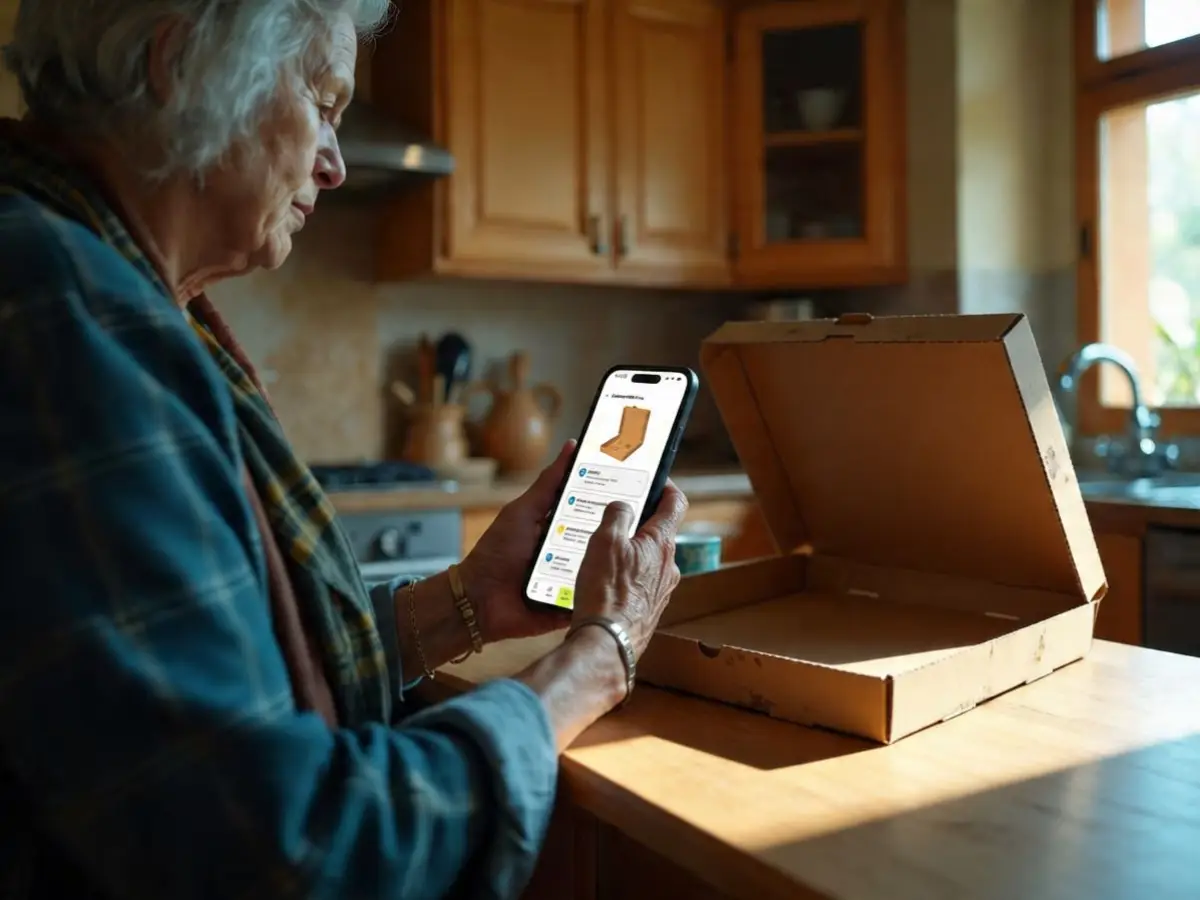
At national level, the most problematic waste categories for users are: Plastic and packaging (17%), Paper (12.8%), Clothing and textiles (6.5%). Looking instead at individual products, the ranking of the most “misunderstood” items is completely reshuffled: Used clothes, Dirty pizza boxes, Polystyrene packaging, Lighters and gas lighters, Mussel/shellfish shells.
“By cross-referencing this vast data heritage, based on a very large sample of the population, it becomes clear that Italians still struggle to identify the correct waste stream depending on the condition of the item. The products most frequently searched almost always follow the pattern dirty vs clean, broken vs intact, used vs new,” notes Noemi De Santis, Head of Communications at Junker.
The major textile waste dilemma
Somewhat surprisingly, the single most searched generic term on the platform is “used clothes”. This demonstrates, on the one hand, growing awareness of the recent obligation to separately collect textile waste, but on the other, persistent uncertainty about which items can actually be included in this stream. Indeed, among the top 100 most searched generic terms in the app are also: used clothes (dirty), shoes in bad condition, bathrobe, shoes in good condition and pillow.
To improve textile waste collection, some municipalities are now testing new management systems, including door-to-door or on-demand textile collection services. According to an initial mapping carried out by the Junker team, 1 municipality out of 100 has already removed street textile containers, which are often overflowing or subject to theft and tampering.
Small WEEE “outperform” big WEEE 7 to 1
Further analysis of Junker app data reveals a form of uncertainty about WEEE that may seem counterintuitive, yet is widespread among Italians. At first glance, one might assume that the greatest source of confusion concerns large household appliances: they are bulky, difficult to handle and their collection requires organisation.
Yet over the past ten years, small WEEE – classified as R4 – have generated almost seven times more searches than the larger ones. Among the most searched small devices are: mobile phone accessories, USB adapters, ATM cards and credit cards, hairdryers, healthcare cards, e-cigarettes, christmas lights.
Continued confusion over light bulbs
Lighting-related searches also show how three generations of light bulbs over the past fifteen years have created cumulative confusion: first halogen and incandescent bulbs (progressively banned by the EU), then compact fluorescent lamps – the so-called “energy-saving bulbs” – and finally LEDs, now the dominant technology.
Each technological shift brought new disposal rules and, with them, fresh uncertainty. The result is that lighting-related searches, across category R5 and associated entries, total more than 54,000 searches: more than any single WEEE category and almost as many as the entire consumer electronics segment.
How are WEEE actually disposed of?
At the same time, surveys and quizzes periodically distributed through the app highlight a general difficulty in navigating the different disposal options for WEEE.
According to a survey launched a year ago in collaboration with Erion WEEE, A Sud and Economiacircolare.com, more than six respondents out of ten admit they do not normally take WEEE to municipal collection centres. Among those who say they never do so, the overwhelming majority (76%) admit to storing unused devices in basements or drawers, while 8% say they place them in residual waste, wasting a potential mine of rare earths and precious metals.
Even more concerning is the situation regarding the possibility of returning WEEE to large electronics retailers. Despite numerous awareness campaigns, 49% are unfamiliar with the “one-to-one” take-back scheme, while as many as 74% do not know about the “one-to-zero” right for devices measuring up to 25 cm.
Bioplastics: good progress, but not quite there yet
Another recent survey carried out in the app focused on bioplastics, in collaboration with the Biorepack consortium, and received responses from nearly 8,000 users. Among the key findings, the overwhelming majority of respondents said they use compostable bioplastic bags to collect household organic waste: 54% reuse fruit and vegetable bags, 41.8% reuse supermarket carrier bags, 50.3% purchase compostable bags at supermarkets, 45.8% use bags distributed by their municipality and/or waste operator. However, 2% still use conventional plastic bags.
“It should be emphasised that Junker users are generally more aware and better informed”, De Santis explains. “According to ISPRA, the percentage of plastic contamination in Italy’s organic waste stream – mainly due to the use of non-compostable bags – averages around 5%”.
Greater uncertainty emerged when users were asked which waste items should not be placed in household organic waste. While 9 respondents out of 10 correctly identified cigarette butts (residual waste), nappies/diapers (residual waste or dedicated collection) and conventional plastic bags (plastic recycling) as contaminants, only 6 out of 10 also identified wooden crates (collection centre) and mineral cat litter (residual waste). Of particular concern is that 9% of respondents also considered compostable bioplastic packaging unsuitable for organic waste collection.
One country, 34 separate collection systems: information is essential
“If we were to take stock of the current situation, we can say that the most critical waste streams in Italy today are textiles, WEEE and bioplastics,” summarises Noemi De Santis. “It is therefore along these three lines that we need to focus efforts to strengthen citizens’ awareness. They have the right – also under recent ARERA requirements – but also the duty to stay properly informed, always remembering that Italy does not have a single waste management system”.
According to a mapping study commissioned from Junker by the CONAI consortium, no fewer than 34 different separate collection systems coexist across the country. This means that the same material – for example beverage cartons – may have to be disposed of in four different ways depending on the municipality where the user is located. Bin colours are equally inconsistent: paper bins alone can appear in as many as six different colours from one municipality to another.
“Given such complexity – concludes De Santis – there is no doubt that over the past ten years public awareness and citizens’ sense of responsibility in Italy have made enormous progress. However, the path towards circularity cannot yet be considered complete, because both the EU and the national regulatory authority have set extremely ambitious targets, such as the obligation to measure waste deliveries introduced by ARERA Resolution 396/2025. We can therefore say that we are only halfway there”.
Cover: photo by Junker