


L’Oréal for the Future is the programme for a sustainable and inclusive future launched in 2020 by L’Oréal, a world leader in the cosmetics industry, operating in 150 countries, with 40 international brands and a turnover of over 44 billion euros. In 2025, halfway through the programme, a strategic review was carried out.
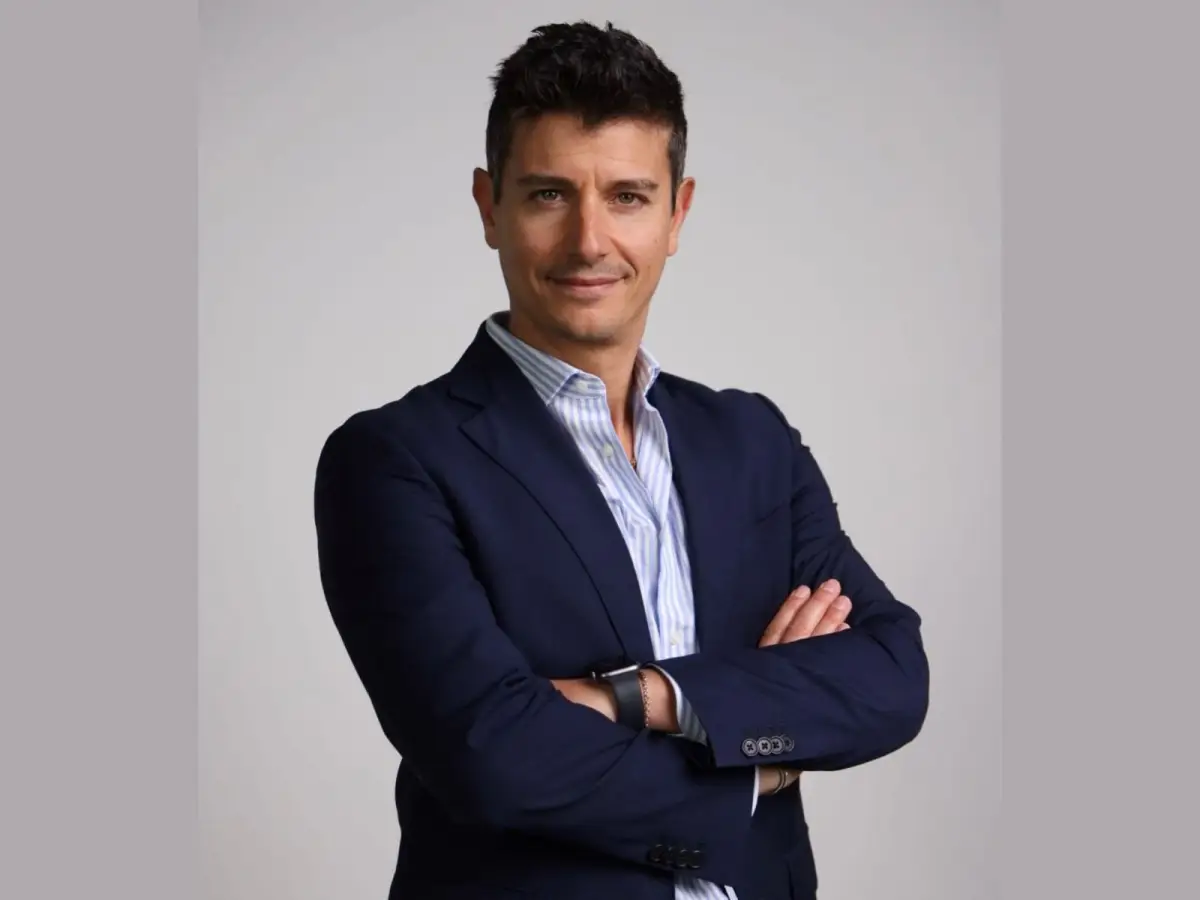
“We have realigned our targets in light of the latest scientific findings and new European regulations, such as the CSRD, structuring our commitment around four key pillars: climate, nature, circularity and community,” explains Simone Targetti Ferri, Sustainability Director at L’Oréal Italia, emphasising that “the group’s commitment to these issues began over twenty-five years ago, based on the conviction that there can be no economic growth without social and environmental sustainability.” We interviewed him to learn more.
The transformation has been significant: we have moved from managing the impact of our production sites to a responsibility that spans the entire value chain. In 1995, we opened our first environmental research laboratory; in 2009, we set our first industrial environmental targets; and in 2013, with the launch of Sharing Beauty With All, sustainability has become a fundamental requirement at every stage, from design to production. In 2015, our company was among the first 100 companies worldwide to join the Science-Based Targets initiative (SBTi), bringing our decarbonisation efforts into line with the objectives of the Paris Agreement.
With L’Oréal for the Future, things have really picked up pace. What has changed?
The most significant progress is evidenced by the facts. In 2025, we were awarded a triple “A” rating – the highest possible score for combating climate change, protecting forests and ensuring water security – by the non-profit organisation CDP for the tenth consecutive year. We are the only company in the world to have achieved this decade-long record. Financial and non-financial performance are now fully integrated: today, sustainability is an essential component of our governance and is directly factored into the assessment of the executive committee and our senior management. This journey has been built on three fundamental pillars: transparency; a collaborative approach throughout the value chain; and, finally, “humility”, as I define it – that is, the ability to review our objectives in light of new discoveries in environmental science.
Which goals are the hardest to achieve?
The path towards integrated sustainability poses several challenges. First and foremost, the evolution of the consumer’s mindset: changing purchasing and usage habits is an inherently slow process, and adapting business strategies to the market’s response times requires a long-term vision. Refills are the most telling example: shifting consumers towards refill models requires massive investment in communication and media to educate them on the value of reuse, overcoming cultural resistance to change, even when faced with a more favourable price. Involving the supply chain in innovative projects, like eco-designing point-of-sale materials, also requires constant mediation: suppliers often perceive these initiatives as an additional workload, so it is important to effectively communicate the medium- and long-term strategic benefits. Finally, technological limitations in sustainable packaging: thanks to our in-house accelerator and in collaboration with our partners, we are developing pioneering technologies, speeding up the transition from experimentation to industrial scale to ensure increasingly high-performance materials.
What does it mean for an international corporation to embark on a sustainability journey, compared with smaller companies?
The main challenge is scalability: while a small company can make changes quickly and easily, for L’Oréal even the slightest alteration – such as the material of a bottle cap or the reworking of a texture – requires a far-reaching transformation of its industrial sites, including the conversion of entire production lines and the training of staff. Our ability – and our duty – is to invest heavily in research and innovation, creating cutting-edge solutions which, once validated on a large scale, become accessible and standardised across the entire industrial supply chain. Moreover, in a global organisation, prioritisation is a constant challenge involving the balancing of a multitude of objectives. Also, a major listed company must manage expectations and engage with shareholders, demonstrating that sustainability is the only path to resilience and long-term profitability, beyond quarterly results.
Innovation is a driving force for transformation: any examples?
Let's take the refill policy: L'Oréal Italia introduced the first refill “fountains” for Mugler perfumes many years ago. The benefits are clear: by refilling a perfume such as Lancôme’s La Vie Est Belle, you save 73% on glass and 66% on plastic, as well as enjoying a direct financial saving for the consumer. Through the Green Sciences programme, we have set ourselves specific targets for ingredients: by 2030, 75% of them will be of natural or recycled origin. Furthermore, at our plant in Settimo Torinese, industrial water is purified and reused in a continuous cycle, powered by 100% renewable energy, saving the equivalent of around 37 million standard water bottles every year.
How can we involve suppliers and partners in this process?
For L’Oréal, involving the supply chain is at the very heart of Scope 3: our suppliers are true partners in transformation, not merely commercial partners. In addition to offering specific programmes and access to advanced tools for measuring environmental impact, we have launched a €100 million innovation accelerator entirely dedicated to sustainability. The objective is to support start-ups capable of offering cutting-edge solutions in critical areas, such as the packaging of the future, circular water management, raw material traceability and the circular economy.
How can we encourage consumers to adopt new consumption patterns?
With the Eco-Beauty Score – a rating system that informs consumers about the environmental impact of each product on a scale from A to E – we ensure that sustainable shopping is easy and transparent. We use the power of our brands to normalise actions such as saving water or refilling bottles.
Social impact is a key pillar of L’Oréal’s 2030 Agenda, then.
Thanks to the Beauty for a Better Life programme, run by the L’Oréal Foundation, over 67,000 women in more than 28 countries have been able to attend vocational training courses in the beauty sector. At the same time, around 20,000 people receive free beauty treatments every year. In this context, last October L’Oréal Italia opened its first social salon in Milan at Casa Jannacci, Europe’s largest public shelter: here, residents can enjoy free haircuts and styling services, as well as receiving essential personal hygiene products. It is not just about aesthetics: a haircut or taking greater care of one’s appearance can be the spark that changes one’s outlook, offering those in vulnerable situations the dignity and confidence needed to face, for example, a job interview without feeling inadequate. Beauty thus becomes a bridge towards reintegration into society.
What is your assessment of the level of sustainability achieved by the sector?
Awareness levels are high, but the main challenge still lies in achieving total circularity: completely eliminating the concept of waste. Another critical challenge is the standardisation of reporting at a global level to set the bar for our commitments ever higher. As an industry leader, L’Oréal works every day to lead the way.
Cover: Simone Targetti Ferri