

There is an image that recurs in the winning project from the Manifesto for Shared Futures course: a student standing still, motionless, in the middle of a street in Milan, whilst around him the city speeds by in time-lapse. The same gesture is repeated in São Paulo, in another neighbourhood, with another member of the group.
The message is clear: we are the disruptors, the rebels seeking to capture the essence, whilst others continue to rush through their lives without noticing the momentous transformations taking place. We pause to reconnect with natural – and therefore human – rhythms, rather than those of global hyper-capitalism. A powerful message that works without needing any explanation, circulates freely, is immediate, and is capable of convincing anyone. A manifesto worthy of the name.
The course: four sessions, two continents, one question
Manifesto for Shared Futures arose from a collaboration between IED Milan and IED São Paulo, coordinated by Martina Bianchini and Anna Pesce on the institutional side and built around a transdisciplinary academic core: the lecturer and foresight practitioner Clarice Garcia (University of Technology Sydney), the Brazilian biodesigner and researcher Graziela Nivoloni (IED São Paulo), the geographer and journalist Emanuele Bompan (Renewable Matter), and Daniela Santillan, a PhD student in Design, Arts and Transdisciplinarity at IED Turin, who acted as the programme’s lead.
Twenty students from both campuses — but with radically different geographical and academic backgrounds, ranging from India to Turkey, Colombia to Iran, and Italy to Brazil — worked together in four online sessions between March and April 2026. The aim? To draft a manifesto for shared futures. All this whilst the world was grappling with the consequences of the war in Iran, the rapid advancement of artificial intelligence, the energy and climate crises, and the erosion of democracy taking place in many countries.
It was not a design course in the conventional sense. The first session, led by Clarice Garcia, introduced the concept of transdisciplinarity and design for the ‘pluriverse’: a network of simultaneous local visions capable of coexisting without cancelling each other out. The second, with Graziela Nivoloni, explored multispecies and systemic perspectives grounded in plural intelligences, highlighting the urgent need to move beyond anthropocentrism for the survival of humanity. The third session, coordinated by Emanuele Bompan, examined the history and languages of political manifestos, from the Communist Manifesto of 1848 to the Ventotene Manifesto of 1941 and on to Namibia’s Freedom Charter of 1977, seeking to answer a simple yet brutal question: what is a manifesto made of? Urgency, love and rage.

The winning project: The Forest Over the Monolith
Group 1, comprising Luca Carminati, Melisa Erdem, Nandini Pokhriyal and Barbara Prandina, produced a series of reels posted on an Instagram account created specifically for this purpose and subsequently abandoned, leaving the content to exist independently online. The series is titled Chapter Five: The Natural Regeneration. Each video depicts a member of the group standing still in a different urban location whilst the city flows past them in in time-lapse. Then, in the final video, the forest.
The written manifesto accompanying the project entitled The Forest Over the Monolith. A Manifesto for Shared Futures is structured into five short, incisive chapters, each conceived as a small, self-contained statement. “We are going through a period of cultural homogenisation that cannot, and must not, continue,” the text reads. “We live in a world of abundance, yet everyone wears the same clothes, looks the same, thinks the same thoughts. […] This is not progress; it is a funeral for the human spirit.”
The second chapter, The Voices of the Middle Ground, is addressed directly to future generations: “It is you who will be born into a world where the ‘global share’ is enormous and your ‘personal share’ is shrinking,” the students write, before issuing a call to arms. “Wake up and reject global standardisation. Fight the monolith of global culture!”
The Stable Roots, the third chapter, looks to indigenous peoples as a model of cultural resistance. “Most indigenous languages do not have a word for ‘wealth’,” the manifesto observes. “Instead, they have words that express living in a reciprocal way, focusing on health and being a good relative”. Instead of assimilation, the group proposes what they call a “cross-pollination of cultures”, that is, a constant state of mutual learning, “rather than a hierarchy in which one dominates the other”.
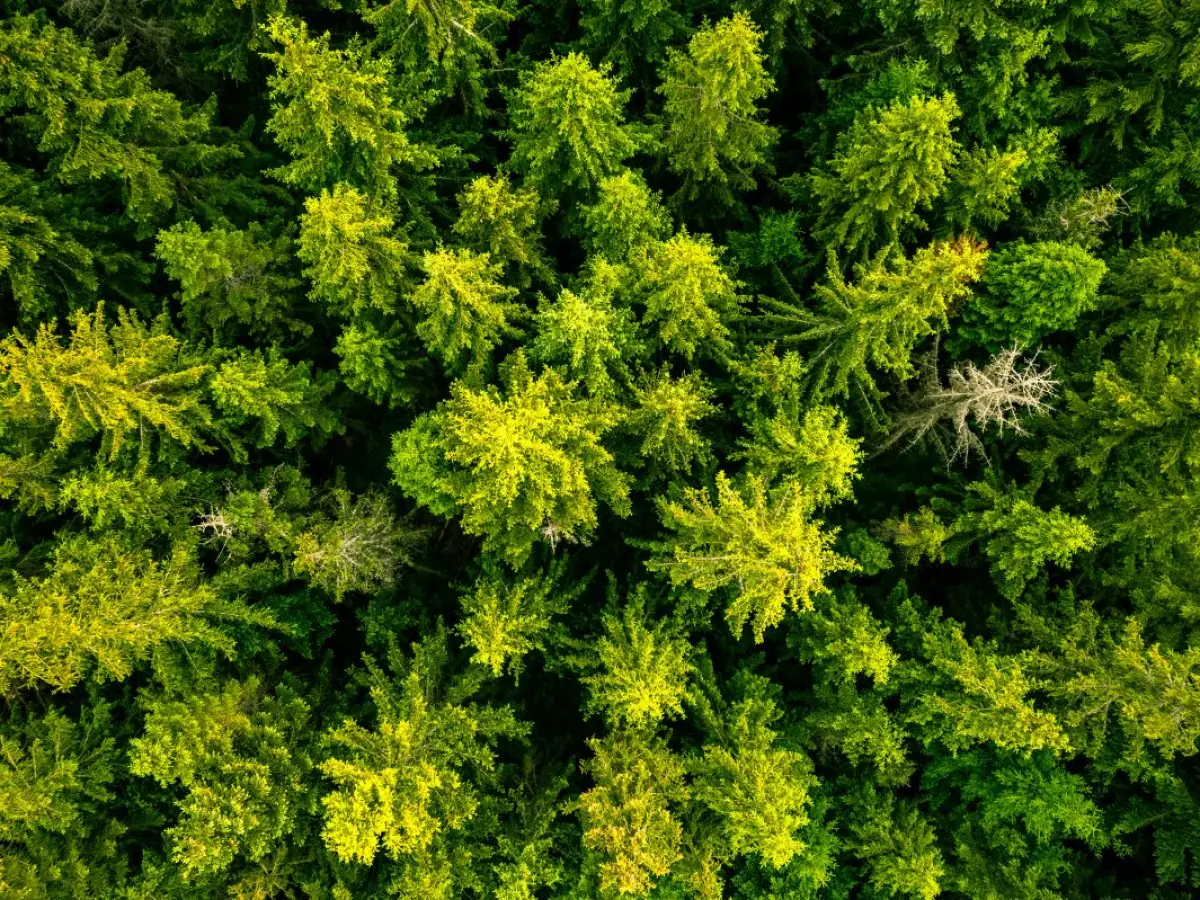
The fourth chapter, The Vision: The Big Forest, sets out the project’s central metaphor. “We must become a great forest, not a single, monolithic tree,” the students argue. “A single large tree is vulnerable; it stands alone and eventually falls. But a forest is resilient. […] The strength of each individual makes the community stronger, and a forest of cultures makes the world a richer place.”
The manifesto concludes with The Natural Regeneration, four practical imperatives set out in rapid succession: assert your identity; seek mutual wealth; pursue happiness through relationships; strengthen yourself, knowing that in doing so you strengthen everyone else. In conclusion: “maintain your identity. Become the forest”.

Special mention: Local Roots. Global Routes
Group 3 received a special mention for a project of a different kind: a prototype website – developed in Figma and titled Local Roots. Global Routes – conceived as a digital platform for discovering, learning about and connecting with local cultures and systems of knowledge around the world. Not a map organised by country, but by points of knowledge: local practices, rituals, ecological knowledge and cultural expressions, visualised as coloured roots that connect with one another without hierarchies and without national borders.
The group has long explored the tension between cosmopolitanism and localism, between binary views of the relationship between humankind and nature, and an equal dialogue between the perspectives of the global North and South, explicitly rejecting, in their process notes, any drift towards nationalism.
“This course had already been planned before the war in Iran,” said Bompan during his session. “But now, as we stand on the brink of a permanent Third World War, it is more urgent than ever. And I’m pleased to be doing this not with politics students or geographers, but with designers. Because the most interesting ideas can emerge from this sort of group.”
Cover: Envato image