



Throughout the history of human civilisation, discovery through exploration has been a fundamental element of its cultural, economic, technical and spiritual evolution. From the brave Polynesian explorations of the Pacific to the Vikings’ voyages across the Atlantic, through the long journeys along the Silk Roads, right up to Alexander von Humboldt’s travels and Amundsen’s Antarctic expeditions, we have always searched for new places to call home, new parts of the world from which to gain knowledge (or wealth), and new mystical places in which to seek the sacred.
Today, we are increasingly looking to our solar system and our galaxy to understand how to cross the vastness of space, colonise planets, and harness energy and minerals from extraterrestrial territories. We dream of the stars. We are innovating in flight technologies, interplanetary communication systems, and robots that will help us build an intergalactic civilisation in the coming millennium.
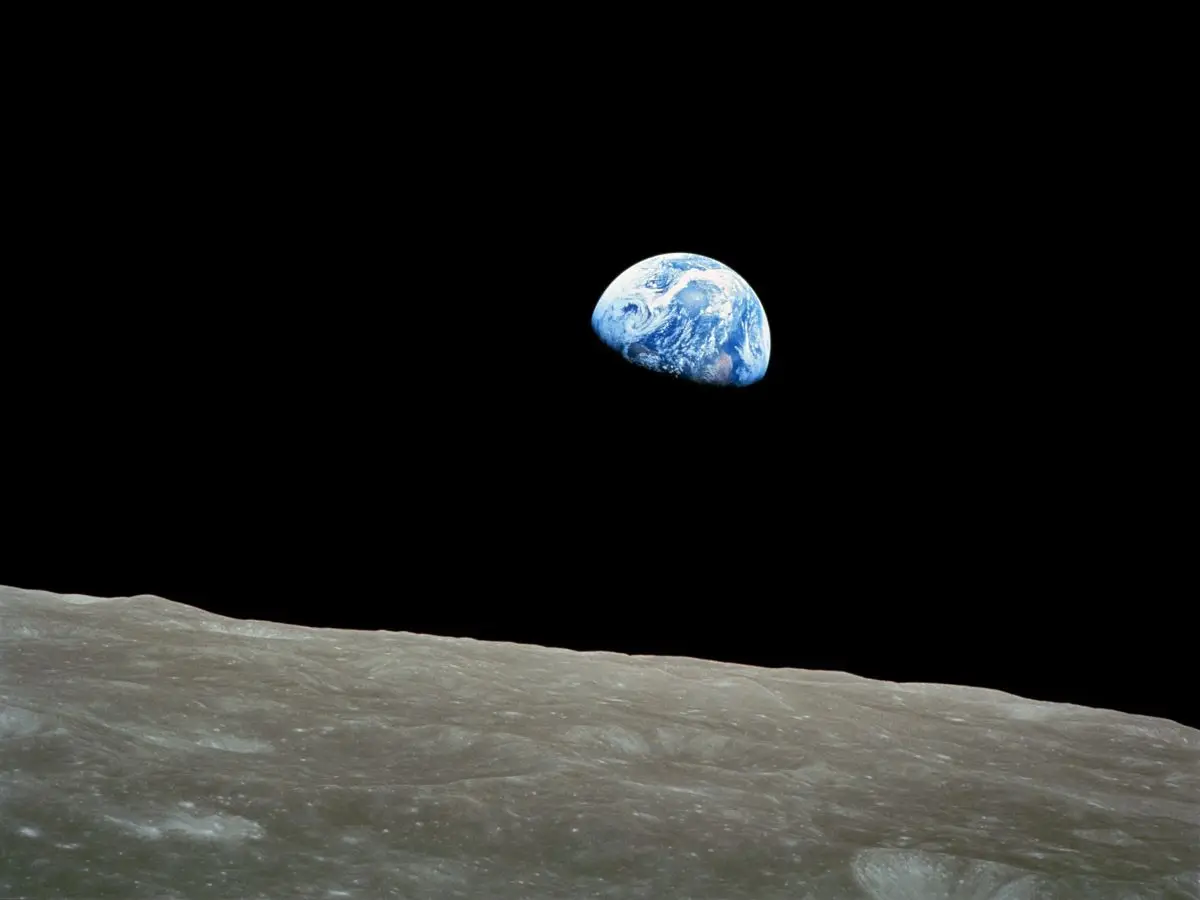
The space economy is a race taking off at the very moment in which environmental and climate challenges are becoming more serious and urgent on the most complex and beautiful planet we know, at least until now. After all, it was precisely a photograph of Earth taken from space – the famous Earthrise, captured on 24 December 1968 by William Anders, a member of the Apollo 8 mission – that sparked the environmental movements and the first laws to protect the planet and its natural world. That delicate blue sphere, seen from lunar orbit, made us dream of the possibility of exploring new worlds but also of loving our own planet even more.
But today's new space race seems to be fuelled by less noble motives. It is no longer an exclusively public endeavour, driven by scientific and strategic interests, but rather a new venture of the private sector and capital, attracted by the opportunities that exploration may bring. Riding the wave of the 17th-century East India Companies’ extractivist drive, SpaceX and a myriad of companies in the space economy are plunging into the business of spacecraft, satellites, interplanetary telecommunications, space mining, interplanetary colonies, orbital data centres, space robotics and much more. Technological development, undoubtedly, but above all a windfall of money to be made.
There is a whole universe of opportunities to explore, but how? Do we want to give rise to a form of space neo-colonialism, characterised by the unchecked exploitation of resources, the cluttering of planetary orbits with private and military satellites? Or do we want to harness the space economy to improve Earth’s green economy, seeking innovative solutions that foster an advanced and ethical interplanetary civilisation, where space regulations are enforced by a UN-led supranational body, where research is collaborative and demilitarised, and where the fruits of development are shared and made available to the people, not just to corporations?
In this issue of Renewable Matter, dedicated to space, we have taken stock of the situation, covering topics such as space ecology, interplanetary development, corporations with intergalactic ambitions, supply chain innovations, the overcrowding of Earth’s orbits, space-based AI centres, earth information systems and much more. We cannot allow the sole model for our civilisation’s development beyond Earth’s borders to be left in the hands of the Elon Musks and Richard Bransons of this world, or the Chinese or Indian military. We need a new ecological, social and anti-colonialist vision of the space economy to ensure that it truly brings prosperity, well-being and shared development. A very long road lies ahead of us before we are able to physically leave our solar system, perhaps coming into contact with alien civilisations that currently remain hidden from us in the vast darkness of the universe.
DOWLOAD AND READ ISSUE #64 OF RENEWABLE MATTER: SPACE ECONOMY
Cover: Earthrise, photograph AS8-14-2383HR taken by NASA’s William Anders on 24 December 1968 during the Apollo 8 mission