


This article is part of our Heat Pumps feature: discover it here
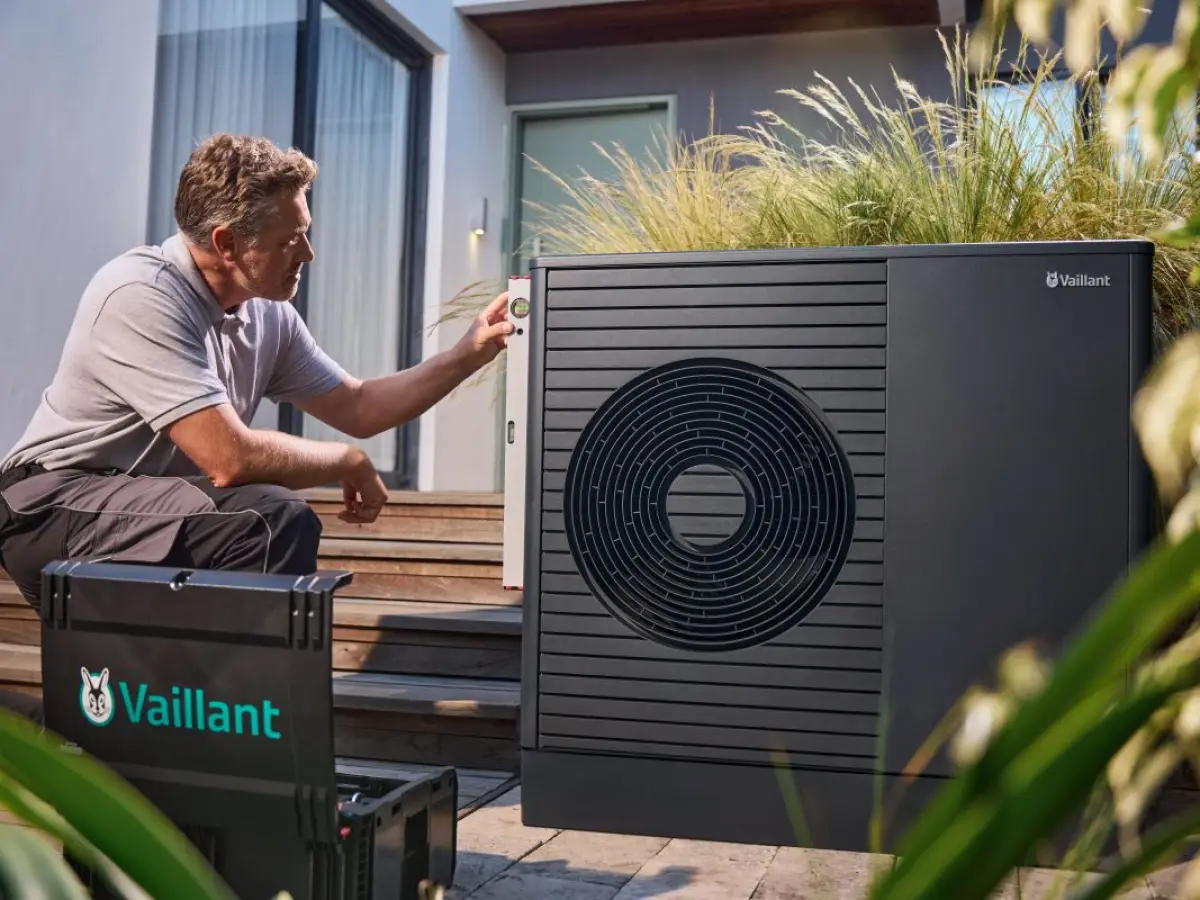
Efficient, electric, more compact and supplied by a refrigerant with low climate impact. These are the features of the new aroTHERM plus, the hydronic (air-to-water) heat pump designed by Vaillant for the Italian urban environment. “We are proud to be heating engineers, but it is clear that all the group’s investments are geared towards the energy transition, which is no longer optional,” said Paolo Curati, CEO of Vaillant Group Italia, during the press presentation held on 7 October at the SAIE fair in Bologna.
The building sector is among the biggest contributors to climate change. The Global Status Report for Buildings and Construction, published by UNEP in March 2025, estimated that buildings account for 34% of global CO₂ emissions and 32% of energy consumption. According to the German group, decarbonisation should encompass the entire life cycle of buildings, through the large-scale adoption of electrified technologies such as heat pumps, hybrid systems and air-conditioning systems.
The space-saving heat pump
AroTHERM plus is an innovative heat pump designed to overcome the installation constraints associated with the use of R290 propane refrigerant, a highly flammable gas that normally requires buffer zones near doors, windows, electrical sockets and light wells for safety reasons.
“The Flexible Space patent is developed specifically with our cities in mind, where the building stock is ageing and fragmented,” continues Curati. “But Italy also lacks a network of business that shares the objective of facilitating the energy transition of buildings.” AroTHERM plus is manufactured at Vaillant’s European facilities, including the gigafactory in Senica, Slovakia, which is one of the continent’s most advanced hubs dedicated to the production of heat pumps.
AroTHERM exceptionally compact design makes it particularly suitable for installation on small balconies and terraces, typical of densely populated urban buildings. Even in the 15 kW size, the heat pump retains a single-fan configuration, optimising its overall dimensions without compromising performance. The system is capable of delivering efficiency even in extreme weather conditions: from -25°C in heating mode up to +46°C in cooling mode.
An air-to-water heat pump extracts heat from the outside air and transfers it to the water that supplies the radiators and the underfloor heating. This heating system offers an alternative to gas boilers, but can also work well as a cooling system without compromising on comfort.
European regulations, from refrigerant gases to energy efficiency
In Europe, the use of fluorinated greenhouse gases (also known as F-gases) with a global warming potential of 2,500 or higher has been prohibited since January 2026. Some F-gases have also been banned because they contribute to the depletion of the ozone layer.
Among the alternative refrigerants currently available on the market, the propane-based R290 appears to be the most promising in terms of reliability, safety, and low global warming potential (0.2). According to Vaillant, which began researching and using R290 around a decade ago, this refrigerant can reach flow temperatures of up to 70°C, ensuring maximum flexibility in both new-builds and energy retrofitting projects.
Another directive that deserve close monitoring in relation to decarbonising the building stock is the Energy Performance of Buildings Directive (EPBD), perhaps misleadingly known as the “Green Homes Directive”. Besides providing for the phasing out of fossil fuel-powered heating and cooling systems by 2040, the directive requires reducing the average annual energy consumption of the building sector by at least 16% by 2030 and 20–22% by 2035.
However, the Italian government has not yet fully transposed the directive: the building renovation plan that Brussels had requested Italy to submit by 31 December 2025 is still missing. During the question time in the Senate on Wednesday 7 October, the Minister for the Environment and Energy Security Gilberto Pichetto Fratin said that the government had “drafted and submitted the plan that sets out the guiding principles and criteria that will guide the government’s actions”. The text appears to be in place, but the timetable for the decree that is due to enact it into law remains unclear. The matter will likely have to wait until 2027.
Today, heat pumps such as the aroTHERM plus are still considerably more expensive than gas boilers. Prices are expected to fall, partly thanks to financial incentives. “Unfortunately, Italy does not have a long-term incentive scheme as it is the case in other countries,” Roberto Cortese, Head of Public Affairs at Vaillant, tells Materia Rinnovabile. “Historically, we had two tax deduction schemes: the ‘Bonus Casa’ with a 50% deduction and the ‘Ecobonus’ with 65%. But in the latest budget law, the government opted for a single 50% rate, which remains in force today”.
For the time being, it is unclear how much funding will be made available by the Meloni government in 2027, nor which energy-efficiency renovation measures will qualify for the incentives. In the meantime, heat pumps are becoming increasingly well-suited to the Italian urban context.
Cover: photo by Vaillant