
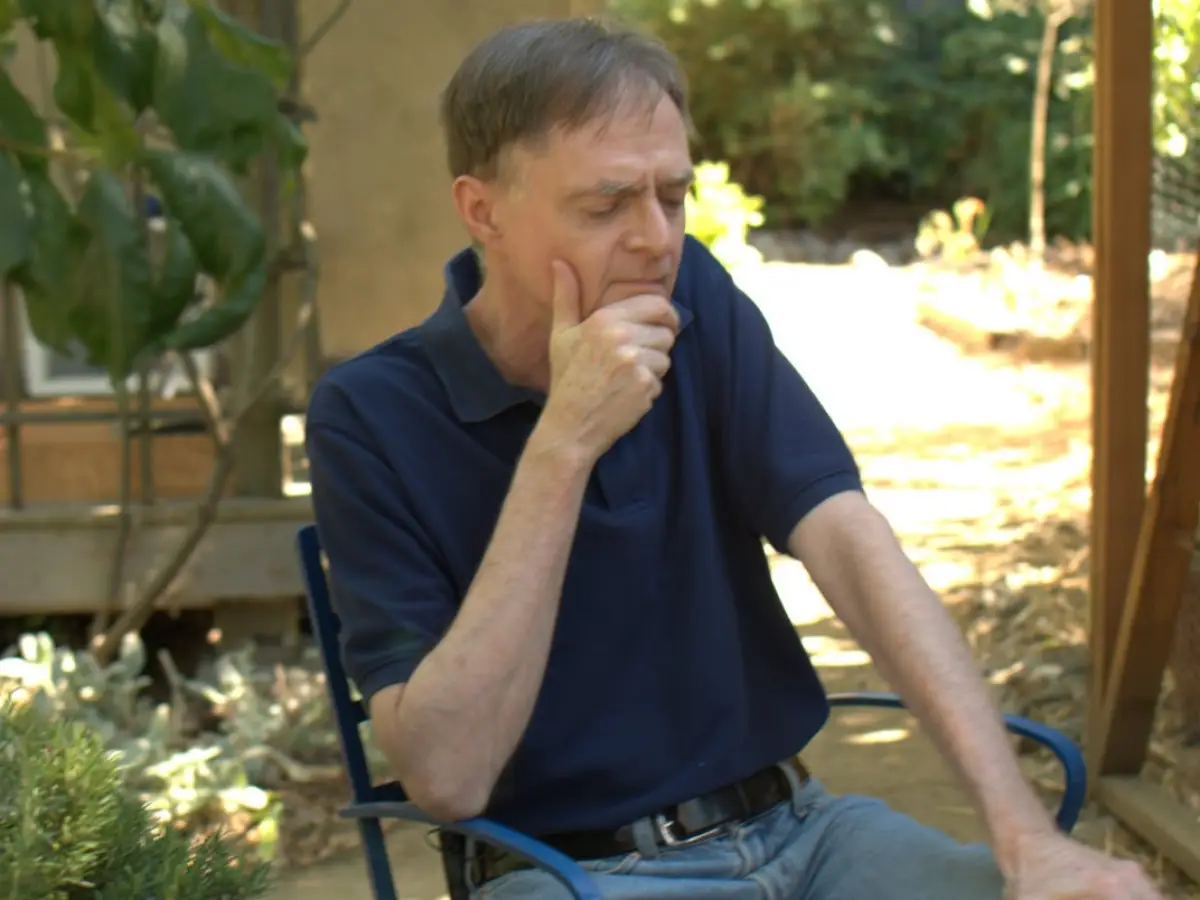

Richard Heinberg, one of the most important American environmental thinkers of this century, died on Sunday, July 19, at the age of 75, from pancreatic cancer diagnosed just two weeks earlier. It was a rapid and brutal illness that brought to a close a life devoted to understanding the ecological limits of modern civilisation.
I met Richard Heinberg in 2009 in Santa Rosa, California—the small town in Sonoma County where he lived and where, for years, he had taught at New College in the program on culture, ecology, and sustainable communities that he had helped establish. I no longer remember the exact details of that meeting, but I clearly recall the feeling: talking with a visionary with a systems-oriented mindset, capable—like any good geographer—of synthesizing economic, social, environmental, and energy data. When, years later, I began writing about the circular economy and the geopolitics of water, I carried his way of thinking with me: never an isolated problem, always a system of intertwined limits.
Over the years, I’ve eagerly read many of his books, beginning with The Party’s Over: Oil, War, and the Fate of Industrial Societies, the book that in 2003 established him as one of the most lucid voices on the subject—so much so that Bill Clinton lent it to The New Yorker journalist David Remnick “full of underlines, with the kind of exclamation points you’d expect from a particularly serious student,” as Remnick himself recounted. From then on, I followed every book he wrote (Powerdown, Peak Everything, The End of Growth, Afterburn) right up to his last—his fourteenth—Power: Limits and Prospects for Human Survival, published while his health was already declining. And I also followed, almost daily, the work of the Post Carbon Institute (PCI), the California-based organization where he served as a senior fellow for nearly twenty years (and also an important networking partner of Renewable Matter), along with its newsletter, MuseLetter, which over the years has become a compass for anyone seeking to think beyond the short-term horizon of growth.
What was striking about Richard—besides his analytical clarity, which allowed him to weave together thermodynamics, ecology, anthropology, and history into a single argument—was his ability to remain human in the face of truths that would have kept others awake at night. An introvert by nature, he spoke little in groups, but when he did, it was always to add something, never just to take up space, recalls his longstanding friend and colleague Asher Miller. Those who worked alongside him for nearly twenty years—much more closely than I ever did—remember above all his kindness, his sense of humor, and his almost stubborn focus on the common good, even as he wrote about the physical limits of industrial civilization.
I already miss the clarity with which he could describe the end of an era without ever succumbing to pointless doomsday rhetoric. I miss the idea that there was still, somewhere in California, someone capable of writing the exact sentence we needed to understand where we were headed. The best way to honour him, I believe, is not through mourning but through work: to continue doing exactly what he did for forty years—telling the truth about the limits of the petro-capitalist economy and acting accordingly.
Cover: Richard Heimberg, photographed by Nicolás Boullosa, Flickr