

This article is part of the thematic channel The Carbon Observer: subscribe to the newsletter
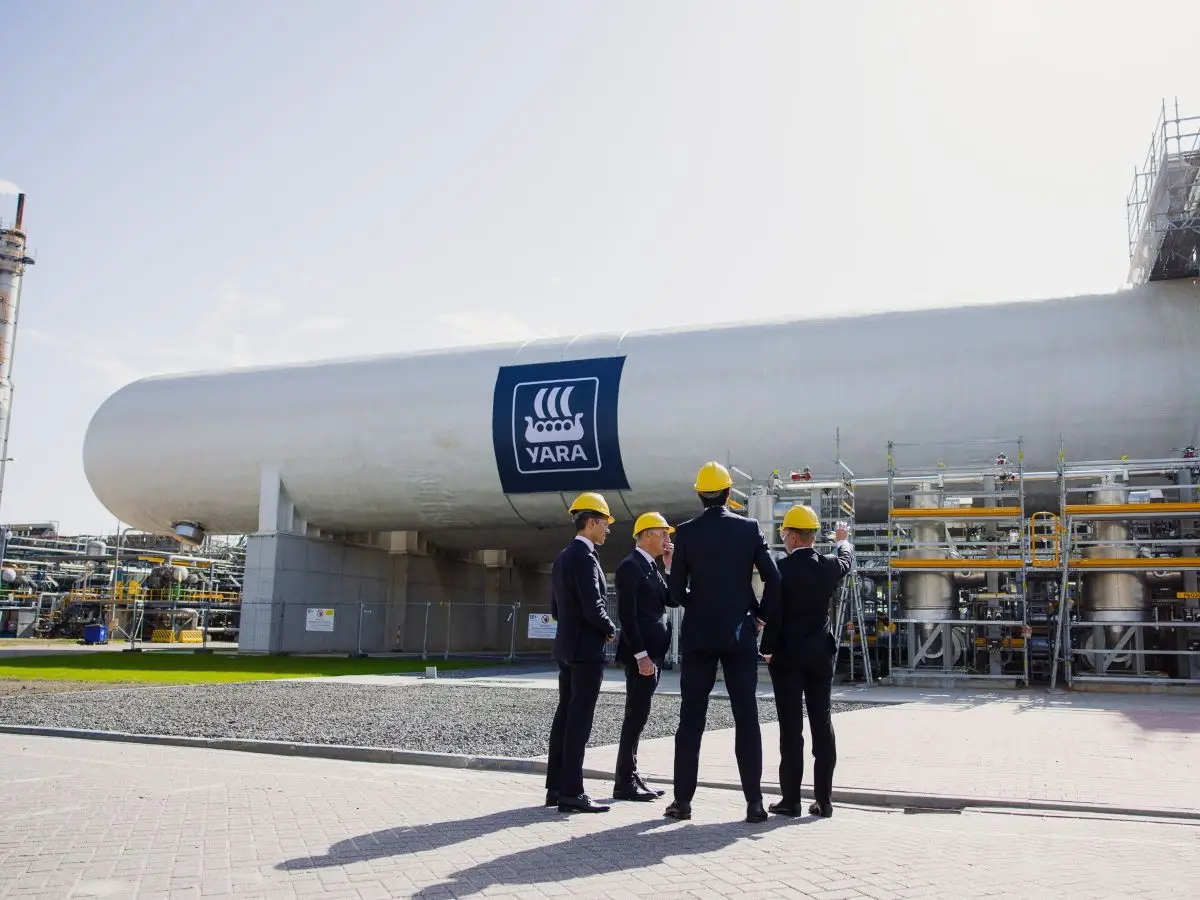
To understand what is changing in European Carbon Capture and Storage, we need to start in Sluiskil, in the Dutch province of Zeeland. Here, Yara, a Norwegian ammonia and fertiliser group, will capture some of the CO₂ generated by its production process and ship it to Norway. Its destination is Øygarden, on the country’s west coast, where Northern Lights, a joint venture between Equinor, Shell and TotalEnergies, will be able to inject the CO₂ through an offshore pipeline into a geological formation about 2,600 metres beneath the seabed. The agreement provides for the storage of around 12 million tonnes over a period of 15 years.
What is new is not the 800,000 tonnes of CO₂ that Yara will be able to capture each year, but the way the supply chain is organised. Yara captures and prepares the CO₂ in the Netherlands, but does not need to own a storage site or build its own infrastructure across the North Sea. Transport and storage are purchased from a specialised operator. This separation of roles makes Sluiskil different from a conventional CCS project. It is an early example of how a European market for CO₂ management services might work.
From capture to the contract with Northern Lights
Yara can be among the first customers for this model because of its production process. Conventional ammonia production generates a high-concentration stream of CO₂, which is easier to separate than in other industrial sectors where capture can be technically more challenging. In 2023, Yara estimated that around 200 million euros in capital would be needed to expand CO₂ liquefaction capacity at Sluiskil and build the infrastructure required to handle the volumes covered by its agreement with Northern Lights. But those 200 million tell only part of the project’s economics. Yara is investing in the infrastructure required within its own plant; on the other side of the North Sea, someone else has had to build the ships, terminals, pipelines, wells and storage capacity.
The infrastructure Yara can turn to today was built as part of Longship, the major project through which Norway has funded the creation of an initial end-to-end CO₂ capture, transport and storage chain.
The project brings together two elements: on one side are the facilities that capture the CO₂, while on the other is Northern Lights, which has built the shared infrastructure to receive, transport and store the CO₂ beneath the North Sea. Northern Lights was not designed solely to serve Longship Norwegian facilities; it can also sell transport and storage capacity to companies in other countries.
Building the system, however, has required substantial public intervention. According to the Norwegian government’s latest estimates, Longship will cost around 35 billion kroner in total. Of this, 23 billion will be covered by the state. The figures demonstrate how important public intervention is in getting this new supply chain off the ground. The reason is simple: few industries are willing to invest in CO₂ capture if there is no infrastructure ready to transport and store it. At the same time, building that infrastructure without enough customers already in place to guarantee the necessary volumes is difficult. Norway has sought to overcome this obstacle by funding the creation of the system. Now that the infrastructure exists, the challenge is to attract enough companies to allow it to expand on an increasingly commercial basis.
From 1.5 to more than 5 million tonnes
Northern Lights became operational in 2025, and in August that year the first volumes from Heidelberg Materials’ capture facility at its cement plant in Brevik were injected into the storage site beneath the Norwegian continental shelf. Northern Lights has also signed an agreement with Stockholm Exergi to transport and store up to 900,000 tonnes a year of biogenic CO₂ for 15 years from 2028. Such agreements support the transition from infrastructure to an established market.
At this initial stage, the facility has CO₂ transport and storage capacity of 1.5 million tonnes a year. Phase 2 will increase that capacity to at least 5 million tonnes a year and is expected to be ready in the second half of 2028. The expansion includes additional onshore storage tanks, a new dock, new injection wells and more ships to transport the CO₂. The planned investment is 7.5 billion Norwegian kroner. Compared with the first phase, the European Union’s Connecting Europe Facility is contributing 131 million euros, while Norway’s Ministry of Energy clarifies the remainder is being financed by the companies involved, with no further financial support from the Norwegian state.
But if this model is to become a genuine market, one crucial piece of information is still missing: how much does it cost to transport a tonne of CO₂ from Sluiskil to its storage site beneath Norway? The roughly 200 million euros announced by Yara do not represent the cost of the entire chain. According to the company, the 200 million euros will be used to expand the plant’s liquefaction capacity and the infrastructure needed to handle 12 million tonnes of CO₂ over 15 years.
It would therefore not be correct to divide the investment by the projected volumes and present the result as the cost of CCS. The figure does not automatically include all the economic components of capture, maritime transport and geological storage, while the commercial terms of the agreement between Yara and Northern Lights have not been disclosed in the two companies’ public statements. Without a public price for the full service, it is difficult to determine from the outside how competitive this chain would be under normal market conditions.
The price of CO₂ creates demand for storage
But why would an industrial company pay to ship its CO₂ across the North Sea and store it beneath the Norwegian seabed? Part of the answer lies in the European emissions trading system. Under the EU ETS, when CO₂ is captured and permanently stored in accordance with the applicable rules, the company does not have to surrender emission allowances for those volumes. For Yara, this means that the tonnes sent to Northern Lights are not simply an additional cost for capture, transport and storage: they also allow the company to avoid purchasing or using the ETS allowances that would otherwise be required if that CO₂ were released into the atmosphere.
The carbon price therefore becomes one of the factors determining how much a company may be willing to pay to use a storage service. In the case of Sluiskil, we do not know where the break-even point lies. Yara and Northern Lights have not disclosed the financial terms of their transport and storage agreement. It is therefore impossible to compare the overall cost of CCS with the value of the ETS allowances avoided.
The 800,000 tonnes a year planned at Sluiskil are significant for a single plant, but become small when compared with the scale envisaged by the European Union. The Net-Zero Industry Act provides for at least 50 million tonnes a year of injection capacity to be available at geological storage sites in the EU by 2030. But 2030 is only a milestone: according to European Commission estimates, from 2040 the EU could need to capture and permanently store around 250 million tonnes of CO₂ a year to meet its climate targets. These are different magnitudes, injection capacity in the first case and volumes to be captured and stored in the second, but both illustrate just how wide the gap is between the initial industrial projects and the scale set out in European policies. Yara’s 800,000 tonnes amount to just 1.6% of the European target for injection capacity by 2030.
The paradox of the first supply chain
Yet Sluiskil contains a paradox: the CO₂ is captured in the Netherlands, and therefore within the European Union, but stored on the Norwegian continental shelf, around 2,600 metres beneath the seabed. Norway is part of the European Economic Area, but not of the EU. The target of at least 50 million tonnes a year set by the Net-Zero Industry Act, meanwhile, applies to injection capacity located within EU territory, its exclusive economic zones or the continental shelves of its member states. The Norwegian capacity used by Yara therefore does not count towards that specific target.
And yet Northern Lights already offers EU industries a realistic option for sending their CO₂ to an operational permanent storage site. It is a small paradox of the emerging European carbon economy: the market is becoming cross-border before the EU has built much of the storage capacity it expects to have within its own territory. The question now is whether industrial demand will be strong enough to turn infrastructure created with substantial public support into a CO₂ transport and storage service capable of sustaining itself at European scale.
Cover: photo by Yara