



In mid-October 2026, LEAP 2.0 – the technical framework developed by the Taskforce on Nature-related Financial Disclosures (TNFD) to help companies assess their nature-related impacts, dependencies, risks and opportunities – was published almost simultaneously with the update to the Science Based Targets Network (SBTN) Nature 2.0, the framework for translating LEAP assessments into science-based targets and practical actions for mitigation and ecosystem restoration.
In the meantime, the TNFD is wrapping up its technical programme and passing the baton to the ISSB (International Sustainability Standards Board) and the ISO system for a standard based on LEAP. In Italy, currently, these tools are used primarily by large corporate groups, but the momentum from supply chains is now reaching SMEs as well. We discussed this with one of Italy’s leading experts, Paolo Viganò, founder of Rete Clima, an organisation that has been supporting companies’ ESG strategies and actions for over fifteen years, including by implementing Nature-based Solutions (NbS) and ecosystem restoration projects. We specifically asked him what changes with the new frameworks, how to work with limited data, and how to move from reporting to on-the-ground action.
TNFD and SBTN are often mentioned together. Let’s start by defining what they are.
TNFD is the framework that helps companies assess and report on how their operations depend on nature and how they impact it in order to understand the resulting risks and opportunities. SBTN, on the other hand, is the methodological approach that enables these assessments to be translated into science-based targets and practical actions. The two frameworks are complementary. TNFD provides recommendations for integrating nature-related issues into corporate governance, strategy, risk management and reporting. The SBTN framework supports instead the setting of measurable targets and practical actions to mitigate pressures on ecosystems, covering areas such as freshwater, soil, terrestrial ecosystems and the ocean, integrating biodiversity across the board.
What does the LEAP (Locate, Evaluate, Assess, Prepare) approach mean?
It is the methodological pathway developed by the TNFD to guide companies in identifying and assessing their dependencies on and impacts on nature, as well as the associated risks and opportunities. This technical approach supports the implementation of the TNFD recommendations and, in its most recent version, also strengthens the link with SBTN methodologies for setting science-based targets. The framework is divided into four stages. The first is locate, in which the company’s interactions with nature are determined, taking into account both direct activities and the entire value chain, in order to locate the sites and ecosystems most affected. Next comes the evaluate phase, in which the company’s dependencies on ecosystem services and the impacts its activities have on nature are analysed. The third phase is assess: here, the risks and opportunities associated with these interactions are analysed, taking into account the potential operational, economic and financial consequences for the company. Finally, there is the prepare phase: here, strategic responses, priorities for action, objectives and the necessary measures to manage the identified risks and impacts are defined.
How can this technical process be applied to a real-world business, for example an agri-food company with a long supply chain?
During the locate phase, the supply chain is mapped out to identify the areas and ecosystems most affected, starting with the main raw materials and the most significant production sites. It is not necessary to have the geolocation of all areas within the supply chain affected by the company’s activities from the outset. The evaluate phase then analyses dependencies and impacts on the natural environment, taking into account, for example, the water requirements of crops, water availability and soil conditions. In the assess phase, this information is translated into risks and opportunities for the company: water stress or soil depletion can, for instance, compromise productivity, increase costs and jeopardise the continuity of supplies, but they can also highlight opportunities linked to introducing agricultural practices aimed at greater ecosystem resilience. Finally, in the prepare phase, the company sets targets and actions, involving its suppliers in the adoption of more sustainable and regenerative practices, such as more efficient water management, the protection of soil fertility and the promotion of biodiversity. In this phase, the indicators and information required for reporting under the TNFD are also established. Almost all stages of the process involve a deep integration between the two frameworks. The first steps of the SBTN process, assess and prioritise, in fact overlap in several areas with the locate and evaluate phases of LEAP: both approaches require an understanding of the pressures the company exerts on nature and the identification of the activities and geographical areas on which to focus. Subsequently, SBTN guides the company in setting science-based targets, defining actions, implementing them and monitoring progress. It also proposes an approach to action based on the AR3T principle: Avoid, Reduce, Regenerate, Restore, Transform. In practical terms, it invites companies not only to avoid and reduce negative impacts on nature, but also to promote the recovery of ecosystems and to progressively rethink their production models, with a view to improving the natural state of those ecosystems themselves. A truly Nature Positive approach.
In mid-October, SBTN Nature 2.0 and LEAP 2.0 were released almost simultaneously. What does this actually mean for users?
The updates to the two frameworks address a long-standing issue relating to the relationship between them and their practical applicability. With these developments, the link between risk analysis (carried out within the TNFD) and the setting of mitigation targets (carried out using SBTN) is now much closer. An interesting new feature introduced is modularity, as SBTN 2.0 allows work to begin even when initial traceability data is incomplete, providing clearer tools for engaging the supply chain. Companies will therefore no longer necessarily have to wait until they have a complete map of their supply chain before they can begin working on nature-based mitigation. Thanks to the new frameworks, it will in fact be possible to work in successive phases, building knowledge together with their supply chain and suppliers. It is a gradual approach that gives companies more leeway, without necessarily compromising the quality of the final result.
The TNFD will conclude its technical programme at the end of 2026 and hand over to the ISSB, which has proposed a voluntary Practice Statement on nature. Is this a step forward, or will nature remain “optional”?
ESG reporting remains largely voluntary for companies; consequently, the disclosure of impacts and dependencies on nature (where material) also follows the same voluntary approach. Nonetheless, this transition to the ISSB certainly paves the way for biodiversity to be definitively incorporated into non-financial reports. We could say, in a way, that the TNFD has established the basic framework for the assessment, management and reporting of biodiversity, and the ISSB is now integrating this into the global IFRS (International Financial Reporting Standards). The IFRS S1 standard already requires companies to disclose any material risks or opportunities for the business as part of their voluntary reporting. This remains, however, purely voluntary. There is still no specific legal obligation regarding the reporting of ESG issues, and therefore not regarding biodiversity either, except in Europe, where companies subject to the CSRD are required to report on their ESG activities and – where biodiversity is material – also on their specific impacts on and dependencies regarding it.
ISO is working on a standard based on the structure and objectives of the LEAP approach. How does having a certifiable standard rather than a set of guidelines make a difference to a company?
Generally speaking, it can be said that the introduction of an ISO standard always represents a significant development for the sector applying that technical standard. Codifying the LEAP approach into an ISO standard (the future ISO 26239) will provide a formal structure for the entire analysis that can be verified by a third party. If a guideline suggests a method, then an ISO standard establishes clear boundaries and requirements: this will enable greater external credibility and the genuine integration of biodiversity metrics into corporate governance processes, as well as the possibility of undergoing independent audits. It should be clarified, however, that the standard will define the working method and not automatically establish a certification process, but it will facilitate the transition towards a robust and comparable corporate process. For a company, this will mean being able to demonstrate the robustness of its analyses to clients, banks and the market, significantly reducing the risks of greenwashing. Above all, it will facilitate the stable integration of nature into corporate governance and management systems.
How are Italian companies faring? How many are using LEAP or have set SBTN targets, and in which sectors?
The uptake of these frameworks is still at a fairly early stage and, as already mentioned, mainly concerns large companies operating in sectors characterised by significant impacts on or dependence on the natural environment. I am thinking in particular of companies in the energy, utilities, agri-food, fashion, manufacturing and raw materials sectors. It is important, however, not to confuse different situations: there are, in fact, companies that have signed up to the TNFD, others that use the LEAP method for their analyses, and others that have formally embarked on the SBTN pathway, perhaps even achieving third-party validation of their targets. Among the Italian companies that have adopted reporting frameworks consistent with the TNFD are ENEL, SNAM, TERNA, Pirelli, Prysmian, Fedrigoni and Poste Italiane. It is likely that there are also other companies using the LEAP method internally without having publicly declared so. On SBTN, the numbers are even more limited: to date, TERNA has had its materiality analyses validated in the official register, while groups such as ENEL and SNAM are working on mitigation plans consistent with the framework, albeit without having sought formal validation.
In Europe, biodiversity reporting is also covered by the CSRD and the ESRS E4 standard, the scope of which has been scaled back by the Omnibus Directive. With no legal obligation, what motivates a company to do so anyway? Access to credit?
Banks can certainly play an important role in environmental reporting and action relating to biodiversity, as the growing focus on nature-related risks can influence assessments of companies’ reliability, financial soundness and exposure. I do not believe, however, that the issue is limited to the banking system. In fact, there is an equally significant push coming, for example, from supply chains: large companies have a vested interest in gaining a better understanding of the environmental conditions in the regions where their raw materials originate and, as a result, are beginning to request more detailed information from their suppliers regarding nature and biodiversity. For an SME working within the supply chain alongside these companies, understanding its own impacts and its dependence on nature can become a key factor in maintaining and developing commercial relationships.
The bottleneck lies in the data: the traceability of raw materials and the state of the environment at the sites. How do you manage with limited information, and how much do satellites and models help?
Given the latest developments in the frameworks, resources can be focused on the sites and raw materials posing the highest risk, rather than having to wait for the company’s entire supply chain to be fully mapped. Satellites and various databases help to cover vast geographical areas by monitoring land use, vegetation cover, water stress and a wealth of other information. Technology alone, however, is not enough: remote sensing data must always be validated and integrated in the field by technicians through fieldwork and direct measurements within the various ecosystems involved in “nature assessments”. At Rete Clima, we work alongside companies even during the phase of building this input database. To do this, we provide our digital platform, Forest Hub (designed to monitor any NbS, including non-forest ones), which acts as a single, georeferenced repository: the platform collects ESA’s Copernicus satellite data, the results of on-site surveys carried out by our technicians, measurements from field sensors, and the outputs of the biodiversity models we have developed in collaboration with the IUAV University of Venice. This is complemented by data sourced from geoportals, various types of databases and citizen science initiatives, which together form a pool of high-quality tools that can collectively provide valuable support for this type of technical activity.
How do we move from LEAP to on-the-ground initiatives, such as afforestation or regeneration?
The transition from assessment to action involves translating the LEAP analysis and SBTN targets into an operational Nature Action Plan (NAP). If the assessment identifies soil degradation or habitat loss within the supply chain, for example, targeted interventions can be planned: afforestation, agroforestry or ecological restoration, in collaboration with farmers and local authorities. Planting trees is not necessarily enough: the intervention must directly address the specific pressures that have been identified and be monitored over time. Rete Clima’s approach aims specifically to cover this technical process seamlessly, from the initial analysis of the “state of nature” of the various ecosystems within the supply chain, through to the practical implementation of Nature-based Solutions (NbS), and on to monitoring and reporting on behalf of companies. With over fifteen years’ experience working on regeneration projects in Italy and abroad, we directly design, implement, manage and monitor interventions on the ground: this enables companies to have a single technical point of contact capable of transforming the critical issues identified by the LEAP into real ecological regeneration projects that are consistent with the supply chain’s territories and their needs.
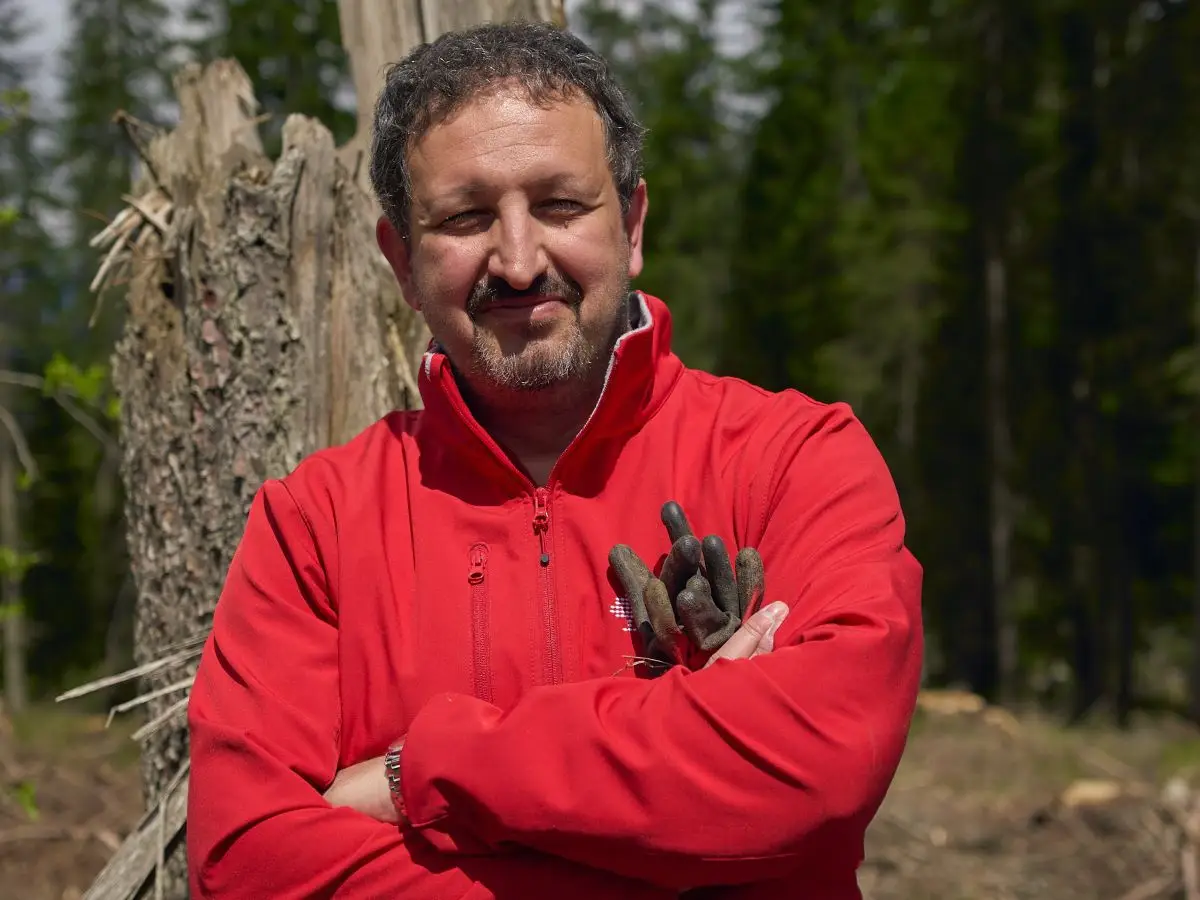
Cover: Paolo Viganò