


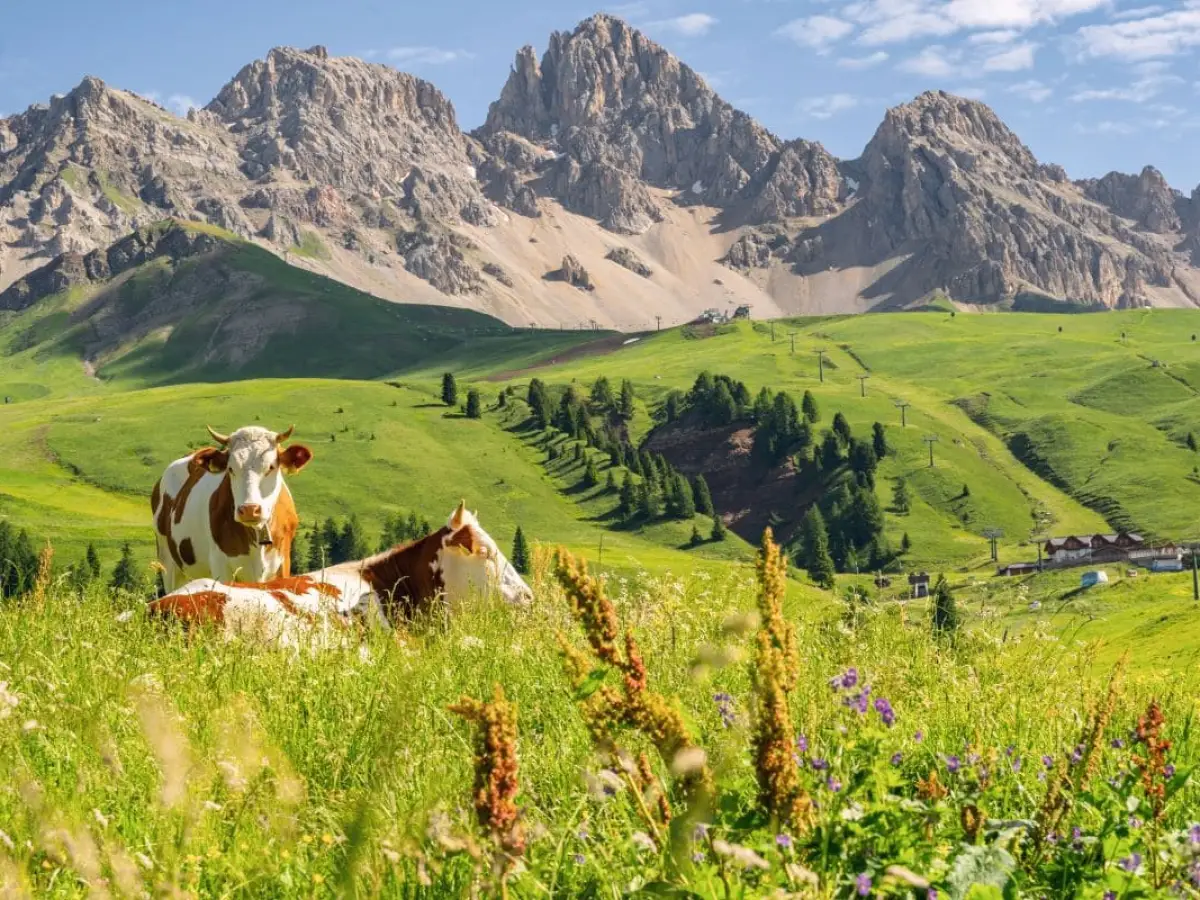
Every year, with the arrival of the first autumn chills, the mountains of Trentino prepare for a moment of celebration: the Desmontegada. This is the moment when livestock herds, which have spent the summer grazing the lush upland pastures of the Alps, slowly descend to the village stables. This ancient ritual, with its gestures and flavours, tells the story of the simple yet hard life of those who still nurture a bond with the mountain.
However, the Desmontegada is not just a celebration, with livestock parades and cheese tasting. It is also the symbol of a fragile system, which every year faces challenges such as climate change, generational turnover, the need for continuous and adequate technical training, and the importance of ensuring safety throughout the entire supply chain, even through strict health and hygiene protocols.
Alpine pastures: ecosystems to protect
Mountain pastures are a vital component of the Alpine landscape and of Trentino's identity. Malghe (mountain dairies), widespread throughout the mountainous territory, safeguard know-how, relationships, and a working culture that's deeply connected to the land. "The 382 active malghe in Trentino are much more than an economic presence: they are the heart of our mountains," says Elisabetta Nardelli, Head of Agrifood & Sustainability at Trentino Marketing, speaking to Renewable Matter. “In 2024, they welcomed over 22,600 cattle, around 39,000 sheep and goats, and 1,400 horses. In more than one hundred of these malghe, milk is still processed on-site, according to ancient knowledge. Some thirty of these also offer accommodation and dining, allowing guests a first-hand experience of the workings of alpine pastures.”
Of the 139,000 tonnes of milk produced in Trentino in 2024, approximately 70,000 come from alpine pastures, of which 20,000 are processed directly in the malghe and 50,000 are delivered to dairies. In total, the value of dairy production is close to 64 million euros (Concast-Trentigrana data).
The numbers, however, tell just one part of the story. Today, this system is in a delicate phase, marked by economic, social, and environmental changes that challenge its continued existence. "Behind every malga there is someone who protects the landscape, who works with respect, who produces cheeses infused with the flavours of meadow herbs and alpine flowers," Nardelli adds. "This work keeps high-altitude ecosystems alive, protects the biodiversity of alpine meadows, and helps safeguard the territory from hydrogeological risks. This is why it is a practice that must be preserved."
The importance of health and hygiene protocols
"For alpine pastures to continue generating value, we need tangible, shared tools: training, innovation, adequate services, and solid supply chains. This is where we are investing," says Nardelli, outlining the main areas of intervention of the "Alpeggio Project", an initiative coordinated by Trentino Marketing that involves the Autonomous Province of Trento, the Chamber of Commerce, the Edmund Mach Foundation, and the Province's Farming Federation. The project integrates technical pasture management, qualified training for managers and supervisors, and research to improve production practices. "Special attention is given to health and hygiene protocols," Nardelli concludes. “Public intervention is essential to develop and apply strict regulations, which are crucial to ensuring the safety and quality of malga milk and cheese, protecting consumer health and the reputation of the supply chain. A stable and sustainable future for these high-altitude practices can only be guaranteed through continuous and collective commitment to these matters.”
This content is produced thanks to the support of sponsors
Cover: image by Envato