


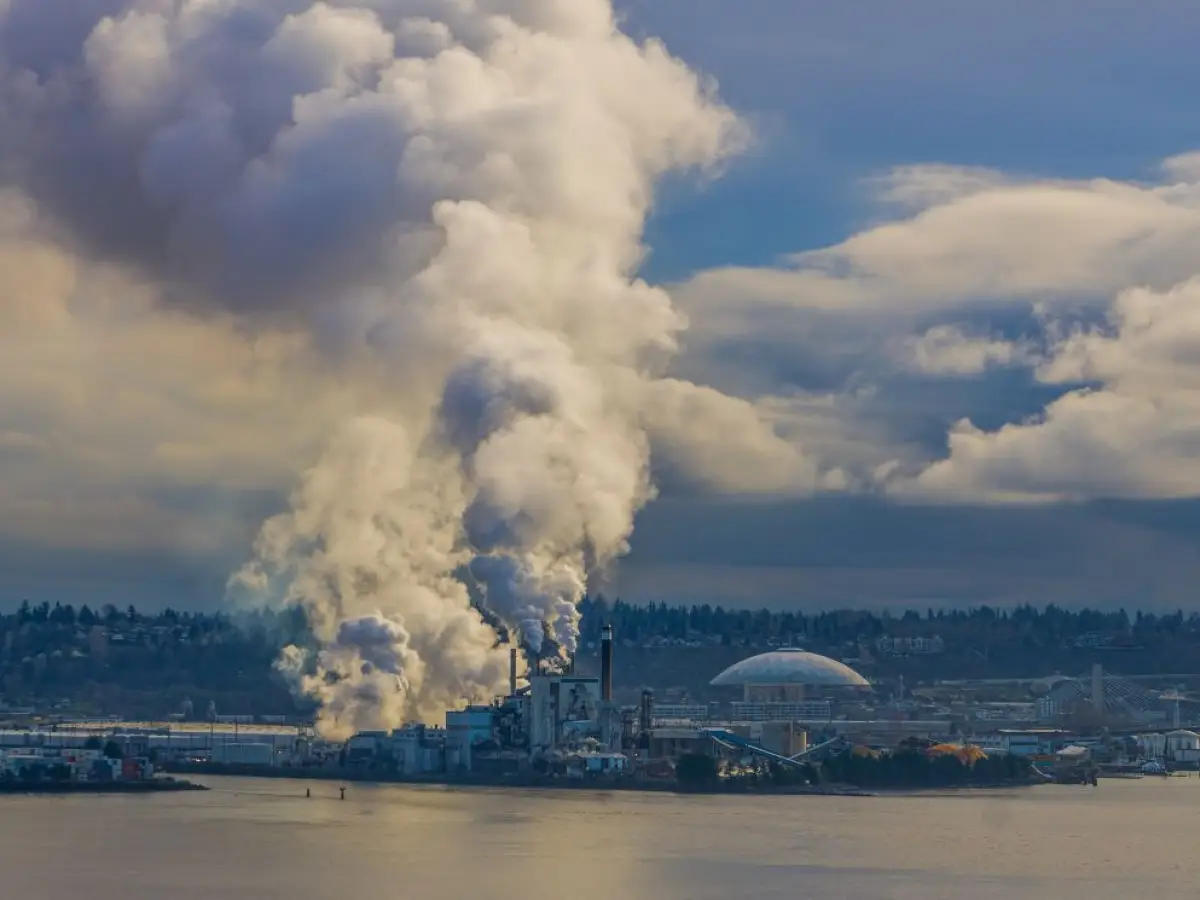

“The world can no longer avoid exceeding the 1.5°C threshold, and the consequences are already devastating: deadly floods, brutal heatwaves, uncontrolled wildfires, lives lost, economies crippled, and widening inequalities. And it is precisely those who bear the least responsibility who are paying the price first and most severely.” These were the opening words with which António Guterres, Secretary-General of the United Nations, commented on the findings of the new Emissions Gap Report 2026: The Point of Return, published today, 21 October, by the United Nations Environment Programme (UNEP), which quantifies the gap between the emissions reductions needed to limit climate risks and those projected under current government commitments.
Current climate policies are not sufficient to curb the climate crisis: if governments continue on their current path, the planet is set to warm by 2.8°C by 2100. Even if governments were to fully implement their national climate commitments, global warming would still reach 2.6°C by 2100. In the most ambitious scenario, the rise in global average temperature would be limited to 2.1°. The priority now is to limit the rise in temperatures and bring them back below the 1.5°C threshold by the end of the century.
The gap between objectives and policies
In the scenario identified by UNEP, global greenhouse gas emissions are expected to fall by 18% by 2030, by 45% by 2035 and by 69% by 2040, compared with 2025 levels. The reduction required by 2035 corresponds to an average annual rate of reduction of 5.7% in the decade 2025–2035. Even assuming the full implementation of Nationally Determined Contributions (NDCs), emissions would fall by only 5–8% by 2030 and 11–15% by 2035 compared with 2025.
The projections have worsened compared with those in the previous edition. According to UNEP, this is due to the United States’ withdrawal from the Paris Agreement and the revision of estimates of historical emissions. The new NDCs submitted since the last edition of the report, however, have had a negligible impact on the warming outlook. The report emphasises that every five years of CO₂ emissions maintained at current levels results in an increase in peak warming of around 0.1°C. The gap therefore also relates to the speed at which measures are implemented.
Staying within 1.5°C also requires the removal of CO₂
Even achieving drastic cuts in emissions would not, on its own, be sufficient to bring temperatures back below 1.5°C by the end of the century. The scenario involving the minimum possible overshoot requires the removal from the atmosphere and permanent storage of around 320 gigatonnes of CO₂ over the course of the century, equivalent to approximately eight years’ worth of global CO₂ emissions at 2024 levels. This condition introduces a further unknown: technological and socio-economic challenges cast doubt on the feasibility of achieving removal on this scale. Relying on it without rapidly reducing emissions at the source would therefore risk jeopardising the path back to safety.
Every additional fraction of a degree and every year spent above 1.5°C increases climate risks, including possible irreversible changes to ice caps, permafrost, ocean circulation and coral ecosystems, with consequences for human health and economic prosperity.
Renewables are on the rise, but progress is not enough
The situation also shows some positive signs, however. Since the adoption of the Paris Agreement, global electricity generation capacity from renewable sources has grown three times faster than expected, while the uptake of solar photovoltaics has been seven times faster than anticipated. Economic instruments, including emissions trading schemes and carbon taxes, have led to average reductions of between 5% and 13% across various sectors examined.
These results, nevertheless, still remain concentrated in certain sectors and countries. To bridge the emissions gap, UNEP highlights the need to scale up and sustain effective policies over time, adapting them to local conditions and development priorities.
The report reiterates the targets agreed in the first Global Stocktake, the collective review of the Paris Agreement: to triple global renewable energy capacity, double the annual rate of improvement in energy efficiency by 2030, begin the transition away from fossil fuels in energy systems, reduce non-CO₂ emissions, and halt and reverse deforestation and forest degradation.
Progress remains insufficient, particularly on fossil fuels and deforestation. Recent trends in absolute emissions, including those linked to energy systems, road transport and methane, continue to move in the wrong direction.
From the energy transition to methane: the targets for 2035 and 2040
In the message accompanying the report, Guterres sums up the gap between the available solutions and the political response: “The emissions gap is now a leadership gap”. UNEP calls on governments to accelerate electrification, invest in grids and storage systems, improve energy efficiency, reduce methane emissions and halt deforestation. It also calls for the adoption of credible pathways to phase out fossil fuels, with clear deadlines and safeguards for the workers and communities affected.
To make climate commitments more tangible, the report identifies sectoral targets consistent with the minimum possible overshoot scenario. By 2035, compared with 2025, global electricity generation capacity from renewable sources should at least triple, and the primary energy intensity of GDP should fall by at least 30%. By 2040, renewable capacity should reach at least 4.5 times the 2025 level, whilst energy intensity should be reduced by at least 40%.
The transition away from fossil fuels would also require, by 2040, a reduction in the share of coal, oil and gas in the total global energy supply by at least 75%, 30% and 35% respectively. Methane is also a priority area. Global emissions of this potent greenhouse gas are expected to fall by at least 25% by 2035 and by 40% by 2040 compared with 2025 levels.
The growth of renewables and policies that are already proving effective demonstrate that the tools to reduce emissions do exist, but the possibility of limiting the temperature rise to below 1.5°C and returning below that threshold by 2100 remains dependent on translating commitments into actual reductions.
Finally, the Secretary-General highlights the responsibility of the G20 countries and the need to mobilise affordable finance for developing countries. For Guterres, exceeding the threshold does not, in fact, amount to giving up: “We can still minimise its magnitude and duration, bringing temperatures back below 1.5°C by the end of the century.” But every year of delay further narrows the chances of limiting the peak.
Cover: Envato image