


For issue 63 of Renewable Matter, we invited three experts to the Think Tank roundtable discussion who could offer us a broad picture of the beverage sector, ranging from wine production to brewing and innovative soft drinks to that of beer producers, all the way to those experimenting with new soft drinks.
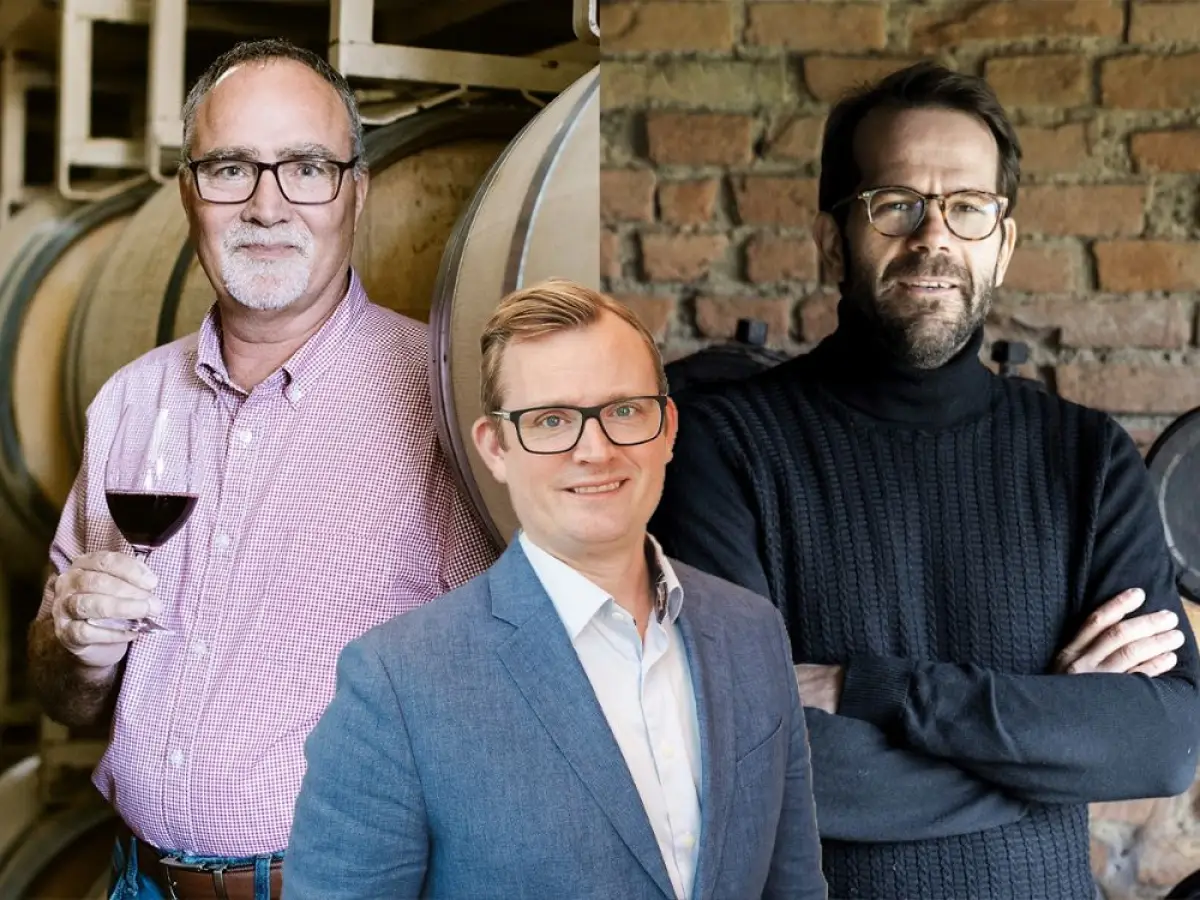
With Greg Jones, a world-renowned climatologist and passionate Oregon winegrower, we discussed the effects of the climate crisis on wine and the resilience strategies needed to preserve the quality of one of the world's most beloved beverages. We asked Simon Boas Hoffmeyer, Global Head of Sustainability at the Carlsberg Group, about the sustainability policies adopted by one of the world's largest beer producers. Finally, with Andrea Bezzecchi, founder of Acetyca, we discussed how to challenge preconceptions and revive a practice rooted in centuries of tradition: drinking vinegar. Below is a preview of the interviews, which you can read in full in Renewable Matter #63.
Gregory V. Jones: A grape for every climate
Of all agricultural products, wine is the most sensitive to climate change. Temperature governs every stage of the vine’s life cycle – from budburst to veraison to harvest – and a shift of 1-2°C in growing season average can push a variety outside its optimal range, raise sugar levels, accelerate ripening and fundamentally alter the wine’s character. Wine also carries an added burden that wheat or soybeans do not: a dense cultural geography of regional identities, DOC and AOC designations, consumer expectations built over centuries. When climate moves, wine cannot simply follow it.
Gregory V. Jones (who prefers to be called Greg) has been mapping this collision between viticulture and climate science since the late 1980s, when he began his doctoral work on Bordeaux. His landmark 2005 paper in Climatic Change, now with over 700 citations, first quantified the relationship between warming growing seasons and vintage quality across major world regions. He is the co-founder of Abacela Winery in the Umpqua Valley, Oregon, where he grows 16 varieties (most of which are Iberian: Tempranillo, Albaríno, Tannat, Touriga Nacional) on slopes chosen with the same climate logic he applies to his research. The vineyard is, in a sense, his laboratory. Emanuele Bompan spoke to him on a June morning from Eugene, in Oregon, where temperatures had already exceeded 38°C.
Simon Boas Hoffmeyer: A zero impact sip of beer
Tuborg, Poretti, Chang, Mythos, Saku, and many others. Anyone who travels has, at least once, sipped a beer from the Carlsberg Group, one of the world’s largest brewers, alongside giants such as Heineken and AB InBev. An industrial operation on a global scale that relies on barley, hops, water, and, above all, a great deal of energy.
Since 2015, the Danish group has reduced emissions from its factories by 63%, increased the recycled content in its packaging to 51% – five years ahead of schedule – and launched water recovery initiatives in Asia, where commercial growth is concentrated in regions facing the greatest water stress. The Brewing Tomorrow programme is now raising the bar across the entire value chain, with a net-zero target for 2040 that encompasses agriculture, packaging and logistics. The challenge is no longer merely technical: it is systemic. Emanuele Bompan discussed this with Simon Boas Hoffmeyer, Global Head of Sustainability & ESG at the Carlsberg Group.
Andrea Bezzecchi: Sour Renaissance
In the Gospels, there is an episode that we all remember as a symbol of the cruelty human beings are capable of: Jesus on the cross, scorched by the sun, is offered a cloth soaked in vinegar instead of water. Never has a gesture been more misunderstood. Recent historical reconstructions show that this was actually intended as an act of care and compassion, because in Roman times vinegar was (also) a thirst-quenching drink.
Andrea Bezzecchi often references this anecdote to overturn centuries of preconceptions about the role of vinegar in gastronomy. With a PhD in agri-food sciences, as a professional balsamic vinegar taster and owner of a historic company in Emilia-Romagna, Acetaia San Giacomo, Bezzecchi founded the startup Acetyca in 2021, together with Beatrice Guzzi and Paolo Tucci, with the specific aim of bringing about a Sour Renaissance. And if the rediscovery of sour flavours in haute cuisine is linked to the trend for “starred” fermentation launched by Copenhagen’s Noma, Bezzecchi isn’t content with just dishes: he wants to bring vinegar back into our glasses too. Giorgia Marino spoke to him about the culture of taste, deep-rooted prejudices and the world’s first vinegar-based soft drink, loved even by children.
Cover: Gregory V. Jones, Simon Boas Hoffmeyer, and Andrea Bezzecchi