


In the meat industry, as in other sectors, supply chain integration is a fundamental prerequisite for developing circular economy models. This is the path followed by Inalca, a subsidiary of Gruppo Cremonini and a leading player in Italy and Europe in the production and distribution of beef, cured meats, and food products.
In 2024, the company recorded revenues of more than 3.2 billion euros, 40% of which were generated in foreign markets. This result was supported, among other factors, by the phasing-in of a new plant in Poland and business growth in Africa, particularly in Algeria and Angola. Long-term competitiveness lies primarily in a fully integrated industrial model, focused on enhancing the use value of raw materials and on an increasingly targeted ability to select and process products according to their destinations, to maximise the recovery of what was once considered waste. We discussed this with Giovanni Sorlini, Head of Quality, Safety and Sustainability Development at Inalca.
The European market has been marked by a general decline in cattle numbers, with Italy experiencing a particularly sharp contraction. The country’s self-sufficiency rate has dropped from 58% in 2010 to 40% in 2023, while the national herd has fallen from 10 million head in 1961 to fewer than 6 million today. How has Inalca responded?
From a strictly economic perspective, the direct management or control of primary production, building solid and continuing relationships with suppliers, has become strategic. Only thus can the supply of raw materials be guaranteed, while also developing sustainable and circular practices. The first initiative Inalca has undertaken to consolidate an integrated supply chain has been to seize the opportunities offered by Italian legislation on subsidised finance, in particular through the fourth and fifth calls for tender for agri-food supply chain contracts. Having an integrated system across the different stages of production also enables the advanced digitalisation of procurement processes. To this end, Inalca has developed a digital platform accessible to all its suppliers, through which it can share livestock identification and traceability information at all levels. Soon, this same platform will also be used to manage the data required by the new European Deforestation Regulation (EUDR), in addition to other important data concerning the sustainability and food security of production.
Are there other objectives, besides simplifying the collection and sharing of information on the environmental performance of farms?
We want to offer farmers an advanced service that supports them in both their day-to-day management and the positioning of their products along the supply chain, with a particular focus on strategic clients in the large-scale retail and branded industries. I'll give two examples. The first concerns the National Animal Welfare Quality Scheme (SQNBA - Schema di Qualità Nazionale per il Benessere Animale - SQNBA). Thanks to digital tools, we can better manage the entire process, scale up the model, and involve more farms, adding value to the product for clients and consumers with claims like "animal welfare-oriented farms." These schemes are complex and require third-party bodies, qualified veterinarians, and structured data management. The second example is the National Quality System for Livestock (Sistema di Qualità Nazionale per la Zootecnia - SQNZ), which promotes sustainable farming practices, rewarding those who adopt precision farming technologies, reduce water consumption, or produce renewable energy.
And what about the circular economy?
We are delving into technical standards, particularly ISO, because we believe that supply chain circularity is still poorly recognised, especially by banks and stakeholders. Sustainability must not be limited to the assessment of CO₂ or greenhouse gas emissions: in a growing agri-food supply chain for cattle, drastic emission reduction is a complex matter. This is why we ask for the inclusion of measurable parameters such as circularity, which is often overlooked in sustainability assessments by various stakeholders, such as financial institutions. Instead, it is essential to also value companies' ability to implement circular economy models, rather than just quantifying emissions.
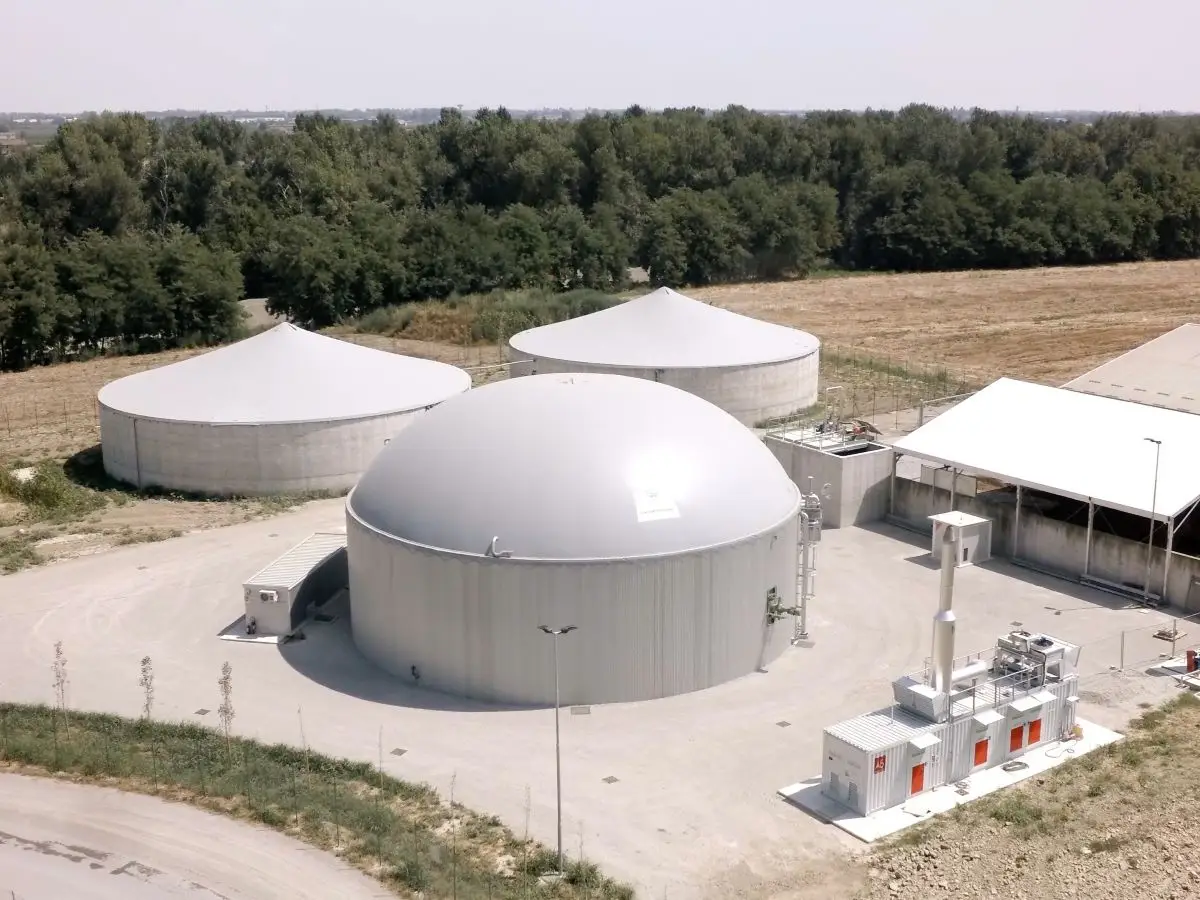
One of the main areas you're moving into, besides the use of non-edible biomass (neither for animal nor human consumption), is the development of renewable energy, such as biogas and biomethane.
Yes, and recently we have also been focusing on fertilisation techniques. Biogas produces a stable fertiliser, digestate, which is well-suited to precision farming, but supply chain integration allows us to add value to other livestock biomass. For example, appropriately processed flours and blood become organic fertilisers that we already use and want to extend to the entire supply chain, to reduce the use of chemical fertilisers like urea. Furthermore, residues from non-agricultural biodigesters, such as those from slaughtering plants, are dried using heat from industrial processes and turned into dry, advanced digestate that can be easily transported over long distances. At the same time, we support farmers in diversifying their forage crops away from maize. We promote more resilient alternatives such as barley or triticale, as well as cover crops to combat desertification, improving soil health and increasing carbon sequestration.
What are the prospects for circularity that is not just vertical, linked to the livestock supply chain, but also "internal" to the industrial sector?
Our core business of meat processing is now enhanced by the recovery of byproducts, which involves various types of products. One example is the biomedical sector, for which we manufacture biological precursors for heart valves from bovine pericardia that are selected, traceable, and managed through specific protocols. Another strategic activity involves the recovery of edible bones, treated in a dedicated plant. From these, we obtain beef tallow, a fat used in animal feed and the confectionery, biochemistry, and oleochemistry sectors. The treatment also yields "bone chips", a combination of collagen and hydroxyapatite, used for the production of pharmaceutical capsules. Even the final residue, which is rich in phosphates, is recovered as a fertiliser. It's a cascading system. Each processing stage opens up new products and markets, ultimately reconfiguring the very identity of the meat industry as a protein industry.
This content is produced thanks to the support of sponsors
Cover: photo by Inalca