

More than 7 trillion dollars a year flow into activities that damage nature, compared with roughly 220 billion for nature-based solutions: a ratio of more than 30 to one, according to UNEP's State of Finance for Nature 2026. Against this backdrop, the Forest Stewardship Council (FSC) is trying to put a market value on what a forest does while it is still standing. Its Ecosystem Services Procedure, revised in 2025, allows certified forest managers to demonstrate verified impacts across seven services, from biodiversity to water and carbon.
Steve Edwards joined FSC as Senior Advisor on Ecosystem Services Markets & Finance five months ago to help scale up the use of this tool, having previously led South Pole's global biodiversity practice and spent years at IUCN working on the mitigation hierarchy. We met him at the Yerevan convention centre during COP17 of the Convention on Biological Diversity.
Finance has dominated this COP. According to UNEP, the flows harming nature are more than thirty times those going into nature-based solutions. Where does FSC stand in this picture?
I'll talk much less about the perverse incentives, although one could say that having a certified, well-managed forest gives confidence that those investments are positive, or at least shouldn't be lumped in with the negative side. What I'd rather talk about is the contribution side. We know that nature provides essential services for humanity. But the value of a standing forest is not seen in the same way as the value of a forest that has been cut down for its timber. As a society, we have easier ways to monetise and commercialise wood once it has been cut down than to put a financial value on all the ecosystem services that flow from standing and healthy forests. So this is an attempt to identify those valuable ecosystem services and provide confidence that the work being done on them is real, trustworthy, and has taken place. It's in the name: a verified impact, either to restore ecosystems or to maintain them as they are. We want to reduce the incentives to cut down the forest and provide greater incentives to maintain it healthy and standing.
So it is another chapter of the finance story.
It's another perspective, because it's really trying to give direct financial value to the people that own those forests. In many cases, they want to be good stewards of the land and of nature, but they lack the financial resources to do so. Everybody would say: you should protect this, because it is important habitat for woodpeckers. And the owner may say: well, I would love to, but I need to earn a living and I need to provide revenue for my community. What's been lacking is a way to compensate those landowners and forest managers for the things that are maintained for nature, rather than lost. And this isn't a new challenge. We've been dealing with this for centuries. If not, we would still have large stocks of cod in the oceans, some of these beautiful forests that have been cut down and cleaner rivers.
Civil society groups such as Third World Network and Friends of the Earth argue that offsets and payments for ecosystem services have existed for a long time but never reached a meaningful scale. You worked for South Pole and IUCN: how do you respond?
I agree that they haven't been fully successful, because we're still struggling today and the state of nature is worse now than it was five, ten, twenty, thirty years ago. But although it hasn't been fully successful, that doesn't mean we shouldn't use it. The reality is that this is the global economic system that we have, and we're trying to find mechanisms within that system that will encourage the conservation of nature. These are imperfect systems: there's a lot you can pick apart with carbon credits, for example. The biodiversity financing gap will never be covered by payments for ecosystem services, biodiversity credits or carbon credits. No one is claiming that. They will at best cover a small percentage. That funding probably needs to come from society, which is represented through our governments, who determine where those resources are spent.
Is there a tool that works better than others?
Take the mitigation hierarchy for biodiversity: avoid impacts, minimise them, restore what was negatively impacted and offset the residual impact you're not able to deal with. The premise is that offsetting is so hard that it drives up the incentive to avoid those impacts in the first place. That's been construed as a licence to trash: if you can get the offsets, people will just go ahead and do the trashing. My response would be that, as a society, we weren't getting anything before. It's noble and important to say there are areas where this type of development shouldn't happen, but it happens anyway. So we're getting more than we were getting without these tools. However, it's important to clarify that FSC doesn't work with offsetting. The products that we have now are not based on offsetting, nor are they used for offsets.
Forestry means dealing with local and Indigenous communities. How does FSC manage these relationships?
FSC was founded right after the Rio conventions, in the early 1990s, with strong participation from environmental NGOs. We have members and three chambers - environmental, social and economic - and all three have to be in agreement. That gives a much stronger voice to the issues you're referring to. There has long been a strong voice for Indigenous Peoples and local communities within FSC governance, and we've been well recognised for the use of free, prior and informed consent in our certification systems: it is regularly cited as an example of how to do this, and do it well.
What decision would make the biggest difference for investment in conservation and restoration here next week?
You've caught me, because I haven't followed the details of the deliberations. But I can give you a perspective on what has changed. I was at COP14, 15, 16, and now 17. At COP14, there were very few representatives of the private sector, mostly business and biodiversity associations. That changed significantly in Montreal, at COP15: there was a wake-up that businesses need to play a role. Here there are probably fewer CEOs, but more operational people, those who have to make this happen in their companies. They may come along the first time to watch, but they're not going to keep coming back if they have nothing to show for it. In my area, nature markets, the Kunming-Montreal Global Biodiversity Framework has very clear language about them; biodiversity credits are mentioned in those decisions. Since then, I have seen clear progress by governments trying to establish nature markets. France is an example. The Biodiversity Credit Alliance, although not governmental, is another. The International Advisory Panel on Biodiversity Credits, initially funded by the French and UK governments, is now its own body.
So you see a positive trend.
Absolutely. The state of nature is depressing; I'm not going to deny that. Are we moving fast enough? Probably not. But there is progress in trying to set up mechanisms to address it, and I wouldn't be surprised if in two years, wherever they decide to have the COP, we'll hear more stories of how these things have actually been implemented.
How do you keep working in such an environment?
Well, I'm an optimist: we have to try. I take a lot of strength from the love of nature. It's going to sound corny, but it's true. We have biophilia. Inherently, we have a strong appreciation of nature. It's harder than the climate change challenge, because with climate change we're seeing the heat waves and the drought. When we lose species, it's hard to see, but slowly they're no longer there. So I want to keep working while we still have enough time to reverse the curve of nature loss and get it moving upwards again.
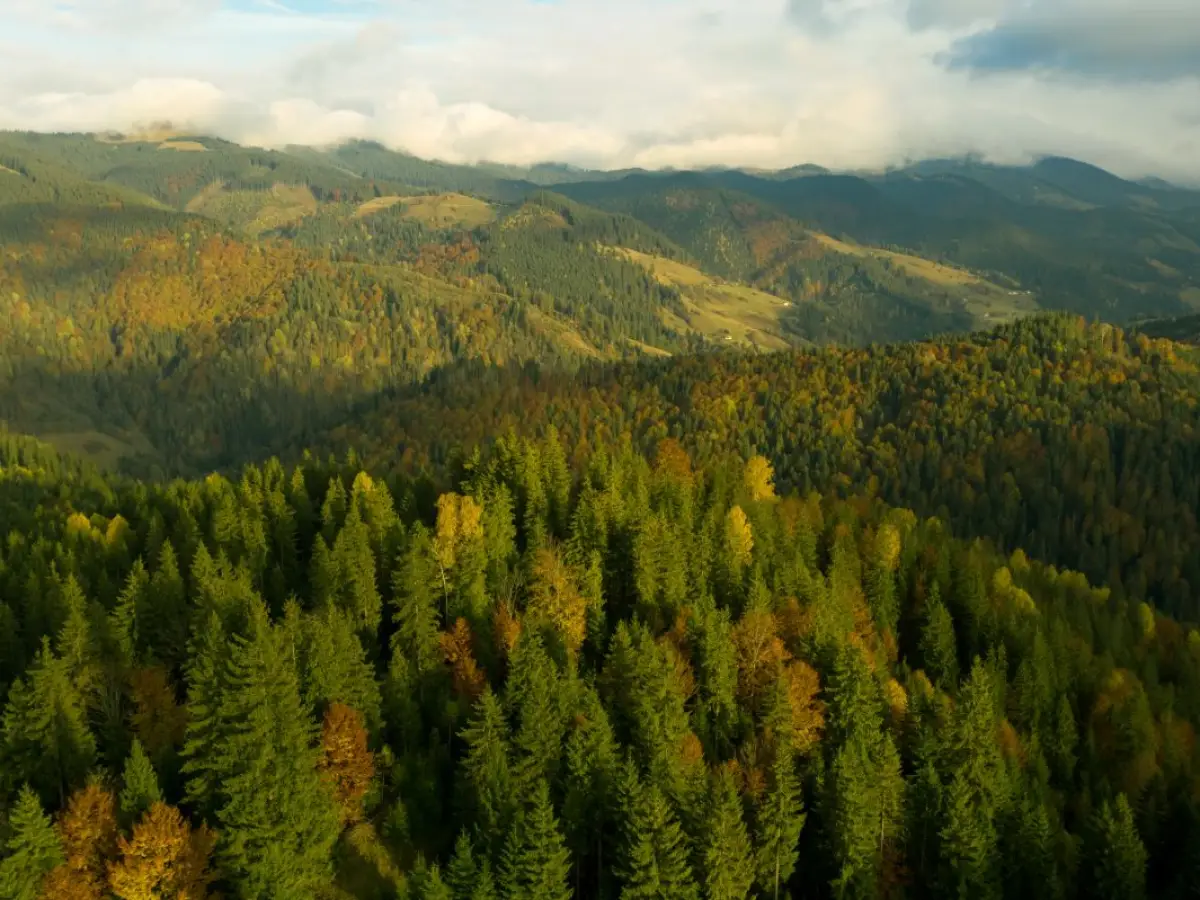
Cover: Envato image